The Birth of Tragedy

This audiobook is narrated by an AI Voice. Before Socrates, before reason triumphed over instinct, ancient Greece created the highest art humanity has ever known—and then destroyed it.

In his explosive 1872 debut, twenty-seven-year-old Friedrich Nietzsche revolutionized how we understand art, culture, and human nature. Through a radical reinterpretation of Greek tragedy, he introduced two primal forces that shape all creativity and existence: the Apollonian drive toward order, clarity, and beautiful form, and the Dionysian impulse toward ecstasy, chaos, and the dissolution of boundaries.

Greek tragedy achieved greatness, Nietzsche argues, by fusing these opposing forces into a profound affirmation of life—embracing both beauty and suffering, order and chaos, joy and horror. But this golden age was murdered by Socratic rationalism, which denied life's tragic dimensions in favor of logical optimism and the dangerous belief that knowledge could redeem existence.

Nietzsche's critique extends far beyond ancient Greece to indict modern Western civilization itself. Our culture, dominated by scientific rationality and Christian morality, has lost the Dionysian capacity to affirm life in all its terrible magnificence. We need logic to make sense of chaos, but we need art to make existence bearable.

This isn't merely a scholarly analysis but a passionate manifesto calling for cultural rebirth through the reawakening of tragic wisdom. Controversial, visionary, and deeply prophetic, The Birth of Tragedy announced the arrival of philosophy's most dangerous voice.

The work that launched Nietzsche's career—and changed how we think about art, reason, and what it means to be human.

À propos de ce livre

This audiobook is narrated by an AI Voice. Before Socrates, before reason triumphed over instinct, ancient Greece created the highest art humanity has ever known—and then destroyed it.

In his explosive 1872 debut, twenty-seven-year-old Friedrich Nietzsche revolutionized how we understand art, culture, and human nature. Through a radical reinterpretation of Greek tragedy, he introduced two primal forces that shape all creativity and existence: the Apollonian drive toward order, clarity, and beautiful form, and the Dionysian impulse toward ecstasy, chaos, and the dissolution of boundaries.

Greek tragedy achieved greatness, Nietzsche argues, by fusing these opposing forces into a profound affirmation of life—embracing both beauty and suffering, order and chaos, joy and horror. But this golden age was murdered by Socratic rationalism, which denied life's tragic dimensions in favor of logical optimism and the dangerous belief that knowledge could redeem existence.

Nietzsche's critique extends far beyond ancient Greece to indict modern Western civilization itself. Our culture, dominated by scientific rationality and Christian morality, has lost the Dionysian capacity to affirm life in all its terrible magnificence. We need logic to make sense of chaos, but we need art to make existence bearable.

This isn't merely a scholarly analysis but a passionate manifesto calling for cultural rebirth through the reawakening of tragic wisdom. Controversial, visionary, and deeply prophetic, The Birth of Tragedy announced the arrival of philosophy's most dangerous voice.

The work that launched Nietzsche's career—and changed how we think about art, reason, and what it means to be human.

Commencez ce livre dès aujourd'hui pour 0 €

  • Accédez à tous les livres de l'app pendant la période d'essai
  • Sans engagement, annulez à tout moment
Essayer gratuitement
Plus de 52 000 personnes ont noté Nextory 5 étoiles sur l'App Store et Google Play.

  1. 5.0

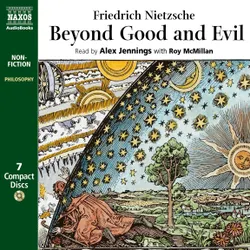
    Par-delà le Bien et le Mal

    Friedrich Nietzsche

  2. 1800 Citations de philosophes

    Aristote, Épicure, Platon, Thalès de Milet, – Socrate, Protagoras, Anaximandre, Épictète, Héraclite, Marc Aurèle, René Descartes, Michel de Montaigne, Alexis de Tocqueville, Voltaire, Charles De Montesquieu, Jean-Jacques Rousseau, Emmanuel Kant, Hannah Arendt, Gottfried Wilhelm Leibniz, Georg Wilhelm Friedrich Hegel, Friedrich Nietzsche, Arthur Schopenhauer, David Hume, John Locke, Francis Bacon, Thomas Hobbes, Thomas More, Confucius, Érasme, Lao Tseu, Baruch Spinoza, Søren Kierkegaard, Nicolas Machiavel, Thomas d'Aquin, Henry David Thoreau

  3. Développez votre culture générale en 1000 citations

    Napoléon Bonaparte, Winston Churchill, Confucius, Albert Einstein, Friedrich Nietzsche, Platon, William Shakespeare, Lao Tseu, Sun Tzu

  4. 50 Chefs-D'œuvre Que Vous Devez Lire Avant De Mourir: Vol 2

    Honoré de Balzac, Alphonse Daudet, Arthur Conan Doyle, Alexandre Dumas, Gustave Flaubert, Francis Scott Fitzgerald, Nikolai Gogol, Victor Hugo, Maurice Leblanc, Jack London, Madame de La Fayette, Guy De Maupassant, Friedrich Nietzsche, Jean-Jacques Rousseau, Robert Louis Stevenson, Jules Verne, H.G. Wells, Michel de Montaigne, Golden Deer Classics

  5. 4.0

    Ainsi Parlait Zarathoustra - Livre Audio

    Friedrich Nietzsche, Livres audio en français

  6. 50 citations de Nietzsche

    Friedrich Nietzsche

  7. 3500 citations ultimes

    Marc Aurèle, Jane Austen, Beaumarchais, Napoléon Bonaparte, Bouddha, Winston Churchill, Cicéron, Confucius, Nicolas de Chamfort, Charles de Gaulle, Antoine de Saint-Exupéry, Léonard de Vinci, Denis Diderot, Fiodor Dostoïevski, Albert Einstein, Ralph Waldo Emerson, Anne Frank, Mahatma Gandhi, Emmanuel Kant, Søren Kierkegaard, Martin Luther King, Georg Christoph Lichtenberg, Abraham Lincoln, Montesquieu, Friedrich Nietzsche, Platon, Marcel Proust, Arthur Schopenhauer, William Shakespeare, – Socrate, Baruch Spinoza, Henry David Thoreau, Lao Tseu, Voltaire, Oscar Wilde

  8. Le Gai Savoir - Livre Audio

    Friedrich Nietzsche, Livres audio en français

  9. Nouveau
    3.3

    Beyond Good and Evil

    Friedrich Nietzsche

  10. Beyond Good & Evil :

    Friedrich Nietzsche

  11. 300 citations de philosophes allemands

    Emmanuel Kant, Hannah Arendt, Gottfried Wilhelm Leibniz, Georg Wilhelm Friedrich Hegel, Friedrich Nietzsche, Arthur Schopenhauer

  12. Ainsi parlait Zarathoustra : Une odyssée philosophique révolutionnaire sur la quête du surhomme et la transmutation des valeurs

    Friedrich Nietzsche