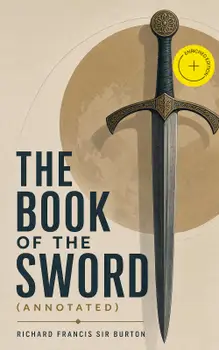









The Book of the Sword is Richard Francis Burton's ambitious "history of the weapon," tracing the sword from prehistoric stone and bronze implements to the sophisticated blades of classical, Islamic, and European cultures. More than a catalogue, it is a Victorian synthesis of archaeology, comparative philology, metallurgy, anthropology, and military history. Burton's prose is dense, learned, and digressive, marked by the era's encyclopedic confidence and by his own delight in technical nomenclature, cultural comparison, and the symbolic life of arms. Sir Richard Francis Burton—soldier, explorer, linguist, translator, and controversial imperial polymath—was unusually equipped to write such a study. His travels in India, Arabia, Africa, and the Near East exposed him to diverse martial traditions, while his lifelong interest in fencing and ethnography gave the sword both practical and cultural significance. The book reflects Burton's belief that weapons reveal civilizations: their technologies, rituals, hierarchies, and myths. Readers interested in arms and armour, Victorian scholarship, or the intellectual history of empire will find this work fascinating. Though some theories reflect its nineteenth-century context, Burton's range, curiosity, and firsthand authority make The Book of the Sword a compelling monument of antiquarian learning.
This enriched edition has been carefully crafted to add value to your reading experience.
- A succinct Introduction situates the work's timeless appeal and themes.
- The Synopsis outlines the central plot, highlighting key developments without spoiling critical twists.
- A detailed Historical Context immerses you in the era's events and influences that shaped the writing.
- A thorough Analysis dissects symbols, motifs, and character arcs to unearth underlying meanings.
- Reflection questions prompt you to engage personally with the work's messages, connecting them to modern life.
- Hand‐picked Memorable Quotes shine a spotlight on moments of literary brilliance.
- Interactive footnotes clarify unusual references, historical allusions, and archaic phrases for an effortless, more informed read.