À propos de ce livre

Three philosophical works by the seventeenth-century Enlightenment thinker and author of Ethics.

How to Improve Your Mind

In this earlier work, Dutch philosopher Baruch Spinoza articulates his view that life is best lived with the supreme happiness of knowing God's infinite love. By extension, all earthly pursuits—including money, fame, and sex—are mere distractions from the greater joy of the soul's quietude.

Translated by the philosopher and founder of the Philosophical Library, Dagobert D. Runes. Runes also provides exclusive commentary and biographical notes.

The Road to Inner Freedom

Spinoza views the ability to experience rational love of God as the key to mastering the contradictory and violent human emotions.

The Book of God

The Book of God, one of Spinzoa's earliest works, came to light only a hundred years ago in two slightly varying Dutch manuscripts. Its youthful author lived in turbulent times, when the Western world was torn by civil and religious strife, and bullies, bigots and pseudo-prophets vied for the ear of a fearful people. While Europe was in an uproar over the right church, Spinoza was seeking the right God. This book is the first known report of his findings.

Translated by Dr. A. Wolf from the Dutch [the author's Tractatus de Deo et homine version] and edited and with an introduction by Dagobert D. Runes.

Commencez ce livre dès aujourd'hui pour 0 €

  • Accédez à tous les livres de l'app pendant la période d'essai
  • Sans engagement, annulez à tout moment
Essayer gratuitement
Plus de 52 000 personnes ont noté Nextory 5 étoiles sur l'App Store et Google Play.

Plus de Baruch Spinoza

  1. Traité théologico-politique : Aux origines de la laïcité moderne : comment Spinoza a révolutionné notre conception de la religion, de l'État, et de liberté de conscience

    Baruch Spinoza, Émile Saisset

  2. 4.6

    Comprendre Spinoza

    Baruch Spinoza

  3. Spinoza. Extraits

    Baruch Spinoza

  4. 3500 citations ultimes

    Marc Aurèle, Jane Austen, Beaumarchais, Napoléon Bonaparte, Bouddha, Winston Churchill, Cicéron, Confucius, Nicolas de Chamfort, Charles de Gaulle, Antoine de Saint-Exupéry, Léonard de Vinci, Denis Diderot, Fiodor Dostoïevski, Albert Einstein, Ralph Waldo Emerson, Anne Frank, Mahatma Gandhi, Emmanuel Kant, Søren Kierkegaard, Martin Luther King, Georg Christoph Lichtenberg, Abraham Lincoln, Montesquieu, Friedrich Nietzsche, Platon, Marcel Proust, Arthur Schopenhauer, William Shakespeare, – Socrate, Baruch Spinoza, Henry David Thoreau, Lao Tseu, Voltaire, Oscar Wilde

  5. 1800 Citations de philosophes

    Aristote, Épicure, Platon, Thalès de Milet, – Socrate, Protagoras, Anaximandre, Épictète, Héraclite, Marc Aurèle, René Descartes, Michel de Montaigne, Alexis de Tocqueville, Voltaire, Charles De Montesquieu, Jean-Jacques Rousseau, Emmanuel Kant, Hannah Arendt, Gottfried Wilhelm Leibniz, Georg Wilhelm Friedrich Hegel, Friedrich Nietzsche, Arthur Schopenhauer, David Hume, John Locke, Francis Bacon, Thomas Hobbes, Thomas More, Confucius, Érasme, Lao Tseu, Baruch Spinoza, Søren Kierkegaard, Nicolas Machiavel, Thomas d'Aquin, Henry David Thoreau

  6. 3.0

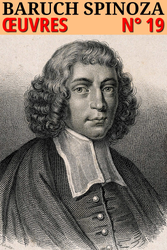
    Baruch Spinoza - Oeuvres complètes : Classcompilé n° 19

    Baruch Spinoza

  7. Dieu, l’homme et la béatitude : supplément aux œuvres de Spinoza : traduit pour la première fois en français [sur la version allemande de C. Sigwart], et précédé d'une introduction par Paul Janet

    Baruch Spinoza

  8. 400 citations de philosophes essentiels

    Confucius, Érasme, Lao Tseu, Baruch Spinoza, Søren Kierkegaard, Nicolas Machiavel, Thomas d'Aquin, Henry David Thoreau

  9. 50 citations de Spinoza

    Baruch Spinoza

  10. Ethics

    Baruch Spinoza

  11. 900 citations de la philosophie moderne

    Francis Bacon, Michel de Montaigne, Emmanuel Kant, Nicolas Machiavel, Montesquieu, Blaise Pascal, Jean-Jacques Rousseau, Baruch Spinoza, Voltaire

  12. 400 citations des grands philosophes du 17ème siècle

    Montesquieu, Blaise Pascal, Baruch Spinoza, Voltaire