ou

Trouvez une histoire immédiatement

  1. 50 Chefs-D'œuvre Que Vous Devez Lire Avant De Mourir : Vol 1 (Golden Deer Classics)

    Mark Twain, Stendhal, Edgar Allan Poe, Victor Hugo, Gustave Flaubert, Alexandre Dumas, Arthur Conan Doyle, René Descartes, Lewis Carroll, Charles Baudelaire, Guillaume Apollinaire, Golden Deer, Alain-Fournier, Jules Amédée d'Aurevilly, Paul Bourget, Charlotte Brontë, Emily Brontë, Pierre Corneille, Nikolai Gogol, Gustave Leroux, Marquis De Sade, Jack London, Sinclair Lewis, Daniel Lesueur, Marcel Proust, Edmond Rostand, Jean-Jacques Rousseau, Mary Shelley, Bram Stoker, Sun Tzu, Rodolphe Töpffer, Vatsyayana, Jules Verne, Voltaire, H.G. Wells, Oscar Wilde, Emile Zola

  2. 4.2

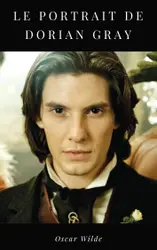
    Le Portrait de Dorian Gray

    Oscar Wilde

  3. Le Portrait de Dorian Gray

    Oscar Wilde

  4. 4.6

    Le Portrait de Dorian Gray

    Oscar Wilde

  5. 50 Masterpieces you have to read before you die Vol: 2 [newly updated] (Golden Deer Classics)

    Lewis Carroll, Mark Twain, Jules Verne, Oscar Wilde, Golden Deer, Arthur Conan Doyle, Louisa May Alcott, Jane Austen, J.M. Barrie, B.M. Bower, Frances Hodgson Burnett, Robert William Chambers, G.K. Chesterton, Wilkie Collins, Charles Darwin, Daniel Defoe, Margaret Deland, Charles Dickens, Fyodor Dostoyevsky, Alexandre Dumas, Francis Scott Fitzgerald, E. M. Forster, Sigmund Freud, Thomas Hardy, Hermann Hesse, James Joyce, Andrew Lang, Jack London, H.P. Lovecraft, Lucy Maud Montgomery, Friedrich Wilhelm Nietzsche, Edgar Allan Poe, Marcel Proust, William Shakespeare, Robert Louis Stevenson, William Strunk Jr., Vatsyayana, H.G. Wells, Virginia Woolf

  6. 4.5

    Le portrait de Dorian Gray

    Oscar Wilde

  7. 4.6

    Le portrait de Dorian Gray

    Oscar Wilde

  8. 4.6

    Le Portrait de Dorian Gray

    Oscar Wilde

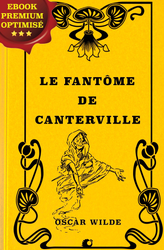
  9. Le fantôme de Canterville

    Oscar Wilde

  10. 4.0

    The Picture of Dorian Gray

    Oscar Wilde

  11. Le fantôme de Canterville

    Oscar Wilde

  12. Nouveau

    50 Masterpieces you have to read before you die vol: 2

    Joseph Sheridan Fanu, Madame de Fayette, Jerome K Jerome, James Joyce, Charles Kingsley, Rudyard Kipling, Pierre Choderlos Laclos, D. H. Lawrence, Matthew Gregory Lewis, Sinclair Lewis, Jack London, H.P. Lovecraft, Thomas Mann, W. Somerset Maugham, Guy De Maupassant, Herman Melville, Edgar Allan Poe, Marcel Proust, Ann Radcliffe, Samuel Richardson, George Sand, Walter Scott, Mary Shelley, Henryk Sienkiewicz, May Sinclair, Upton Sinclair, Stendhal, Laurence Sterne, Robert Louis Stevenson, Bram Stoker, Harriet Beecher Stowe, Jonathan Swift, Rabindranath Tagore, William Makepeace Thackeray, Leo Tolstoy, Anthony Troloppe, Ivan Turgenev, Mark Twain, Jules Verne, Lew Wallace, H.G. Wells, Rebecca West, Edith Wharton, Oscar Wilde, Cao Xueqin, Émile Zola

À propos de ce livre

Oscar Wilde's "The Importance of Being Earnest" is a delightful and scathing comedy that examines the intricacies of social conventions and the superficiality of Victorian society. The play employs a witty repartee and a rich tapestry of paradoxes to expose the absurdities inherent in the pursuit of love and respectability. Wilde's characteristic use of epigrams and puns propels the narrative, marking this work as one of the finest examples of farcical theater and a crucial commentary on identity and deception during the late 19th century. Oscar Wilde, known for his flamboyant personality and sharp intellect, was deeply influenced by the constraints of the society in which he lived. A central figure in the Aesthetic Movement, Wilde often challenged societal norms through his work. His own experiences with identity and the societal expectations surrounding love and marriage significantly informed the biting satire present in this play, drawing from both his life in the elite circles and the tensions with societal norms that ultimately led to his downfall. This masterpiece is highly recommended for readers who appreciate sharp wit intertwined with profound social criticism. "The Importance of Being Earnest" not only entertains but invites contemplation on the authenticity of human relationships and the masks we wear, making it an enduring classic that resonates as much today as it did over a century ago.