À propos de ce livre

In 1783, the last British troops left the American East Coast port cities of Savannah, Charleston, and New York. The War of Independence was over, and the United States of America finally emerged as an independent nation free from British rule. It was a stunning defeat for the British, but it was no less surprising to the victors – in fact, the man who would become the first president of the new nation, George Washington, described the outcome of the war as "little short of a standing miracle."

In many ways, America was unready for self-rule, as many institutions characterizing other nations were either entirely absent or existed only in their infancy. A part of the issue was the way in which the new nation had been created, not as a single entity but as a collection of 13 independent “United Colonies,” each with its own government, laws, and customs. It would not be until almost 100 years later that the people of America would refer to themselves as belonging to a single nation rather than a particular state within a larger union.

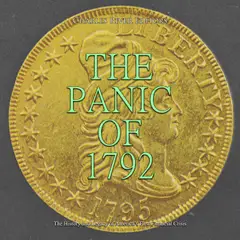
It was clear that the “hands-off” policy Congress initially tried to implement simply would not work in terms of the new nation’s finances. Some means had to be found to limit imports, encourage exports, deal with the country’s massive debt, and establish a national bank and sound fiscal policies that would apply to every part of the new union, not just to individual states. Much of that would fall on Alexander Hamilton and Robert Morris, who helped create the financial institutions that would become the heart of the United States' economy, but the story would also be incomplete without a former Continental Congressman named William Duer, who almost destroyed these same institutions through the Panic of 1792.

Commencez ce livre dès aujourd'hui pour 0 €

  • Accédez à tous les livres de l'app pendant la période d'essai
  • Sans engagement, annulez à tout moment
Essayer gratuitement
Plus de 52 000 personnes ont noté Nextory 5 étoiles sur l'App Store et Google Play.

  1. The Monterey International Pop Festival: The History and Legacy of the First Major Rock Festival in the 1960s

    Charles River Editors

  2. African Americans and the Revolutionary War: The History of Black Soldiers in the American Revolution

    Charles River Editors

  3. The Dissolution of Czechoslovakia: The History of the Central European Nation from Its Founding to Its Breakup

    Charles River Editors

  4. 5.0

    The Kingdoms of Israel and Judah: The History and Legacy of the Sovereign Israelite Kingdoms in Antiquity

    Charles River Editors

  5. 3.5

    The Battle of Khe Sanh: The History and Legacy of the Major Battle that Preceded the Tet Offensive during the Vietnam War

    Charles River Editors

  6. 4.0

    The Eureka Rebellion: The History and Legacy of the Gold Miners’ Uprising against the British in Australia

    Charles River Editors

  7. 3.8

    The Pleistocene Era: The History of the Ice Age and the Dawn of Modern Humans

    Charles River Editors

  8. The Biggest Tank Battles of World War II: The History of the Most Decisive Tank Encounters between the Allies and Axis

    Charles River Editors

  9. 3.3

    Modern Latvia: The History and Legacy of Latvia’s Struggle for Independence in the 20th Century

    Charles River Editors

  10. 5.0

    NASA’s Space Race Programs: The History and Legacy of NASA Missions in the 1950s and 1960s

    Charles River Editors

  11. 4.0

    The Kingdom of Mitanni: The Mysterious History of the Short-Lived Mesopotamian Civilization during the Late Bronze Age

    Charles River Editors

  12. 4.5

    Dagestan: The History and Legacy of Russia’s Most Ethnically Diverse Republic

    Charles River Editors