À propos de ce livre

In "The Three Critiques: The Critique of Pure Reason, The Critique of Practical Reason, and The Critique of Judgment," Immanuel Kant presents a groundbreaking exploration of epistemology, ethics, and aesthetics, fundamentally reshaping Western philosophy. Each critique acts as a pillar in Kant's critical philosophy, addressing the limits of human understanding, the nature of moral judgment, and the conditions for aesthetic appreciation. The texts are marked by a rigorous analytic style, replete with intricate arguments and foundational concepts such as the categorical imperative and the aesthetic sublime that anchor Kant's transcendental idealism within both metaphysics and human experience. Immanuel Kant (1724-1804), a pivotal figure in Enlightenment thought, was profoundly influenced by the philosophical debates of his time, especially regarding the nature of knowledge and morality. His engagement with rationalism and empiricism led to his distinct method of critical examination, seeking to resolve the tensions between subjective experience and objective reality. The challenges posed by skepticism and dogmatism drove Kant to develop a comprehensive framework that articulated the relationship between reason, will, and the aesthetic experience. Scholars and readers alike will find "The Three Critiques" indispensable for understanding modern philosophy's emergence. With clarity and depth, Kant'Äôs works not only provide a robust foundation for ethical and aesthetic inquiry but also challenge readers to contemplate their own cognitive capacities and moral responsibilities. This collection is essential for anyone seeking insight into the philosophical currents that define contemporary thought.

Commencez ce livre dès aujourd'hui pour 0 €

  • Accédez à tous les livres de l'app pendant la période d'essai
  • Sans engagement, annulez à tout moment
Essayer gratuitement
Plus de 52 000 personnes ont noté Nextory 5 étoiles sur l'App Store et Google Play.

  1. 3.8

    Kant’s Foundations of Ethics

    Immanuel Kant

  2. Sur le mal radical dans la nature humaine

    Immanuel Kant, Frédéric Gain

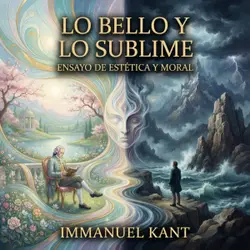
  3. Lo Bello y Lo Sublime : Ensayo de Estética y Moral

    Immanuel Kant

  4. 100 Clásicos de la Literatura Universal

    Francis Scott Fitzgerald, Mary Shelley, Lyman Frank Baum, Louisa May Alcott, Dante Alighieri, Jane Austen, Ambrose Bierce, Emily Brontë, Edgar Rice Burroughs, Lewis Carroll, Wilkie Collins, René Descartes, Charles Dickens, Emily Dickinson, Alexandre Dumas, Gustave Flaubert, Benito Pérez Galdós, Johann Wolfgang von Goethe, Thomas Hardy, E T A Hoffmann, Washington Irving, Henry James, James Joyce, Franz Kafka, Gaston Leroux, Federico García Lorca, H.P. Lovecraft, Publio Virgilio Marón, Lucy Maud Montgomery, John William Polidori, Marco Polo, Antoine de Saint-Exupéry, Emilio Salgari, Walter Scott, Mark Twain, Jules Verne, Julio Verne, H.G. Wells, Edith Wharton, Mary Wollstonecraft, Stefan Zweig, Sun Tzu, Bram Stoker, - Aristoteles, George Bernard Shaw, Henryk Sienkiewicz, Concepción Arenal, Charlotte Brontë, Miguel de Cervantes, G.K. Chesterton, Daniel Defoe, Fyodor Mikhailovich Dostoyevsky, Arthur Conan Doyle, Sigmund Freud, H. Rider Haggard, Homero, Immanuel Kant, Rudyard Kipling, Molière, Friedrich Nietzsche, Fernando de Rojas, Sófocles, William Makepeace Thackeray, León Tolstói, Voltaire, Ramón María del Valle-Inclán, Oscar Wilde, Virginia Woolf

  5. Grundlegung zur Metaphysik der Sitten

    Immanuel Kant

  6. Beantwortung der Frage: Was ist Aufklärung?

    Immanuel Kant

  7. Hacia la paz perpetua

    Immanuel Kant

  8. Teoría y praxis : Estudio preliminar: Eduardo García Belsunce

    Immanuel Kant

  9. Crítica de la Razón Pura

    Immanuel Kant

  10. Perpetual Peace: A Philosophical Essay

    Immanuel Kant

  11. The Critique of Pure Reason

    Immanuel Kant

  12. La paz perpetua : Octava edición

    Immanuel Kant