À propos de ce livre

“By the pricking of my thumbs, something wicked this way comes.”

“More is thy due than more than all can pay.”

"What’s done cannot be undone."

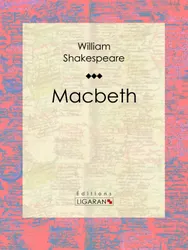
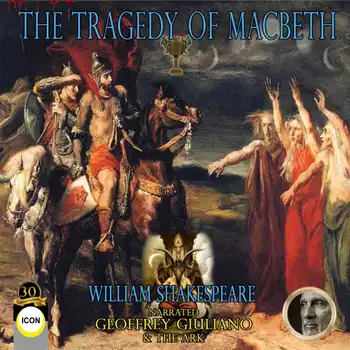
The Tragedy of Macbeth is a play by William Shakespeare. It is thought to have been first performed in 1606. It dramatizes the damaging physical and psychological effects of political ambition on those who seek power. Of all the plays that Shakespeare wrote during the reign of James I, Macbeth most clearly reflects his relationship with King James, patron of Shakespeare's acting company. It was first published in the Folio of 1623, possibly from a prompt book, and is Shakespeare's shortest tragedy.

A brave Scottish general named Macbeth receives a prophecy from a trio of witches that one day he will become King of Scotland. Consumed by ambition and spurred to action by his wife, Macbeth murders King Duncan and takes the Scottish throne for himself. He is then wracked with guilt and paranoia. Forced to commit more and more murders to protect himself from enmity and suspicion, he soon becomes a tyrannical ruler. The bloodbath and consequent civil war swiftly take Macbeth and Lady Macbeth into the realms of madness and death.

Shakespeare's source for the story is the account of Macbeth, King of Scotland, Macduff, and Duncan in Holinshed's Chronicles (1587), a history of England, Scotland, and Ireland familiar to Shakespeare and his contemporaries, although the events in the play differ extensively from the history of the real Macbeth. The events of the tragedy are usually associated with the execution of Henry Garnet for complicity in the Gunpowder Plot of 1605.

In the backstage world of theatre, some believe that the play is cursed, and will not mention its title aloud, referring to it instead as "The Scottish Play". The play has attracted some of the most renowned actors to the roles of Macbeth and Lady Macbeth, and has been adapted to film, television, opera, novels, comics, and other media.

Commencez ce livre dès aujourd'hui pour 0 €

  • Accédez à tous les livres de l'app pendant la période d'essai
  • Sans engagement, annulez à tout moment
Essayer gratuitement
Plus de 52 000 personnes ont noté Nextory 5 étoiles sur l'App Store et Google Play.

  1. 3.8

    Roméo et Juliette - Livre Audio

    William Shakespeare, Livres audio en français

  2. 3.0

    Hamlet - Livre Audio

    William Shakespeare, Livres audio en français

  3. 4.7

    Hamlet

    William Shakespeare

  4. 4.7

    Le Songe d'une Nuit d'Eté

    William Shakespeare

  5. 2000 citations ultimes

    Marc Aurèle, Jane Austen, Bouddha, Cicéron, Emil Cioran, Confucius, Léonard de Vinci, Albert Einstein, Anne Frank, Mahatma Gandhi, Johann Wolfgang Goethe, Carl Jung, Emmanuel Kant, Friedrich Nietzsche, Marcel Proust, Arthur Schopenhauer, William Shakespeare, Baruch Spinoza, Anton Tchekhov, Lao Tseu

  6. Roméo et Juliette

    William Shakespeare

  7. 4.0

    Hamlet

    William Shakespeare

  8. 5.0

    Romeo and Juliet (lättläst)

    William Shakespeare

  9. Développez votre culture générale en 1000 citations

    Napoléon Bonaparte, Winston Churchill, Confucius, Albert Einstein, Friedrich Nietzsche, Platon, William Shakespeare, Lao Tseu, Sun Tzu

  10. 5.0

    Hamlet

    William Shakespeare

  11. Le Songe D'Une Nuit D'Été

    William Shakespeare

  12. 3500 citations ultimes

    Marc Aurèle, Jane Austen, Beaumarchais, Napoléon Bonaparte, Bouddha, Winston Churchill, Cicéron, Confucius, Nicolas de Chamfort, Charles de Gaulle, Antoine de Saint-Exupéry, Léonard de Vinci, Denis Diderot, Fiodor Dostoïevski, Albert Einstein, Ralph Waldo Emerson, Anne Frank, Mahatma Gandhi, Emmanuel Kant, Søren Kierkegaard, Martin Luther King, Georg Christoph Lichtenberg, Abraham Lincoln, Montesquieu, Friedrich Nietzsche, Platon, Marcel Proust, Arthur Schopenhauer, William Shakespeare, – Socrate, Baruch Spinoza, Henry David Thoreau, Lao Tseu, Voltaire, Oscar Wilde