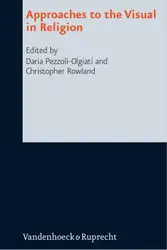
Three recent and commercially successful series of novels employ and adapt the resources of popular fantasy fiction to create visions of religious identity: J.K. Rowling's Harry Potter books, Phillip Pullman's Dark Materials and Tim LaHaye and Jerry Jenkins' Left Behind series. The act of creating fantasy counter-worlds naturally involves all three stories in the creation of what Mike Gray terms "transfigurations of transcendence": hopeful albeit paradoxical encodings of the ambiguous, non-observable reality whose primary locus in modern society is the societally extra-systemic human individual. Popular fantasy fiction turns out to involve acts of world-creation that are inherently religious and inherently paradoxical.A substantive examination shows that all three are involved in more or less intentional re-narrations of traditional Christian beliefs and narratives. The »atheist« His Dark Materials series does not deny but re-imagines the Christian visions of selfhood; the »traditionalist« Left Behind series does not simply replicate but modifies its own declared values; the apparent secularity of the Harry Potter series is shaped by its creative reception of Christian patterns and narratives. While the stories' visions of selfhood clearly clash, the basic paradoxes involved in their struggle to articulate transcendence expose significant parallels and a productive conversation with the Christian tradition.It is not simply that popular fantasy fiction is theologically relevant – the Christian Heilsgeschichte, too, proves to be highly relevant in popular culture. However, while far from obsolescent, models of religious identity in contemporary society require criticism and creativity – and, as evinced most powerfully in the Harry Potter stories, a flair for constructive engagement with paradox.
Commencez ce livre dès aujourd’hui pour 0 €
- Accédez à tous les livres de l'app pendant la période d'essai
- Sans engagement, annulez à tout moment
Auteur(e) :
Série :
Research in Contemporary Religion (RCR)Langue :
anglais
Format :

La Fascination De Méduse À Travers L’Art, L’Histoire Et La Légende
Andrea Piancastelli

Summary of A Knight of the Seven Kingdoms
Paul Adams

Great War Britain Manchester: Remembering 1914-18
Andrew Simpson

Sur les traces de René Caillié : Le Mali de 1828 revisité
Pierre Viguier

Italian Course
Ann-Charlotte Wennerholm

Études: Baudelaire, Paul Claudel, André Gide, Rameau, Bach, Franck, Wagner, Moussorgsky, Debussy… : Ingres, Cézanne, Gauguin
Jacques Rivière

Il piacere: Libro 1
Gabriele D’Annunzio

Learn Italian in a Hurry : Grasp the Basics of Italian Rapidamente!
Michael P San Filippo

Sept mook n°30 : Joseph Kessel inédit

Toscana, terra magica : Italienisch A1
Alessandra Mattanza

Aventures et mésaventures du baron de Münchhausen
Gottfried August Bürger, Rudolf Erich Raspe

A Billion Years: My Escape From a Life in the Highest Ranks of Scientology
Mike Rinder

Approaches to the Visual in Religion

Secular and Sacred? : The Scandinavian Case of Religion in Human Rights, Law and Public Space

More than a Provocation : Sexuality, Media and Theology
Stefanie Knauss

Meaning and Melancholy in the Thought of Emmanuel Levinas
Stine Holte

Dance To My Ministry : Exploring Hip-Hop Spirituality
Carl Petter Opsahl

The Spaces of Others – Heterotopic Spaces : Practicing and Theorizing Hospitality and Counter-Conduct beyond the Religion/Secular Border

"Born Again": A Portrait and Analysis of the Doctrine of Regeneration within Evangelical Protestantism
Stephen J. Hamilton

Intercultural Theology : Exploring World Christianity after the Cultural Turn
Judith Gruber

Religion and Difference : Contested Contemporary Issues
Trygve Wyller, Daria Pezzoli-Olgiati, Stefanie Knauss, Hans-Günter Heimbrock, Hans-Joachim Sander, Carla Danani

Dance as Third Space : Interreligious, Intercultural, and Interdisciplinary Debates on Dance and Religion(s)

Protestantism and Protestantization

Robinson Crusoe tries again : Missiology and European Constructions of "Self" and "Other" in a Global World 1789–2010
Werner Ustorf