Uncle Tom's Cabin

Uncle Tom's Cabin; or, Life Among the Lowly, is an anti-slavery novel by Harriet Beecher Stowe, published in 1852. Stowe, a Connecticut-born teacher at the Hartford Female Seminary and an active abolitionist, featured the character of Uncle Tom, a long-suffering black slave around whom the stories of other characters revolve. The sentimental novel depicts the reality of slavery while also asserting that Christian love can overcome something as destructive as enslavement of fellow human beings.

Uncle Tom's Cabin was the best-selling novel of the 19th century and the second best-selling book of that century, following the Bible. It is credited with helping fuel the abolitionist cause in the 1850s. In the first year after it was published, 300,000 copies of the book were sold in the United States; one million copies were sold in Great Britain. In 1855, three years after it was published, it was called "the most popular novel of our day." The impact attributed to the book is great, reinforced by a story that when Abraham Lincoln met Stowe at the start of the Civil War, Lincoln declared, "So this is the little lady who started this great war." The quote is apocryphal; it did not appear in print until 1896, and it has been argued that "The long-term durability of Lincoln's greeting as an anecdote in literary studies and Stowe scholarship can perhaps be explained in part by the desire among many contemporary intellectuals ... to affirm the role of literature as an agent of social change."

The book and the plays it inspired helped popularize a number of stereotypes about black people. These include the affectionate, dark-skinned "mammy"; the "pickaninny" stereotype of black children; and the "Uncle Tom", or dutiful, long-suffering servant faithful to his white master or mistress. In recent years, the negative associations with Uncle Tom's Cabin have, to an extent, overshadowed the historical impact of the book as a "vital antislavery tool."

Uncle Tom's Cabin first appeared as a 40-week serial in The National Era, an abolitionist periodical, starting with the June 5, 1851, issue. Because of the story's popularity, the publisher John P. Jewett contacted Stowe about turning the serial into a book. While Stowe questioned if anyone would read Uncle Tom's Cabin in book form, she eventually consented to the request.

Harriet Beecher Stowe (June 14, 1811 - July 1, 1896) was an American abolitionist and author. She wrote more than 20 books, including novels, three travel memoirs, and collections of articles and letters. She was influential both for her writings and her public stands on social issues of the day.

À propos de ce livre

Uncle Tom's Cabin; or, Life Among the Lowly, is an anti-slavery novel by Harriet Beecher Stowe, published in 1852. Stowe, a Connecticut-born teacher at the Hartford Female Seminary and an active abolitionist, featured the character of Uncle Tom, a long-suffering black slave around whom the stories of other characters revolve. The sentimental novel depicts the reality of slavery while also asserting that Christian love can overcome something as destructive as enslavement of fellow human beings.

Uncle Tom's Cabin was the best-selling novel of the 19th century and the second best-selling book of that century, following the Bible. It is credited with helping fuel the abolitionist cause in the 1850s. In the first year after it was published, 300,000 copies of the book were sold in the United States; one million copies were sold in Great Britain. In 1855, three years after it was published, it was called "the most popular novel of our day." The impact attributed to the book is great, reinforced by a story that when Abraham Lincoln met Stowe at the start of the Civil War, Lincoln declared, "So this is the little lady who started this great war." The quote is apocryphal; it did not appear in print until 1896, and it has been argued that "The long-term durability of Lincoln's greeting as an anecdote in literary studies and Stowe scholarship can perhaps be explained in part by the desire among many contemporary intellectuals ... to affirm the role of literature as an agent of social change."

The book and the plays it inspired helped popularize a number of stereotypes about black people. These include the affectionate, dark-skinned "mammy"; the "pickaninny" stereotype of black children; and the "Uncle Tom", or dutiful, long-suffering servant faithful to his white master or mistress. In recent years, the negative associations with Uncle Tom's Cabin have, to an extent, overshadowed the historical impact of the book as a "vital antislavery tool."

Uncle Tom's Cabin first appeared as a 40-week serial in The National Era, an abolitionist periodical, starting with the June 5, 1851, issue. Because of the story's popularity, the publisher John P. Jewett contacted Stowe about turning the serial into a book. While Stowe questioned if anyone would read Uncle Tom's Cabin in book form, she eventually consented to the request.

Harriet Beecher Stowe (June 14, 1811 - July 1, 1896) was an American abolitionist and author. She wrote more than 20 books, including novels, three travel memoirs, and collections of articles and letters. She was influential both for her writings and her public stands on social issues of the day.
Commencez ce livre dès aujourd'hui pour 0 €

  • Accédez à tous les livres de l'app pendant la période d'essai
  • Sans engagement, annulez à tout moment
Essayer gratuitement
Plus de 52 000 personnes ont noté Nextory 5 étoiles sur l'App Store et Google Play.
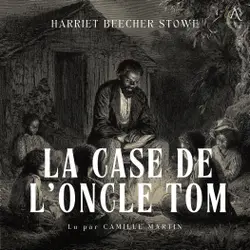
  1. La Case de l'oncle Tom - Livre Audio

    Harriet Beecher Stowe, Livres audio en français

  2. The Big Book of Christmas: 140+ authors and 400+ novels, novellas, stories, poems & carols

    Hans Christian Andersen, Charles Dickens, Louisa May Alcott, Lucy Maud Montgomery, Anne Brontë, Willa Cather, G.K. Chesterton, F. Marion Crawford, Fyodor Dostoyevsky, Arthur Conan Doyle, Mary E. Wilkins Freeman, The Brothers Grimm, Thomas Hardy, Nathaniel Hawthorne, O.Henry, E T A Hoffmann, Washington Irving, James Joyce, Rudyard Kipling, H.P. Lovecraft, John Milton, Beatrix Potter, Arthur Quiller-Couch, Walter Scott, Robert Louis Stevenson, Harriet Beecher Stowe, Leo Tolstoy, Anthony Trollope, Mark Twain, Oscar Wilde, Anton Chekhov, L. Frank Baum, William Blake, Samuel Taylor Coleridge, Emily Dickinson, Henry Wadsworth Longfellow, Clement C. Moore, William Shakespeare, Andrew Lang

  3. Uncle Tom's Cabin - Audiobook

    Harriet Beecher Stowe, Classic Audiobooks

  4. La case de l'oncle Tom : Harriet Beecher Stowe

    Harriet Beecher Stowe

  5. 100 Obras Maestras de la Literatura Universal : Edición enriquecida. Explorando la diversidad literaria a lo largo de los siglos

    Johann Wolfgang Goethe, Gustave Flaubert, Franz Kafka, Lewis Carroll, Sigmund Freud, Henrik Ibsen, Charles Dickens, Honoré de Balzac, Mark Twain, Immanuel Kant, Friedrich Schiller, Harriet Beecher Stowe, Oscar Wilde, Robert Louis Stevenson, Edgar Allan Poe, William Shakespeare, Dante Alighieri, Giovanni Boccaccio, Bram Stoker, Charlotte Brontë, Emily Brontë, Jack London, Henry James, Louisa May Alcott, Victor Hugo, Arthur Conan Doyle, Joseph Conrad, Jane Austen, José Rizal, Edgar Rice Burroughs, Herman Melville, Jonathan Swift, Gustavo Adolfo Bécquer, Vicente Blasco Ibáñez, Benito Pérez Galdós, Jean-Jacques Rousseau, Daniel Defoe, Pedro Calderón Barca, Virginia Woolf, Washington Irving, Juan Valera, Horacio Quiroga, Nathaniel Hawthorne, Charles Baudelaire, Wilkie Collins, William Makepeace Thackeray, Voltaire, Apuleius, Leopoldo Alas, John Milton, José Martí, Lope de Vega, Emilio Salgari, Francisco de Quevedo, Rubén Darío, Antonio Machado, José Zorrilla, Tirso de Molina, Emilia Pardo Bazán, Fernando de Rojas, L. Frank Baum, H.G. Wells, J.M. Barrie, H. Rider Haggard, H.P. Lovecraft, Seneca, Hans Christian Andersen, Friedrich Nietzsche, Mary Shelley, Baltasar Gracián, Sófocles, Sun Tzu, Fiódor Dostoyevski, Antón Chéjov, León Tolstoi, Tomás Moro, San Agustín, Nikolái Gógol, Julio Verne, Homero, Platón, Alejandro Dumas, Aristóteles, Hermanos Grimm, Jorge Isaacs, Ignacio De Loyola, Nicolás Maquiavelo, Miguel Cervantes, Teresa de Jesús, Alejandro Dumas hijo, Mijaíl Bakunin, Miguel De Unamuno, Duque de Rivas, Ramón María Valle-Inclán, Federico García Lorca, Gibrán Jalil Gibrán

  6. Uncle Tom's Cabin

    Harriet Beecher Stowe

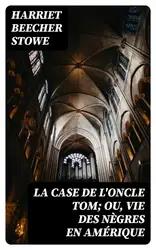
  7. La case de l'oncle Tom; ou, vie des nègres en Amérique : Édition enrichie.

    Harriet Beecher Stowe

  8. La case de l'oncle Tom

    Harriet Beecher Stowe, Ligaran

  9. Nouveau

    The Big Book of Christmas

    Louisa May Alcott, O.Henry, Mark Twain, Beatrix Potter, Charles Dickens, William Shakespeare, Harriet Beecher Stowe, Emily Dickinson, Robert Louis Stevenson, Rudyard Kipling

  10. Nouveau
    5.0

    Uncle Tom's Cabin

    Harriet Beecher Stowe

  11. Nouveau
    5.0

    Uncle Tom's Cabin

    Harriet Beecher Stowe

  12. 50 Clásicos que Debes Leer Antes de Morir : Un viaje literario por los tesoros de la literatura universal

    Dante Alighieri, Aristóteles, Jane Austen, Charles Baudelaire, Giovanni Boccaccio, Anne Brontë, C. Collodi, James Fenimore Cooper, Fedor Mikhaïlovitch Dostoïevski, Arthur Conan Doyle, Alexandre Dumas, José de Espronceda, Gustave Flaubert, Sigmund Freud, Benito Pérez Galdós, Kahlil Gibran, Johann Wolfgang Goethe, Johann Wolfgang von Goethe, Victor Hugo, Thomas Hardy, Nathaniel Hawthorne, Vicente Blasco Ibáñez, Washington Irving, James Joyce, Mariano José de Larra, Jack London, Federico García Lorca, H.P. Lovecraft, Antonio Machado, Gustav Meyrink, John Stuart Mill, Amado Nervo, Friedrich Nietzsche, Solomon Northup, Alexander Sergeyevich Pushkin, Francisco de Quevedo, Walter Scott, William Shakespeare, Robert Louis Stevenson, Harriet Beecher Stowe, Jonathan Swift, Mark Twain, Miguel De Unamuno, Ramón María del Valle-Inclán, Julio Verne, Virginia Woolf