3.5(2)

Under the Greenwood Tree

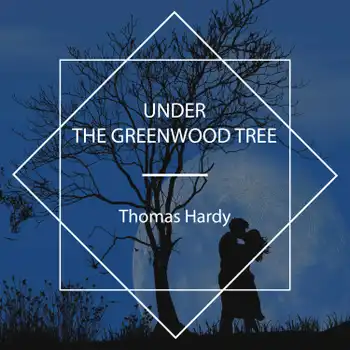
Under the Greenwood Tree, subtitled The Mellstock Quire, A Rural Painting of the Dutch School, is a novel by Thomas Hardy, published anonymously in 1872. It was Hardy's second published novel, the last to be printed without his name, and the first of his great series of Wessex novels. Whilst Hardy originally thought of simply calling it The Mellstock Quire, he settled on a title taken from a song in Shakespeare's As You Like It (Act II, Scene V).

The Quire is the group of musicians who accompany the hymns at the local church and we follow the fortunes of one member, Dick Dewy, who falls in love with the new schoolmistress, Fancy Day.

Another element of the book is the battle between the traditional musicians of the Quire and the local vicar, Parson Maybold, who installs a church organ. This battle illustrates the developing technology being introduced in the Victorian era and its threat to traditional country ways.

The novel is often seen as Thomas Hardy's most gentle and pastoral novel. Sometimes grouped with Hardy's lesser novels, Under the Greenwood Tree is also occasionally recognised by critics as an important precursor to his major works.

In his 1872 review of the novel for the Saturday Review, the critic Horace Moule, one of Hardy's mentors and friends, called it a "prose idyll"; that judgement has stuck. Hardy's amiable, mildly ironic portrait of rural town life in the middle of the nineteenth century is perhaps the strongest aspect of the work. The Wessex rustics who play critical but generally secondary roles in Hardy's later novels, like The Return of the Native and The Mayor of Casterbridge, claim the centre stage in Under the Greenwood Tree.

Total Running Time (TRT): 6h, 44 min.

Thomas Hardy (1840-1928) was an English novelist and poet. A Victorian realist, in the tradition of George Eliot, he was also influenced both in his novels and poetry by Romanticism, especially by William Wordsworth.

Charles Dickens is another important influence on Thomas Hardy. Like Dickens, he was also highly critical of much in Victorian society, though Hardy focused more on a declining rural society.

Initially he gained fame as the author of such novels as Far from the Madding Crowd (1874), The Mayor of Casterbridge (1886), Tess of the d'Urbervilles (1891), and Jude the Obscure (1895). However, since the 1950s Hardy has been recognized as a major poet, and had a significant influence on The Movement poets of the 1950s and 1960s, including Phillip Larkin.

The bulk of his fictional works, initially published as serials in magazines, were set in the semi-fictional region of Wessex and explored tragic characters struggling against their passions and social circumstances. Hardy's Wessex is based on the medieval Anglo-Saxon kingdom and eventually came to include the counties of Dorset, Wiltshire, Somerset, Devon, Hampshire, and much of Berkshire, in south west England.

À propos de ce livre

Under the Greenwood Tree, subtitled The Mellstock Quire, A Rural Painting of the Dutch School, is a novel by Thomas Hardy, published anonymously in 1872. It was Hardy's second published novel, the last to be printed without his name, and the first of his great series of Wessex novels. Whilst Hardy originally thought of simply calling it The Mellstock Quire, he settled on a title taken from a song in Shakespeare's As You Like It (Act II, Scene V).

The Quire is the group of musicians who accompany the hymns at the local church and we follow the fortunes of one member, Dick Dewy, who falls in love with the new schoolmistress, Fancy Day.

Another element of the book is the battle between the traditional musicians of the Quire and the local vicar, Parson Maybold, who installs a church organ. This battle illustrates the developing technology being introduced in the Victorian era and its threat to traditional country ways.

The novel is often seen as Thomas Hardy's most gentle and pastoral novel. Sometimes grouped with Hardy's lesser novels, Under the Greenwood Tree is also occasionally recognised by critics as an important precursor to his major works.

In his 1872 review of the novel for the Saturday Review, the critic Horace Moule, one of Hardy's mentors and friends, called it a "prose idyll"; that judgement has stuck. Hardy's amiable, mildly ironic portrait of rural town life in the middle of the nineteenth century is perhaps the strongest aspect of the work. The Wessex rustics who play critical but generally secondary roles in Hardy's later novels, like The Return of the Native and The Mayor of Casterbridge, claim the centre stage in Under the Greenwood Tree.

Total Running Time (TRT): 6h, 44 min.

Thomas Hardy (1840-1928) was an English novelist and poet. A Victorian realist, in the tradition of George Eliot, he was also influenced both in his novels and poetry by Romanticism, especially by William Wordsworth.

Charles Dickens is another important influence on Thomas Hardy. Like Dickens, he was also highly critical of much in Victorian society, though Hardy focused more on a declining rural society.

Initially he gained fame as the author of such novels as Far from the Madding Crowd (1874), The Mayor of Casterbridge (1886), Tess of the d'Urbervilles (1891), and Jude the Obscure (1895). However, since the 1950s Hardy has been recognized as a major poet, and had a significant influence on The Movement poets of the 1950s and 1960s, including Phillip Larkin.

The bulk of his fictional works, initially published as serials in magazines, were set in the semi-fictional region of Wessex and explored tragic characters struggling against their passions and social circumstances. Hardy's Wessex is based on the medieval Anglo-Saxon kingdom and eventually came to include the counties of Dorset, Wiltshire, Somerset, Devon, Hampshire, and much of Berkshire, in south west England.

Commencez ce livre dès aujourd'hui pour 0 €

  • Accédez à tous les livres de l'app pendant la période d'essai
  • Sans engagement, annulez à tout moment
Essayer gratuitement
Plus de 52 000 personnes ont noté Nextory 5 étoiles sur l'App Store et Google Play.

  1. The Woodlanders

    Thomas Hardy

  2. Nouveau
    3.0

    50 Masterpieces you have to read before you die vol: 2

    Lewis Carroll, Mark Twain, Jules Verne, Oscar Wilde, Arthur Conan Doyle, Louisa May Alcott, Jane Austen, G.K. Chesterton, Wilkie Collins, Charles Dickens, Fyodor Dostoyevsky, Alexandre Dumas, F. Scott Fitzgerald, E. M. Forster, Thomas Hardy, Hermann Hesse, James Joyce, Jack London, H.P. Lovecraft, Lucy Maud Montgomery, Edgar Allan Poe, Marcel Proust, William Shakespeare, Robert Louis Stevenson, H.G. Wells, Virginia Woolf, Rudyard Kipling, D. H. Lawrence, Thomas Mann, William Somerset Maugham, Herman Melville, George Sand, Mary Shelley, Walter Scott, Leo Tolstoy, Bram Stoker

  3. Beware The Silence : Ultimate Collection of Horror Classics, Macabre Tales & Supernatural Mysteries

    Wilhelm Hauff, Charles Dickens, Mark Twain, Harriet Beecher Stowe, Adelbert von Chamisso, Oscar Wilde, Robert Louis Stevenson, Edgar Allan Poe, William Hope Hodgson, Joseph Sheridan Le Fanu, John Buchan, Louis Tracy, Bram Stoker, Anatole France, Charlotte Brontë, Emily Brontë, Jack London, Henry James, Théophile Gautier, Arthur Conan Doyle, Richard Le Gallienne, Jane Austen, Ralph Adams Cram, Thomas De Quincey, John Meade Falkner, Guy De Maupassant, Thomas Hardy, William Archer, Daniel Defoe, John Kendrick Bangs, Cleveland Moffett, Brander Matthews, Marie Belloc Lowndes, Horace Walpole, Rudyard Kipling, Lafcadio Hearn, Hugh Walpole, Ambrose Bierce, Frederick Marryat, Ellis Parker Butler, Washington Irving, Leonid Andreyev, David Lindsay, Nathaniel Hawthorne, Grant Allen, Arthur Machen, Wilkie Collins, William Makepeace Thackeray, Thomas Peckett Prest, James Malcolm Rymer, Fergus Hume, Edward Bellamy, Walter Hubbell, Charlotte Perkins Gilman, Leopold Kompert, Richard Marsh, Florence Marryat, Catherine Crowe, John William Polidori, Vincent O'Sullivan, H.G. Wells, Robert W. Chambers, W. Jacobs, M.P. Shiel, E F Benson, Jerome K Jerome, M. R. James, E T A Hoffmann, Stanley G. Weinbaum, George W. M. Reynolds, H.P. Lovecraft, Robert E. Howard, Edith Nesbit, Sabine Baring-Gould, William Thomas Beckford, Francis Marion Crawford, Lucy Maud Montgomery, Mary Elizabeth Braddon, Mary Louisa Molesworth, Mary E. Wilkins Freeman, Nikolai Gogol, Mary Shelley, Elizabeth Gaskell, Edward Bulwer-Lytton, Frank R. Stockton, A. T. Quiller-Couch, Ann Radcliffe, Louisa M. Alcott, Amelia B. Edwards, Leonard Kip, Matthew Gregory Lewis, Fitz-James O’Brien, Katherine Rickford, Bithia Mary Croker, Catherine L. Pirkis, Émile Erckmann, Alexandre Chatrian, Pedro De Alarçon, H. Munro (Saki), Pliny the Younger, Helena Blavatsky, Villiers de l'Isle-Adam, William F. Harvey, Fiona Macleod, William T. Stead, Gambier Bolton, Andrew Jackson Davis, Nizida, Walter F. Prince, Chester Bailey Fernando

  4. The Greatest Historical Novels of All Time : 70 Novels in One Edition: Love Through the Ages – From Ancient Egypt to the Roaring 30s

    Charlotte Brontë, Anne Brontë, Emily Brontë, Henry James, Samuel Richardson, Jane Austen, Guy De Maupassant, Thomas Hardy, Bernardin de Saint-Pierre, Edith Wharton, Maria Edgeworth, Henry Fielding, Anthony Trollope, Alexandre Dumas, Mary Wollstonecraft, Louis Hémon, Nathaniel Hawthorne, William Makepeace Thackeray, Grace Livingston Hill, Gilbert Parker, Fanny Fern, Georg Ebers, Fanny Burney, Mary Hays, Robert Williams Buchanan, Mary Angela Dickens, Madame de La Fayette, F. Scott Fitzgerald, D. K. Broster, Sabine Baring-Gould, Eliza Haywood, Leo Tolstoy, Catharine Trotter Cockburn, Lady Sydney Morgan, Pierre Choderlos de Laclos, Olifant, María Ruiz de Burton, Lady Charlotte Bury, Philip Meadows Taylor

  5. Historical Romances – Boxed Set : 70 Novels in One Edition: Love Through the Ages – From Ancient Egypt to the Roaring 30s

    Charlotte Brontë, Anne Brontë, Emily Brontë, Henry James, Samuel Richardson, Jane Austen, Guy De Maupassant, Thomas Hardy, Bernardin de Saint-Pierre, Edith Wharton, Maria Edgeworth, Henry Fielding, Anthony Trollope, Alexandre Dumas, Mary Wollstonecraft, Louis Hémon, Nathaniel Hawthorne, William Makepeace Thackeray, Grace Livingston Hill, Gilbert Parker, Fanny Fern, Georg Ebers, Fanny Burney, Mary Hays, Robert Williams Buchanan, Mary Angela Dickens, A.E.W. Mason, Madame de La Fayette, F. Scott Fitzgerald, D. K. Broster, Sabine Baring-Gould, Eliza Haywood, Leo Tolstoy, Catharine Trotter Cockburn, Lady Sydney Morgan, Pierre Choderlos de Laclos, Olifant, María Ruiz de Burton, Lady Charlotte Bury, Philip Meadows Taylor

  6. Tess d'Uberville

    Thomas Hardy

  7. 50 Clásicos que debes leer antes de morir

    Dante Alighieri, Aristóteles, Jane Austen, Charles Baudelaire, Giovanni Boccaccio, Anne Brontë, C. Collodi, James Fenimore Cooper, Fedor Mikhaïlovitch Dostoïevski, Arthur Conan Doyle, Alexandre Dumas, José de Espronceda, Gustave Flaubert, Sigmund Freud, Benito Pérez Galdós, Kahlil Gibran, Johann Wolfgang Goethe, Johann Wolfgang von Goethe, Victor Hugo, Thomas Hardy, Nathaniel Hawthorne, Vicente Blasco Ibáñez, Washington Irving, James Joyce, Mariano José de Larra, Jack London, Federico García Lorca, H.P. Lovecraft, Antonio Machado, Gustav Meyrink, John Stuart Mill, Amado Nervo, Friedrich Nietzsche, Solomon Northup, Alexander Sergeyevich Pushkin, Francisco de Quevedo, Walter Scott, William Shakespeare, Robert Louis Stevenson, Harriet Beecher Stowe, Jonathan Swift, Mark Twain, Miguel De Unamuno, Ramón María del Valle-Inclán, Julio Verne, Virginia Woolf

  8. Jude l'obscur : un roman naturaliste anglais de l'écrivain Thomas Hardy

    Thomas Hardy

  9. L'Honorable Laura

    Thomas Hardy

  10. 3.0

    Une femme imaginative

    Thomas Hardy

  11. 4.0

    La Duchesse de Hamptonshire

    Thomas Hardy

  12. 5.0

    Tess d'Urberville : texte intégral

    Thomas Hardy