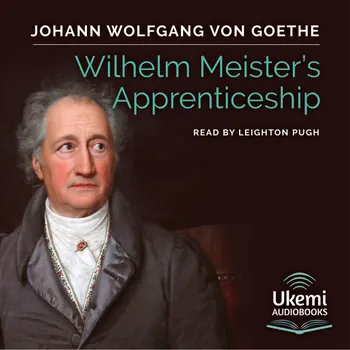
Wilhelm Meister's Apprenticeship

Wilhelm Meister’s Apprenticeship - Wilhelm Meisters Lehrjahre was the original German title - was Goethe’s second novel, published 1795-6, almost two decades after The Sorrows of Young Werther. It again focuses on a young man but this time on his growing understanding and maturity as he makes his way in the world. As such, it is regarded as the founding work in the ‘coming of age’ genre: the ‘bildungsroman’ ( a term actually coined some 30 years later), which characterised a philosophical novel tracing the cultural, emotional and educational development of an individual from youth to adulthood.

Disdaining to follow his father’s advice to pursue a bourgeois life in business and disappointed in love, Wilhelm Meister searches for a more fulfilling path - and is initially drawn to the arts.

He becomes involved in a theatre troupe, the works of Shakespeare and specifically Hamlet beckon. But his artistic life is interrupted when mundane brutality in the form of an attack by bandits intrudes. Wilhelm, despite being wounded, survives the encounter, which leads him to another level of understanding, and his personal journey to maturity continues.

The novel was hugely influential throughout the 19th century and beyond and remains a key work in classic European literature. Thomas Carlyle’s admired but slightly archaic translation has been lightly revised for this recording which features a sensitive reading by Leighton Pugh.
Commencez ce livre dès aujourd'hui pour 0 €

  • Accédez à tous les livres de l'app pendant la période d'essai
  • Sans engagement, annulez à tout moment
Essayer gratuitement
Plus de 52 000 personnes ont noté Nextory 5 étoiles sur l'App Store et Google Play.

  1. 4.0

    Faust

    Johann Wolfgang Goethe

  2. 4.0

    Faust

    Johann Wolfgang Goethe

  3. 50 Clásicos que debes leer antes de morir : Las Obras Inmortales de la Literatura Universal en un Solo Volumen

    Dante Alighieri, Aristóteles, Jane Austen, Charles Baudelaire, Giovanni Boccaccio, Anne Brontë, C. Collodi, James Fenimore Cooper, Fedor Mikhaïlovitch Dostoïevski, Arthur Conan Doyle, Alexandre Dumas, José de Espronceda, Gustave Flaubert, Sigmund Freud, Benito Pérez Galdós, Kahlil Gibran, Johann Wolfgang Goethe

  4. 50 Clásicos que debes leer antes de morir

    Dante Alighieri, Aristóteles, Jane Austen, Charles Baudelaire, Giovanni Boccaccio, Anne Brontë, C. Collodi, James Fenimore Cooper, Fedor Mikhaïlovitch Dostoïevski, Arthur Conan Doyle, Alexandre Dumas, José de Espronceda, Gustave Flaubert, Sigmund Freud, Benito Pérez Galdós, Kahlil Gibran, Johann Wolfgang Goethe, Johann Wolfgang von Goethe, Victor Hugo, Thomas Hardy, Nathaniel Hawthorne, Vicente Blasco Ibáñez, Washington Irving, James Joyce, Mariano José de Larra, Jack London, Federico García Lorca, H.P. Lovecraft, Antonio Machado, Gustav Meyrink, John Stuart Mill, Amado Nervo, Friedrich Nietzsche, Solomon Northup, Alexander Sergeyevich Pushkin, Francisco de Quevedo, Walter Scott, William Shakespeare, Robert Louis Stevenson, Harriet Beecher Stowe, Jonathan Swift, Mark Twain, Miguel De Unamuno, Ramón María del Valle-Inclán, Julio Verne, Virginia Woolf

  5. 2000 citations ultimes

    Marc Aurèle, Jane Austen, Bouddha, Cicéron, Emil Cioran, Confucius, Léonard de Vinci, Albert Einstein, Anne Frank, Mahatma Gandhi, Johann Wolfgang Goethe, Carl Jung, Emmanuel Kant, Friedrich Nietzsche, Marcel Proust, Arthur Schopenhauer, William Shakespeare, Baruch Spinoza, Anton Tchekhov, Lao Tseu

  6. Les Souffrances du jeune Werther

    Johann Wolfgang Goethe

  7. Las afinidades electivas

    Johann Wolfgang Goethe

  8. Faust : Traduzione ottocentesca

    Johann Wolfgang Goethe

  9. 50 Clásicos que debes leer antes de morir

    Dante Alighieri, Aristóteles, Jane Austen, Charles Baudelaire, Giovanni Boccaccio, Anne Brontë, C. Collodi, James Fenimore Cooper, Fedor Mikhaïlovitch Dostoïevski, Arthur Conan Doyle, Alexandre Dumas, José de Espronceda, Gustave Flaubert, Sigmund Freud, Benito Pérez Galdós, Kahlil Gibran, Johann Wolfgang Goethe, Johann Wolfgang von Goethe, Victor Hugo, Thomas Hardy, Nathaniel Hawthorne, Vicente Blasco Ibáñez, Washington Irving, James Joyce, Mariano José de Larra, Jack London, Federico García Lorca, H.P. Lovecraft, Antonio Machado, Gustav Meyrink, John Stuart Mill, Amado Nervo, Friedrich Nietzsche, Solomon Northup, Alexander Sergeyevich Pushkin, Francisco de Quevedo, Walter Scott, William Shakespeare, Robert Louis Stevenson, Harriet Beecher Stowe, Jonathan Swift, Mark Twain, Miguel De Unamuno, Ramón María del Valle-Inclán, Julio Verne, Virginia Woolf

  10. Johann Wolfgang von Goethe: Zum Schäkespears Tag : Eine Rede auf William Shakespeare

    Johann Wolfgang Goethe

  11. Johann Wolfgang von Goethe: Egmont : Ein Trauerspiel. Ungekürzt gelesen.

    Johann Wolfgang Goethe

  12. 4.0

    Johann Wolfgang von Goethe: Meisterwerke der Poesie. Die zehn besten Gedichte und Balladen : Bibliothek der Klassiker

    Johann Wolfgang Goethe