À propos de ce livre

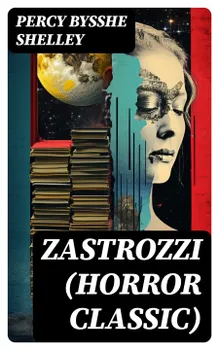
In "Zastrozzi," Percy Bysshe Shelley crafts a gripping narrative that intricately weaves themes of vengeance, obsession, and the darker aspects of human nature. Set against a backdrop of Gothic romance, the novella features the titular character, Zastrozzi, a nefarious villain whose desire for revenge drives the chilling plot. Shelley's prose is marked by its lyrical quality and philosophical depth, characteristic of the Romantic era. The work invites readers to explore the psychological dimensions of its characters, reflecting the tension between enlightenment rationality and Romantic sensibility. Shelley, renowned for his revolutionary ideas and lyrical prowess, wrote "Zastrozzi" during a tumultuous period marked by personal struggles and socio-political upheaval. Influenced by the radical social views of his time and his own experiences of loss and exile, Shelley delves into the complexities of the human psyche. The novella stands as an early manifestation of Gothic literature, signaling his interest in transcending the constraints of conventional narrative to probe deeper existential questions. For readers interested in the intersection of horror and philosophy, "Zastrozzi" is an essential addition to the canon of Gothic literature. Shelley's innovative exploration of moral ambiguity and the monstrous facets of desire makes this novella a thought-provoking read that lingers long after the final page, inviting reflection on the shadows that dwell within us all.

In this enriched edition, we have carefully created added value for your reading experience:

- A succinct Introduction situates the work's timeless appeal and themes.

- The Synopsis outlines the central plot, highlighting key developments without spoiling critical twists.

- A detailed Historical Context immerses you in the era's events and influences that shaped the writing.

- An Author Biography reveals milestones in the author's life, illuminating the personal insights behind the text.

- A thorough Analysis dissects symbols, motifs, and character arcs to unearth underlying meanings.

- Reflection questions prompt you to engage personally with the work's messages, connecting them to modern life.

- Hand‐picked Memorable Quotes shine a spotlight on moments of literary brilliance.

- Interactive footnotes clarify unusual references, historical allusions, and archaic phrases for an effortless, more informed read.
Commencez ce livre dès aujourd'hui pour 0 €

  • Accédez à tous les livres de l'app pendant la période d'essai
  • Sans engagement, annulez à tout moment
Essayer gratuitement
Plus de 52 000 personnes ont noté Nextory 5 étoiles sur l'App Store et Google Play.

  1. Into Eternal Darkness : Novels, Tales and Poems: The Mysteries of Udolpho, The Tell-Tale Heart, Sweeney Todd…

    Théophile Gautier, William Blake, Horace Walpole, Mary Shelley, Ann Radcliffe, Matthew Gregory Lewis, Jane Austen, Charlotte Brontë, Emily Brontë, William Thomas Beckford, Eliza Parsons, Eleanor Sleath, William Godwin, Charles Brockden Brown, Percy Bysshe Shelley, E. T. Hoffmann, Thomas love Peacock, Edgar Allan Poe, John William Polidori, Washington Irving, Charles Robert Maturin, James Hogg, Victor Hugo, Frederick Marryat, Nikolai Gogol, Edward Bulwer-Lytton, George W. Reynolds, James Malcolm Rymer, Thomas Peckett Prest, Nathaniel Hawthorne, George Eliot, Wilkie Collins, Mayne Reid, Robert Louis Stevenson, Charles Dickens, Joseph Sheridan Fanu, Émile Erckmann, Alexandre Chatrian, Walter Hubbell, Arthur Conan Doyle, Oscar Wilde, Guy De Maupassant, Charlotte Perkins Gilman, Arthur Machen, George MacDonald, John Meade Falkner, Marie Corelli, Richard Marsh, Henry James, Bram Stoker, Joseph Conrad, Guy Boothby, W. W. Jacobs, M. R. James, Robert Hugh Benson, E F Benson, Gaston Leroux, William Hope Hodgson, Grant Allen, Tobias Smollett, Clara Reeve, Friedrich Schiller, Samuel Taylor Coleridge, John Keats, Lord Byron, Robert Browning, Christina Rossetti

  2. Harvard Classics : The Five-Foot Shelf of Books

    Aesop, Dante Alighieri, Hans Christian Andersen, Augustine of Hippo, Marcus Aurelius, Jane Austen, Francis Bacon, Honoré de Balzac, Francis Beaumont, Bjørnstjerne Bjørnson, Thomas Browne, Robert Browning, John Bunyan, EDMUND BURKE, Robert Burns, Lord Byron, Thomas Carlyle, Benvenuto Cellini, Miguel de Cervantes, Marcus Tullius Cicero, Richard Henry Jr., Charles Darwin, Alphonse Daudet, Thomas Dekker, Charles Dickens, Fyodor Dostoevsky, John Dryden, Charles W. Eliot, George Eliot, Ralph Waldo Emerson, Epictetus, John Fletcher, Theodor Fontane, Benjamin Franklin, Johann Wolfgang Goethe, Oliver Goldsmith, Jacob Grimm, Edward Everett Hale, Bret Harte, Nathaniel Hawthorne, Homer, Victor Hugo, Washington Irving, Henry James, Ben Jonson, Gottfried Keller, Thomas à Kempis, Alexander L. Kielland, Martin Luther, Niccolò Machiavelli, Alessandro Manzoni, Christopher Marlowe, Philip Massinger, Guy De Maupassant, John Stuart Mill, John Milton, Thomas More, William Morris, Alfred de Musset, William Allan Neilson, William Penn, Plato, Pliny the Younger, Plutarch, George Sand, Percy Bysshe Shelley, Richard Brinsley Sheridan, Adam Smith, Laurence Sterne, Theodor Storm, William Makepeace Thackeray, Leo Tolstoy, Ivan Turgenev, Mark Twain, Juan Valera, Virgil, Izaak Walton, John Webster, John Woolman

  3. Prometeo liberado

    Percy Bysshe Shelley

  4. Percy Bysshe Shelley: Ode an den Westwind : Ausgewählte Gedichte

    Percy Bysshe Shelley

  5. History of a Six Weeks' Tour : Through a Part of France, Switzerland, Germany, and Holland: with Letters Descriptive of a Sail Round the Lake of Geneva, and of the Glaciers of Chamouni

    Mary Wollstonecraft Shelley, Percy Bysshe Shelley

  6. Beatrice Cenci

    Percy Bysshe Shelley

  7. 100 Meisterwerke der englischen Literatur - Klassiker, die man kennen muss (Kommentiert) : Erweiterte Ausgabe. Hamlet, 1984, Ulysses...

    George Orwell, Charles Dickens, Jane Austen, Katherine Mansfield, H.P. Lovecraft, William Wordsworth, John Keats, Percy Bysshe Shelley, Robert Burns, John Milton, William Shakespeare, Christopher Marlowe, Geoffrey Chaucer, Laurence Sterne, Henry Fielding, Mary Shelley, Emily Brontë, Charlotte Brontë, Anne Brontë, William Makepeace Thackeray, George Eliot, D. H. Lawrence, Herman Melville, Thomas Wolfe, Virginia Woolf, Joseph Conrad, Sinclair Lewis, Walt Whitman, Edgar Allan Poe, Oscar Wilde, Jerome K Jerome, Washington Irving, Bram Stoker, H.G. Wells, Daniel Defoe, Lew Wallace, James Fenimore Cooper, Jonathan Swift, Robert Louis Stevenson, Mark Twain, Lewis Carrol, Edward Bulwer-Lytton, F. Scott Fitzgerald, Arthur Conan Doyle, Jack London, Henry David Thoreau, G.K. Chesterton, Edith Wharton, Henry James, Thomas Hardy, Margaret Mitchell, Kate Chopin, Willa Cather, Charlotte Perkins Gilman, James Joyce, John Galsworthy, Francis Hodgson Burnett, Lucy Maud Montgomery, Louisa May Alcott, Rudyard Kipling

  8. St. Irvyne : Der Rosenkreuzer

    Percy Bysshe Shelley

  9. Zastrozzi : Gotik-Klassiker

    Percy Bysshe Shelley

  10. Die größten Klassiker der Regency-Ära : Europäische Romantik zwischen Gesellschaftsroman, Schauerromantik, Volksmärchen und politischer Lyrik

    Walter Scott, Mary Shelley, Jane Austen, Fanny Burney, Mary Wollstonecraft, Lord Byron, Percy Bysshe Shelley, Karoline von Günderrode, Jacob Grimm, Wilhelm Grimm, Washington Irving, Joseph von Eichendorff, E. T. Hoffmann, Friedrich Hölderlin, Heinrich Heine, Friedrich Schiller, Johann Wolfgang Goethe, Eliza Haywood, Maria Edgeworth, Johanna Schopenhauer, Marianne Ehrmann, Sophie Albrecht, Caroline von Wolzogen, Harriette Wilson, Benedikte Naubert, Sophie von Roche, Germaine de Staël, Christian August Vulpius, Johann David Wyse

  11. The Necessity of Atheism :

    Percy Bysshe Shelley

  12. Die größten Klassiker der Lyrik (Kommentiert) : Erweiterte Ausgabe. Die schönsten Gedichte der Weltliteratur: Bhagavadgita, Duineser Elegien, Grashalme, Venus und Adonis, Das verlorene Paradies, West-östlicher Divan

    Lord Byron, Rainer Maria Rilke, Giacomo Leopardi, Walt Whitman, Dschalal ad-Din Rumi, Heinrich Heine, William Shakespeare, John Milton, Friedrich Schiller, Percy Bysshe Shelley, Edgar Allan Poe, Johann Wolfgang Goethe, Gottfried von Straßburg, Victor Hugo, Dante Alighieri, William Wordsworth, Homer, Vergil, Ovid, Georg Herwegh, Giosuè Carducci, Omar Chayyām, Alphonse de Lamartine, Stéphane Mallarmé, Christian Morgenstern, Joachim Ringelnatz, Annette von Droste-Hülshoff, Alexander Sergejewitsch Puschkin, Robert Burns, Charles Baudelaire