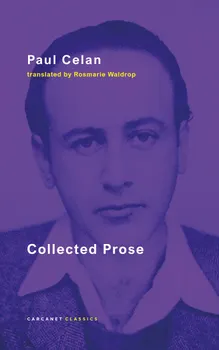
Collected Prose

Paul Celan (1920–70) stands as one of the greatest post-war European poets, a writer whose painful struggle with the possibilities and limitations of German, his native language, has helped to define the response of poetry in the aftermath of the Holocaust.

Celan's prose is as thought-provoking as, and less familiar than, his poetry. The writings and aphorisms on poetry and art illuminate the sources of his language: he explores the condition of being a stranger in the world, the necessity – and limitation – of discourse, enlarging our understanding of the poet and his vocation. A spare and reluctant prose writer, Celan speaks with a quiet authority that insists on the centrality of poetry in the modern world.

Rosmarie Waldrop's translation remains true to the poetic rhythms of Celan's prose; her introduction sets the pieces in context.

Over dit boek

Paul Celan (1920–70) stands as one of the greatest post-war European poets, a writer whose painful struggle with the possibilities and limitations of German, his native language, has helped to define the response of poetry in the aftermath of the Holocaust.

Celan's prose is as thought-provoking as, and less familiar than, his poetry. The writings and aphorisms on poetry and art illuminate the sources of his language: he explores the condition of being a stranger in the world, the necessity – and limitation – of discourse, enlarging our understanding of the poet and his vocation. A spare and reluctant prose writer, Celan speaks with a quiet authority that insists on the centrality of poetry in the modern world.

Rosmarie Waldrop's translation remains true to the poetic rhythms of Celan's prose; her introduction sets the pieces in context.
Begin vandaag nog met dit boek voor € 0

  • Krijg volledige toegang tot alle boeken in de app tijdens de proefperiode
  • Geen verplichtingen, op elk moment annuleren
Probeer nu gratis
Meer dan 52.000 mensen hebben Nextory 5 sterren gegeven in de App store en op Google Play.