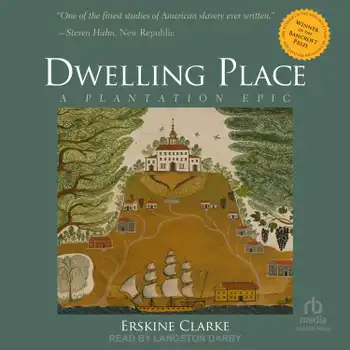
Dwelling Place : A Plantation Epic

Published some thirty years ago, Robert Manson Myers's Children of Pride won the National Book Award in history and went on to become a classic reference on America's slaveholding South. That book presented the letters of the prominent Presbyterian minister and plantation patriarch Charles Colcock Jones (1804–1863), whose family owned more than a hundred slaves. While extensive, these letters can provide only one part of the story of the Jones family plantations in Georgia. In this remarkable book, the religious historian Erskine Clarke completes the story, offering a narrative history of four generations of the plantations' inhabitants, white and black. Encompassing the years 1805 to 1869, Dwelling Place describes the simultaneous but vastly different experiences of slave and slave owner. This "upstairs-downstairs" history reveals in detail how the benevolent impulses of Jones and his family became ideological supports for deep oppression, and how the slave Lizzy Jones and members of her family struggled against oppression.

Through letters, plantation and church records, court documents, slave narratives, archaeological findings, and the memory of the African American community, Clarke brings to light the long-suppressed history of the slaves of the Jones plantations—a history inseparably bound to that of their white owners.


Over dit boek

Published some thirty years ago, Robert Manson Myers's Children of Pride won the National Book Award in history and went on to become a classic reference on America's slaveholding South. That book presented the letters of the prominent Presbyterian minister and plantation patriarch Charles Colcock Jones (1804–1863), whose family owned more than a hundred slaves. While extensive, these letters can provide only one part of the story of the Jones family plantations in Georgia. In this remarkable book, the religious historian Erskine Clarke completes the story, offering a narrative history of four generations of the plantations' inhabitants, white and black. Encompassing the years 1805 to 1869, Dwelling Place describes the simultaneous but vastly different experiences of slave and slave owner. This "upstairs-downstairs" history reveals in detail how the benevolent impulses of Jones and his family became ideological supports for deep oppression, and how the slave Lizzy Jones and members of her family struggled against oppression.

Through letters, plantation and church records, court documents, slave narratives, archaeological findings, and the memory of the African American community, Clarke brings to light the long-suppressed history of the slaves of the Jones plantations—a history inseparably bound to that of their white owners.

Begin vandaag nog met dit boek voor € 0

  • Krijg volledige toegang tot alle boeken in de app tijdens de proefperiode
  • Geen verplichtingen, op elk moment annuleren
Probeer nu gratis
Meer dan 52.000 mensen hebben Nextory 5 sterren gegeven in de App store en op Google Play.