Euthyphro

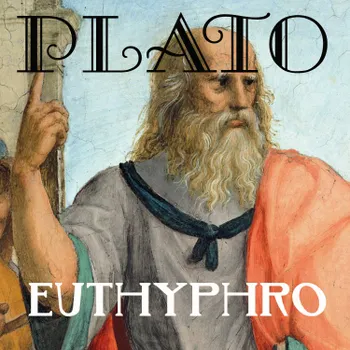
Euthyphro by Plato is a Socratic dialogue whose events occur in the weeks before the trial of Socrates (399 BC), between Socrates and Euthyphro.The dialogue covers subjects such as the meaning of piety and justice. As is common with Plato's earliest dialogues, it ends in aporia.

In this dialogue, Socrates meets Euthyphro at the porch of the archon basileus (the 'king magistrate') at that time. Socrates tells him that he is preparing to go to court against the charges of Meletus on the grounds of impiety. Euthyphro tells Socrates that he is going to court himself to prosecute his father for binding a worker in chains and leaving him to die. This has granted him the ire of his own family who believe his father was in the right. The worker had killed a fellow worker, which they believe exempts his father from liability for leaving him bound in the ditch to starve to death. Since Euthyphro seems assured of himself, Socrates asks him to define piety. His help will clarify Socrates' case in the courtroom. If Socrates is asked to define piety, he can simply rely on Euthyphro's definition. This however leads to the main dilemma of the dialogue when the two cannot come to a satisfactory conclusion. Is something pious because the gods approve of it or do the gods approve of it because it is pious? This aporic ending has led to one of the longest theological and meta-ethical debates in history.

Over dit boek

Euthyphro by Plato is a Socratic dialogue whose events occur in the weeks before the trial of Socrates (399 BC), between Socrates and Euthyphro.The dialogue covers subjects such as the meaning of piety and justice. As is common with Plato's earliest dialogues, it ends in aporia.

In this dialogue, Socrates meets Euthyphro at the porch of the archon basileus (the 'king magistrate') at that time. Socrates tells him that he is preparing to go to court against the charges of Meletus on the grounds of impiety. Euthyphro tells Socrates that he is going to court himself to prosecute his father for binding a worker in chains and leaving him to die. This has granted him the ire of his own family who believe his father was in the right. The worker had killed a fellow worker, which they believe exempts his father from liability for leaving him bound in the ditch to starve to death. Since Euthyphro seems assured of himself, Socrates asks him to define piety. His help will clarify Socrates' case in the courtroom. If Socrates is asked to define piety, he can simply rely on Euthyphro's definition. This however leads to the main dilemma of the dialogue when the two cannot come to a satisfactory conclusion. Is something pious because the gods approve of it or do the gods approve of it because it is pious? This aporic ending has led to one of the longest theological and meta-ethical debates in history.

Begin vandaag nog met dit boek voor € 0

  • Krijg volledige toegang tot alle boeken in de app tijdens de proefperiode
  • Geen verplichtingen, op elk moment annuleren
Probeer nu gratis
Meer dan 52.000 mensen hebben Nextory 5 sterren gegeven in de App store en op Google Play.

  1. 10 Masterpieces You Have to Read Before You Die, Vol.5 : The Odyssey, The Republic, Meditations, The Divine Comedy, Faust and others

    Homer, Plato, Aristotle, Marcus Aurelius, Niccolo Machiavelli, Dante Alighieri, Johann Wolfgang von Goethe, Leo Tolstoy

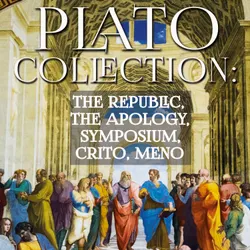
  2. Plato Collection : The Republic, The Apology, Symposium, Crito, Meno

    Plato

  3. Yale Required Reading - Collected Works (Vol. 1) : Enriched edition. Exploring the Depths of Ancient Greek Thought

    Aristotle, Plato, Euripides, Gilbert Murray, Epictetus, Pindar, Theocritus, Homer, Plutarch, Aeschylus, Sophocles, - Aristophanes, Herodotus, Anacreon, Sappho -, Thucydides, Hesiod, Demosthenes, Lysias, Alcaeus, Archilochus, Theognis of Megara, Simonides of Ceos, Bacchylides, Apollonius, Callimachus

  4. Yale Classics (Vol. 1) : Enriched edition. Exploring the Essence of Ancient Wisdom and Literary Brilliance in Western Thought

    Aristotle, Plato, Euripides, Gilbert Murray, Epictetus, Pindar, Theocritus, Homer, Plutarch, Aeschylus, Sophocles, - Aristophanes, Herodotus, Anacreon, Sappho -, Thucydides, Hesiod, Demosthenes, Lysias, Alcaeus, Archilochus, Theognis of Megara, Simonides of Ceos, Bacchylides, Apollonius, Callimachus

  5. De republiek van Plato : Verrijkte editie. Een verkenning van idealisme, ethiek en rechtvaardigheid in oude Griekse filosofie

    Plato

  6. 4.0

    3500 Final Quotes

    Marcus Aurelius, Jane Austen, Beaumarchais, Napoleon Bonaparte, Buddha, Winston Churchill, Cicero, Confucius, Nicolas de Chamfort, Charles de Gaulle, Antoine de Saint-Exupéry, Denis Diderot, Fyodor Dostoevsky, Albert Einstein, Ralph Waldo Emerson, Anne Frank, Mahatma Gandhi, Immanuel Kant, Søren Kierkegaard, Martin Luther King, Georg Christoph Lichtenberg, Abraham Lincoln, Montesquieu, Friedrich Nietzsche, Plato, Marcel Proust, Arthur Schopenhauer, William Shakespeare, Socrates, Baruch Spinoza, Henry David Thoreau, Leonardo da Vinci, Voltaire, Oscar Wilde, Laozi

  7. 33 Masterpieces of Philosophy and Science to Read Before You Die (Illustrated) : Utopia, The Meditations, The Art of War, The Kama Sutra, Candide

    Thomas More, Marcus Aurelius Antoninus, Sun Tzu, Vatsyayana, Voltaire, Edwin A. Abbott, Aristotle, Dale Carnegie, Gilbert Keith Chesterton, René Descartes, Epictetus, Sigmund Freud, Hermann Hesse, David Hume, Lao Tzu, David Herbert Lawrence, Niccolò Machiavelli, John Mill, Prentice Mulford, Friedrich Nietzsche, Plato, Bertrand Russell, H.G. Wells, Frances Bacon

  8. 4.4

    Plato’s Apology

    Plato

  9. 5.0
    #9

    7 short stories that INFJ will love

    Marcus Aurelius, Virginia Woolf, H.P. Lovecraft, Kate Chopin, Nathaniel Hawthorne, Plato, Ralph Waldo Emerson, August Nemo

  10. The Republic

    Plato

  11. 3.0

    Classic Philosophical Works (Thus Spoke Zarathustra, The Apology of Socrates, Tao Te Ching...)

    Plato, Friedrich Nietzsche, Herman Hesse, Leo Tolstoy, Immanuel Kant, Sun Tzu

  12. 4.5

    The Apology of Socrates

    Plato