Over dit boek

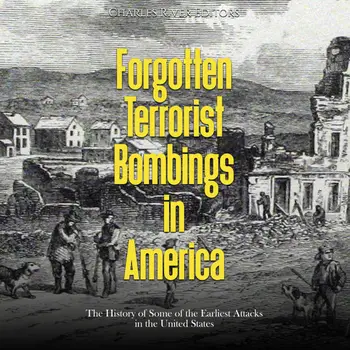
Bombs have been around for centuries. The military units called “Grenadiers” in European armies used throwable black powder bombs, early versions of what today are called grenades. They were heavy, so Grenadiers were tall, strong soldiers able to throw grenades for a distance. Terrorism has been around for many centuries, most infamously the period called The Terror (1793-94) in the French Revolution. However, the combination of bombs and terrorism is considerably more recent, dating to the 1870s and 1880s.

Black powder had been used occasionally for terrorism before the 1800s, with the most famous incident being the Guy Fawkes gunpowder plot to blow up the English Parliament in 1605. Fawkes used barrels of gunpowder rather than a bomb in the modern sense. Terrorism was nothing new in the United States, where, for example, tarring and feathering of Loyalists during the American Revolution was a terror technique designed to quell Tory sentiments. However, terrorists using bombs to accomplish political ends in the United States goes back only about 150 years. That’s partly a result of the rise of political movements seeing violence as legitimate, and partly the result of the development of dynamite.

Alfred Nobel invented dynamite in 1867, making usable a substance that had been invented years before, called nitroglycerine. The substance was known to be a powerful explosive, but it was too unstable and too dangerous to be of much use, until Nobel devised a way to make it stable and usable. Nobel also invented the blasting cap, which would ignite the dynamite, using a fuse that could be lit, and later, allow it to be ignited by an electric charge provided by a battery. Nobel would late in his life feel remorse for the harm his invention had caused, and established the Nobel Prizes as a kind of atonement.


Begin vandaag nog met dit boek voor € 0

  • Krijg volledige toegang tot alle boeken in de app tijdens de proefperiode
  • Geen verplichtingen, op elk moment annuleren
Probeer nu gratis
Meer dan 52.000 mensen hebben Nextory 5 sterren gegeven in de App store en op Google Play.

  1. King Philip's War : The History and Legacy of the 17th Century Conflict Between Puritan New England and the Native Americans

    Charles River Editors, Jay Moore

  2. 5.0

    Legends of the West : Forgotten Sidekicks of the Wild West

    Charles River Editors, Sean McLachlan

  3. 2.0

    Across the Silk Road and the Atlantic: The History of Marco Polo and Christopher Columbus’ Groundbreaking Voyages

    Charles River Editors

  4. Antoni Gaudi and Frank Lloyd Wright: The Lives and Works of the Most Influential Modern Architects

    Charles River Editors

  5. 3.0

    Flat Earth and Hollow Earth Theories: A History of Strange Tales and Bizarre Beliefs about the Planet

    Charles River Editors

  6. Niels Bohr and J. Robert Oppenheimer: The Lives and Careers of the Physicists Who Pioneered Atomic Energy

    Charles River Editors

  7. Nostradamus and Baba Vanga: The Controversial Lives and Prophecies of the Modern Era’s Most Famous Seers

    Charles River Editors

  8. The Kyshtym Disaster: The Controversial History of the Nuclear Meltdown Hidden by the Soviet Union

    Charles River Editors

  9. Queen Elizabeth I and Mary, Queen of Scots: The Controversial History of Cousins Turned Rivals

    Charles River Editors

  10. South Africa and the British Empire: The History and Legacy of the Region Under Great Britain’s Control

    Charles River Editors

  11. The Greatest Generals of the Roman Republic: The History of the Military Leaders Who Led the Rise of Rome

    Charles River Editors

  12. 5.0

    Bugs Moran: The Notorious Life and Legacy of the Chicago Gangster Who Became Al Capone’s Biggest Rival

    Charles River Editors