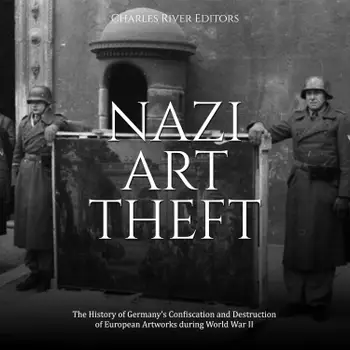
Nazi Art Theft: The History of Germany’s Confiscation and Destruction of European Artworks during World War II

Looting and the acquisition of plunder have long been crucial features of war. Removing an enemy’s portable wealth is a way of ensuring they lack the resources to create a new army while making it possible for members of the victorious army to be suitably rewarded. In the past, that plunder tended to be in the form of coinage, precious stones, gold, and silver. The removal of artwork for its own sake (rather than for the intrinsic value of the materials from which they were made) was relatively rare.

In the long history of Europe, no country established such complete domination of the continent as the Nazis had by the summer of 1941. Before the war, Germany used the threat of the army rather than direct conflict to achieve territorial gains in Austria and Czechoslovakia. In September 1939, Germany invaded Poland, triggering the war, and by June 1940, German forces had occupied Poland, Norway, Denmark, Belgium, Luxembourg, Holland, and large parts of France. By the spring of 1941, Greece, Serbia, and Yugoslavia were also occupied by Nazi forces. Italy, Hungary, Romania, Spain, Bulgaria, Slovakia, Finland, and Croatia were all either in alliance with Germany or subject to German control. Furthermore, by the winter of 1941, German forces were close to Leningrad and Moscow.

Given their unlimited and virtually uncontrolled access to most of Europe, it is perhaps unsurprising that this would also lead to consideration of the acquisition of art. If Berlin was to become the new world capital, then surely it was reasonable to assume Berlin should display the world’s most important works of art. With nothing to stop them, the Nazis became the most rapacious looters of art the world had ever seen, to the extent that it has been estimated that the Nazis may have acquired up to 20% of all art in Western Europe. Some works were returned after the war, many disappeared, and still others have become the subject of intense speculation.
Begin vandaag nog met dit boek voor € 0

  • Krijg volledige toegang tot alle boeken in de app tijdens de proefperiode
  • Geen verplichtingen, op elk moment annuleren
Probeer nu gratis
Meer dan 52.000 mensen hebben Nextory 5 sterren gegeven in de App store en op Google Play.

  1. Nieuw
    3.6

    The Battle of the Somme: The History and Legacy of World War I’s Biggest Battle

    Charles River Editors

  2. Nieuw
    3.7

    The Battle of Chaldiran: The History and Legacy of the Ottoman Empire’s Decisive Victory Over the Safavid Dynasty in Anatolia

    Charles River Editors

  3. Nieuw

    Weird Television: A Collection of Interrupted Broadcasts, Paranormal Apparitions, and Other Mysteries on TV

    Charles River Editors

  4. Nieuw
    5.0

    The Germanic Tribes in Antiquity: The History and Legacy of the Ancient Peoples Who Spread across Europe

    Charles River Editors

  5. Nieuw

    NASA Programs in the 1970s: The History and Legacy of the Space Agency’s Missions to Mars and Beyond

    Charles River Editors

  6. Nieuw

    Nostradamus and Baba Vanga: The Controversial Lives and Prophecies of the Modern Era’s Most Famous Seers

    Charles River Editors

  7. Nieuw
    2.0

    Boudica: The Life and Legacy of the Celtic Queen Who Rebelled against the Romans in Britain

    Charles River Editors

  8. Nieuw

    Vampires and Werewolves: The Legends and Folk Tales about History’s Most Notorious Mythical Beings

    Charles River Editors

  9. Nieuw

    The Bronze Age: The Rise and Fall of the World’s First Advanced Civilizations

    Charles River Editors

  10. Nieuw

    Eleanor of Aquitaine and Richard the Lionheart: The History of the Mother and Son Who Shaped Medieval Europe

    Charles River Editors

  11. Nieuw

    Demonic Possession and Exorcism: The History of the Belief that the Devil Possesses People

    Charles River Editors

  12. Nieuw

    The Megalodon: The History and Legacy of the World’s Largest Prehistoric Predator

    Charles River Editors