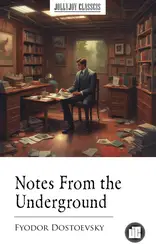
A retired civil servant lives in a corner of Petersburg and addresses the reader with forty pages of argument nobody asked for: that reason will not make men good, that a man may choose his own harm simply to prove he is free. Then he tells the story that proves it. Dostoevsky wrote it after prison and exile, and everything he built afterwards stands on this small furious book. Sixty plates of boulevard idlers, reading rooms and dim interiors by Vladimir Makovsky and Aleksander Gierymski set the Petersburg of the confession beside the wider nineteenth century.