Over dit boek

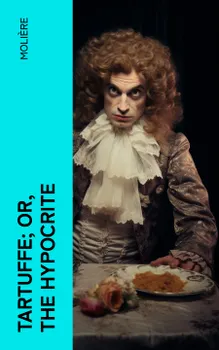
Molière's *Tartuffe; Or, The Hypocrite* is a five-act comedy in rhymed alexandrines that exposes the social and moral dangers of counterfeit piety. The plot centers on Orgon, a credulous bourgeois who welcomes the ostensibly devout Tartuffe into his household, overlooking the impostor's avarice, sensuality, and manipulative control. Through sharp reversals, verbal wit, comic misunderstandings, and the practical intelligence of characters such as Elmire and Dorine, Molière contrasts genuine virtue with theatrical sanctimony. The play belongs to the classical tradition of French comedy while extending it into pointed social criticism, probing the tensions among religious authority, domestic power, inheritance, and reason. Its satire is not an attack on faith itself, but on hypocrisy that exploits faith for private advantage. Jean-Baptiste Poquelin, known as Molière, was France's leading comic dramatist and actor, whose theatrical experience gave his dialogue exceptional rhythm, precision, and stage vitality. Writing under the patronage of Louis XIV, he repeatedly challenged fashionable pretensions and abuses of power. The controversy surrounding *Tartuffe*—first performed at Versailles in 1664 and subsequently suppressed before its revised public premiere in 1669—reflects the play's unsettling scrutiny of religious influence and social self-deception. This enduring comedy is recommended to readers interested in satire, classical theatre, and the psychology of credulity. Its elegant verse, memorable characters, and continuing relevance make it both an incisive historical document and a remarkably entertaining study of how manipulation flourishes when appearances are mistaken for truth.
Begin vandaag nog met dit boek voor € 0

  • Krijg volledige toegang tot alle boeken in de app tijdens de proefperiode
  • Geen verplichtingen, op elk moment annuleren
Probeer nu gratis
Meer dan 52.000 mensen hebben Nextory 5 sterren gegeven in de App store en op Google Play.

Meer van Molière

  1. 4.0

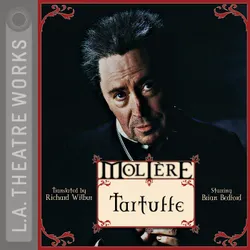
    Tartuffe

    Molière

  2. Nieuw

    L'Avare

    Molière

  3. 100 Clásicos de la Literatura Universal

    Francis Scott Fitzgerald, Mary Shelley, Lyman Frank Baum, Louisa May Alcott, Dante Alighieri, Jane Austen, Ambrose Bierce, Emily Brontë, Edgar Rice Burroughs, Lewis Carroll, Wilkie Collins, René Descartes, Charles Dickens, Emily Dickinson, Alexandre Dumas, Gustave Flaubert, Benito Pérez Galdós, Johann Wolfgang von Goethe, Thomas Hardy, E T A Hoffmann, Washington Irving, Henry James, James Joyce, Franz Kafka, Gaston Leroux, Federico García Lorca, H.P. Lovecraft, Publio Virgilio Marón, Lucy Maud Montgomery, John William Polidori, Marco Polo, Antoine de Saint-Exupéry, Emilio Salgari, Walter Scott, Mark Twain, Jules Verne, Julio Verne, H.G. Wells, Edith Wharton, Mary Wollstonecraft, Stefan Zweig, Sun Tzu, Bram Stoker, - Aristoteles, George Bernard Shaw, Henryk Sienkiewicz, Concepción Arenal, Charlotte Brontë, Miguel de Cervantes, G.K. Chesterton, Daniel Defoe, Fyodor Mikhailovich Dostoyevsky, Arthur Conan Doyle, Sigmund Freud, H. Rider Haggard, Homero, Immanuel Kant, Rudyard Kipling, Molière, Friedrich Nietzsche, Fernando de Rojas, Sófocles, William Makepeace Thackeray, León Tolstói, Voltaire, Ramón María del Valle-Inclán, Oscar Wilde, Virginia Woolf

  4. Querella del Teatro

    Pierre Nicole, Antoine Godeau, Antoine Singlin, de Sablé, Blaise Pascal, Jean Racine, Goibaud du Bois, Barbier d'Aucour, Pierre Corneille, Molière

  5. La escuela de los maridos; La escuela de las mujeres

    Molière

  6. Don Juan o el Festín de piedra; Anfitrión

    Molière

  7. El enfermo imaginario : y estudio crítico-literario de Moliere

    Molière

  8. Las preciosas ridículas : y Exhumando a Moliere

    Molière

  9. Don Juan o el convidado de piedra : y estudio crítico literario

    Molière

  10. La escuela de las mujeres : y estudio crítico literario

    Molière

  11. El médico a la fuerza : y estudio crítico literario

    Molière

  12. Tartufo o el impostor : y estudio crítico literario del autor

    Molière