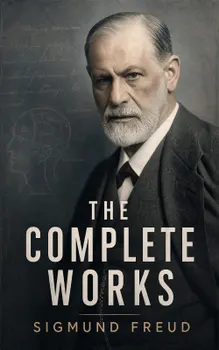
The Complete Works : Studies, Theories & Essays

Sigmund Freud (was an Austrian neurologist and the founder of psychoanalysis, one of the most influential intellectual movements of the modern era. Born in Freiberg, Moravia, then part of the Austrian Empire, Freud studied medicine at the University of Vienna and devoted much of his career to understanding the workings of the human mind. Through his pioneering theories on the unconscious, dreams, repression, childhood development, and the structure of personality, he transformed the study of psychology and human behavior. His writings influenced not only psychiatry and psychotherapy but also literature, philosophy, anthropology, education, and cultural studies. Although many of his ideas remain debated, Freud's work continues to shape discussions about the nature of consciousness, identity, motivation, and emotional life.

Freud's books remain relevant because they address universal questions about the hidden forces that influence human thoughts, emotions, and behavior. Their enduring popularity stems from their profound exploration of the human psyche and their lasting impact on psychology, culture, and intellectual history.

This comprehensive edition presents the complete works of Sigmund Freud, bringing together the writings that established psychoanalysis and revolutionized modern understandings of the mind. Among the many influential texts included in this collection are ten of Freud's most celebrated and historically significant works.

The collection includes:

The Interpretation of Dreams, which is widely regarded as Freud's masterpiece and the foundational text of psychoanalysis. In this groundbreaking work, Freud argues that dreams represent disguised expressions of unconscious wishes and conflicts. By introducing methods of dream analysis, he opened an entirely new approach to understanding the human mind.

Psychopathology of Everyday Life examines seemingly trivial mistakes such as slips of the tongue, memory lapses, and accidental actions. Freud contends that these everyday occurrences reveal unconscious thoughts and motivations, demonstrating that hidden psychological processes influence even ordinary behavior.

Three Contributions to the Theory of Sex, often known as Three Essays on the Theory of Sexuality, challenged conventional attitudes toward human development. Freud explored infantile sexuality, psychological growth, and the formation of adult personality, creating one of the most controversial yet influential works in psychological literature.

Totem and Taboo extends psychoanalytic ideas into the fields of anthropology and cultural history. By comparing the mental life of individuals with that of early societies, Freud sought to explain the origins of religion, morality, and social organization.

Introduction to Psychoanalysis serves as one of Freud's most accessible works. Based on a series of lectures, it provides a systematic overview of dreams, neuroses, repression, and the unconscious, making complex psychoanalytic concepts understandable to a broad audience.

Beyond the Pleasure Principle marked a major turning point in Freud's thought. Here he proposed that human behavior cannot be explained solely by the pursuit of pleasure and introduced the concept of the death drive, one of his most debated theoretical innovations.

Group Psychology and the Analysis of the Ego investigates how individuals behave within crowds, communities, and social groups. Freud explored the psychological mechanisms underlying leadership, collective identity, and social influence, offering insights that remain relevant in modern social psychology.

The Ego and the Id introduced Freud's influential structural model of the mind. By distinguishing between the id, ego, and superego, he provided a framework for understanding internal psychological conflicts and personality development.
Over dit boek

Sigmund Freud (was an Austrian neurologist and the founder of psychoanalysis, one of the most influential intellectual movements of the modern era. Born in Freiberg, Moravia, then part of the Austrian Empire, Freud studied medicine at the University of Vienna and devoted much of his career to understanding the workings of the human mind. Through his pioneering theories on the unconscious, dreams, repression, childhood development, and the structure of personality, he transformed the study of psychology and human behavior. His writings influenced not only psychiatry and psychotherapy but also literature, philosophy, anthropology, education, and cultural studies. Although many of his ideas remain debated, Freud's work continues to shape discussions about the nature of consciousness, identity, motivation, and emotional life.

Freud's books remain relevant because they address universal questions about the hidden forces that influence human thoughts, emotions, and behavior. Their enduring popularity stems from their profound exploration of the human psyche and their lasting impact on psychology, culture, and intellectual history.

This comprehensive edition presents the complete works of Sigmund Freud, bringing together the writings that established psychoanalysis and revolutionized modern understandings of the mind. Among the many influential texts included in this collection are ten of Freud's most celebrated and historically significant works.

The collection includes:

The Interpretation of Dreams, which is widely regarded as Freud's masterpiece and the foundational text of psychoanalysis. In this groundbreaking work, Freud argues that dreams represent disguised expressions of unconscious wishes and conflicts. By introducing methods of dream analysis, he opened an entirely new approach to understanding the human mind.

Psychopathology of Everyday Life examines seemingly trivial mistakes such as slips of the tongue, memory lapses, and accidental actions. Freud contends that these everyday occurrences reveal unconscious thoughts and motivations, demonstrating that hidden psychological processes influence even ordinary behavior.

Three Contributions to the Theory of Sex, often known as Three Essays on the Theory of Sexuality, challenged conventional attitudes toward human development. Freud explored infantile sexuality, psychological growth, and the formation of adult personality, creating one of the most controversial yet influential works in psychological literature.

Totem and Taboo extends psychoanalytic ideas into the fields of anthropology and cultural history. By comparing the mental life of individuals with that of early societies, Freud sought to explain the origins of religion, morality, and social organization.

Introduction to Psychoanalysis serves as one of Freud's most accessible works. Based on a series of lectures, it provides a systematic overview of dreams, neuroses, repression, and the unconscious, making complex psychoanalytic concepts understandable to a broad audience.

Beyond the Pleasure Principle marked a major turning point in Freud's thought. Here he proposed that human behavior cannot be explained solely by the pursuit of pleasure and introduced the concept of the death drive, one of his most debated theoretical innovations.

Group Psychology and the Analysis of the Ego investigates how individuals behave within crowds, communities, and social groups. Freud explored the psychological mechanisms underlying leadership, collective identity, and social influence, offering insights that remain relevant in modern social psychology.

The Ego and the Id introduced Freud's influential structural model of the mind. By distinguishing between the id, ego, and superego, he provided a framework for understanding internal psychological conflicts and personality development.

Begin vandaag nog met dit boek voor € 0

  • Krijg volledige toegang tot alle boeken in de app tijdens de proefperiode
  • Geen verplichtingen, op elk moment annuleren
Probeer nu gratis
Meer dan 52.000 mensen hebben Nextory 5 sterren gegeven in de App store en op Google Play.

  1. The Ego and the ID : (An Introduction & Sigmund Freud Biography Added)

    Sigmund Freud

  2. De invloed van ons onbewuste in ons dagelijksch leven

    Sigmund Freud

  3. 500 Quotations from the Great Philosophers of the 20th Century

    Gaston Bachelard, Ambrose Bierce, Emil Cioran, Sigmund Freud, Carl Jung

  4. 4.4

    200 Quotes on Psychoanalysis

    Sigmund Freud, Carl Jung

  5. 33 Masterpieces of Philosophy and Science to Read Before You Die (Illustrated) : Utopia, The Meditations, The Art of War, The Kama Sutra, Candide

    Thomas More, Marcus Aurelius Antoninus, Sun Tzu, Vatsyayana, Voltaire, Edwin A. Abbott, Aristotle, Dale Carnegie, Gilbert Keith Chesterton, René Descartes, Epictetus, Sigmund Freud, Hermann Hesse, David Hume, Lao Tzu, David Herbert Lawrence, Niccolò Machiavelli, John Mill, Prentice Mulford, Friedrich Nietzsche, Plato, Bertrand Russell, H.G. Wells, Frances Bacon

  6. Introduction to Psychoanalysis

    Sigmund Freud

  7. Sigmund Freuds Classics

    Sigmund Freud

  8. Three Contributions to The Theory of Sex

    Sigmund Freud

  9. 3.0

    A General Introduction to Psychoanalysis : Illustrated

    Sigmund Freud

  10. Nieuw

    Hysteri: Psykologiska mekanismer bakom bortträngda minnen

    Sigmund Freud

  11. Nieuw

    50 Clásicos que Debes Leer Antes de Morir : Un viaje literario por los tesoros de la literatura universal

    Dante Alighieri, Aristóteles, Jane Austen, Charles Baudelaire, Giovanni Boccaccio, Anne Brontë, C. Collodi, James Fenimore Cooper, Fedor Mikhaïlovitch Dostoïevski, Arthur Conan Doyle, Alexandre Dumas, José de Espronceda, Gustave Flaubert, Sigmund Freud, Benito Pérez Galdós, Kahlil Gibran, Johann Wolfgang Goethe, Johann Wolfgang von Goethe, Victor Hugo, Thomas Hardy, Nathaniel Hawthorne, Vicente Blasco Ibáñez, Washington Irving, James Joyce, Mariano José de Larra, Jack London, Federico García Lorca, H.P. Lovecraft, Antonio Machado, Gustav Meyrink, John Stuart Mill, Amado Nervo, Friedrich Nietzsche, Solomon Northup, Alexander Sergeyevich Pushkin, Francisco de Quevedo, Walter Scott, William Shakespeare, Robert Louis Stevenson, Harriet Beecher Stowe, Jonathan Swift, Mark Twain, Miguel De Unamuno, Ramón María del Valle-Inclán, Julio Verne, Virginia Woolf