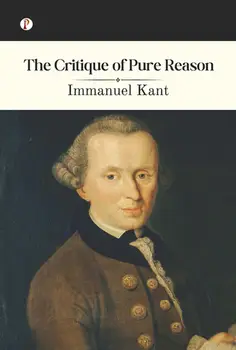
Immanuel Kant, a German philosopher, attempts to define the boundaries and scope of metaphysics in his book The Critique of Pure Reason. It aims to establish the groundwork for another type of metaphysics while demonstrating the impossibility of one. Kant challenged the metaphysics of German philosopher Gottfried Wilhelm Leibniz for supposing that the human intellect can reach facts about things like God, freedom, and immortality—things that, by their very nature, can never be the objects of experience. But according to Kant, the mind lacks such power, making rationalist metaphysics a fraud. Knowledge, according to Kant, must be based on "priori" judgements since they can only be necessary and synthetic—that is, such that the predicate term contains more information than is analytically contained in the subject—if they are distinct from the contingencies of experience.