4.0(1)

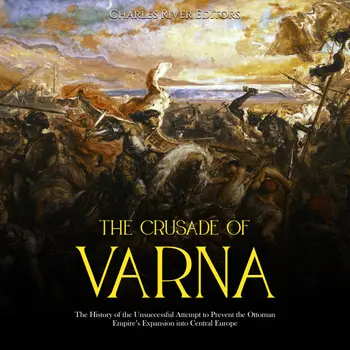
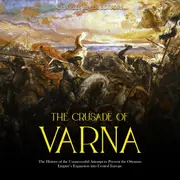
The Crusade of Varna: The History of the Unsuccessful Attempt to Prevent the Ottoman Empire’s Expansion into Central Europe

In terms of geopolitics, perhaps the most seminal event of the Middle Ages was the successful Ottoman siege of Constantinople in 1453. The city had been an imperial capital as far back as the 4th century, when Constantine the Great shifted the power center of the Roman Empire there, effectively establishing two almost equally powerful halves of antiquity’s greatest empire. The fall of Constantinople is still well-known today, but the Ottoman Empire was already pushing into Europe beforehand, and it would take repeated efforts by various European coalitions to prevent a complete Ottoman takeover of the continent. At the time, the most powerful European countries in Eastern Europe and the Balkans were Poland and Hungary. Russia was still throwing off the Mongol yoke, France and England were fighting an interminable war, Germany was broken into hundreds of entities, and the Holy Roman Empire was fighting the rise of Protestantism. The Italian merchant city-states of Venice and Genoa were intimately tied to the Balkans, the Byzantine Empire, the Black Sea, and the Ottomans. Genoa had been something of an Ottoman ally since the 1300s, even while the Ottomans were looming as a grave threat to Europe.

The Ottoman Sultan Murad II became known as the Ghazi Sultan and was seen as not only defending Islam against the Christians but also as a defender of other, less powerful Muslim beys. Thus, he gained support from Muslims both far and near before he turned his armies towards Venice, the Karamids, Serbia, and finally Hungary, which would get the Europeans’ attention. In the historic tradition that already dated back over 300 years, a crusade was called to stop the Ottomans, and the main battle would be fought near Varna, a fortified city on the Black Sea coast of what is now Bulgaria. The result would set into motion the Ottomans’ far more famous forays into Europe.

Begin vandaag nog met dit boek voor € 0

  • Krijg volledige toegang tot alle boeken in de app tijdens de proefperiode
  • Geen verplichtingen, op elk moment annuleren
Probeer nu gratis
Meer dan 52.000 mensen hebben Nextory 5 sterren gegeven in de App store en op Google Play.

  1. Nostradamus and Baba Vanga: The Controversial Lives and Prophecies of the Modern Era’s Most Famous Seers

    Charles River Editors

  2. U-Boats in the Atlantic: The History of Germany’s Submarines during World War I and World War II

    Charles River Editors

  3. The Wars of Alexander the Great: The History of the Campaigns in Persia and India that Established the World’s Largest Empire

    Charles River Editors

  4. 4.5

    Uranprojekt: The History and Legacy of Nazi Germany’s Nuclear Weapons Program during World War II

    Charles River Editors

  5. 3.0

    The Yakuza and the Triads: The History of Asia’s Most Notorious Transnational Criminal Organizations

    Charles River Editors

  6. 3.5

    The Shining Path: The History of Peru’s Revolutionary Communist Party and the Ongoing Civil War

    Charles River Editors

  7. Edith Stein: The Life and Legacy of the Jewish Philosopher Who Became a Catholic Saint

    Charles River Editors

  8. Zimbabwe under the British Empire: The History of Great Britain’s Colonization and Decolonization Before the Country’s Independence

    Charles River Editors

  9. Vampires and Werewolves: The Legends and Folk Tales about History’s Most Notorious Mythical Beings

    Charles River Editors

  10. 2.0

    Boudica: The Life and Legacy of the Celtic Queen Who Rebelled against the Romans in Britain

    Charles River Editors

  11. Sulla and Gaius Marius: The Lives and Legacies of the Leaders Who Fought Rome’s First Civil War

    Charles River Editors

  12. Eleanor of Aquitaine and Richard the Lionheart: The History of the Mother and Son Who Shaped Medieval Europe

    Charles River Editors