The Tenant of Wildfell Hall

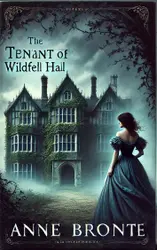
The Tenant of Wildfell Hall is the second and final novel by the English author Anne Brontë. It was first published in 1848 under the pseudonym Acton Bell. Probably the most shocking of the Brontë's novels, it had an instant and phenomenal success, but after Anne's death her sister Charlotte prevented its re-publication in England until 1854.

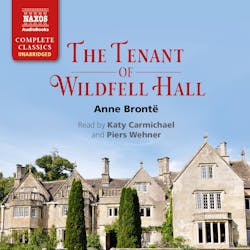
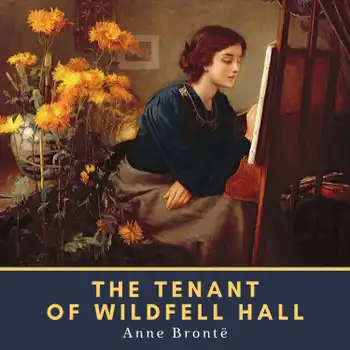
The novel is framed as a series of letters from Gilbert Markham to his friend about the events connected with his meeting a mysterious young widow, calling herself Helen Graham, who arrives at Wildfell Hall, an Elizabethan mansion which has been empty for many years, with her young son and a servant. Contrary to the early 19th century norms, Helen pursues an artist's career and makes an income by selling her pictures. Mrs Graham's strict seclusion soon gives rise to gossip in the neighbouring village and she becomes a social outcast. Refusing to believe anything scandalous about her, Gilbert befriends Mrs Graham and discovers her past. In the diary she gives Gilbert, Helen chronicles her husband's physical and moral decline through alcohol and debauchery in the dissipated aristocratic society. Ultimately Helen flees with her son, whom she desperately wishes to save from his father's influence. The depiction of marital strife and women's professional identification has also a strong moral message mitigated by Anne Brontë's belief in universal salvation.

Most critics now consider The Tenant of Wildfell Hall to be one of the first feminist novels. May Sinclair, in 1913, said that "the slamming of [Helen's] bedroom door against her husband reverberated throughout Victorian England". In leaving her husband and taking away their child, Helen violates not only social conventions but also the early 19th century English law.
Over dit boek

The Tenant of Wildfell Hall is the second and final novel by the English author Anne Brontë. It was first published in 1848 under the pseudonym Acton Bell. Probably the most shocking of the Brontë's novels, it had an instant and phenomenal success, but after Anne's death her sister Charlotte prevented its re-publication in England until 1854.

The novel is framed as a series of letters from Gilbert Markham to his friend about the events connected with his meeting a mysterious young widow, calling herself Helen Graham, who arrives at Wildfell Hall, an Elizabethan mansion which has been empty for many years, with her young son and a servant. Contrary to the early 19th century norms, Helen pursues an artist's career and makes an income by selling her pictures. Mrs Graham's strict seclusion soon gives rise to gossip in the neighbouring village and she becomes a social outcast. Refusing to believe anything scandalous about her, Gilbert befriends Mrs Graham and discovers her past. In the diary she gives Gilbert, Helen chronicles her husband's physical and moral decline through alcohol and debauchery in the dissipated aristocratic society. Ultimately Helen flees with her son, whom she desperately wishes to save from his father's influence. The depiction of marital strife and women's professional identification has also a strong moral message mitigated by Anne Brontë's belief in universal salvation.

Most critics now consider The Tenant of Wildfell Hall to be one of the first feminist novels. May Sinclair, in 1913, said that "the slamming of [Helen's] bedroom door against her husband reverberated throughout Victorian England". In leaving her husband and taking away their child, Helen violates not only social conventions but also the early 19th century English law.

Begin vandaag nog met dit boek voor € 0

  • Krijg volledige toegang tot alle boeken in de app tijdens de proefperiode
  • Geen verplichtingen, op elk moment annuleren
Probeer nu gratis
Meer dan 52.000 mensen hebben Nextory 5 sterren gegeven in de App store en op Google Play.

  1. 3.0

    50 Masterpieces you have to read before you die vol: 1 (2020 Edition) : Included: Little Women, The Richest Man in Babylon Emma, The Call Of The Wild ....

    Louisa May Alcott, Dante Alighieri, Marcus Aurelius, Jane Austen, L. Frank Baum, Charlotte Brontë, Emily Brontë, Anne Brontë, Miguel de Cervantes, Agatha Christie, George S. Clason, Arthur Conan Doyle, Joseph Conrad, Charles Dickens, Fyodor Dostoyevsky, Alexandre Dumas, George Eliot, G.K. Chesterton, G.K. Chesterton, Zane Grey, Nathaniel Hawthorne, Napoleon Hill, Homer, Victor Hugo, Frances Hodgson Burnett, Washington Irving, Henry James, Franz Kafka, Rudyard Kipling, Jack London, Leo Tolstoy, H.P. Lovecraft, Lucy Maud Montgomery, Joseph Murphy, Robert Louis Stevenson, Edgar Allan Poe, Marcel Proust, Publius, Mary Shelley, Bram Stoker, Mark Twain, Sun Tzu, Lew Wallace, Wallace D. Wattles, H.G. Wells

  2. The Essential Classics: Volume 3 : Queen Lucia; Moby Dick; Far From the Madding Crowd; Buddenbrooks; & Agnes Grey

    Herman Melville, Thomas Hardy, E F Benson, Thomas Mann, Anne Brontë

  3. The Brontë Sisters: The Complete Poems

    Emily Brontë, Charlotte Brontë, Anne Brontë

  4. 5.0

    50 Masterpieces you have to read before you die vol: 2 : Timeless Classics to Enrich Your Mind and Soul

    Louisa, Jane Austen, Joseph Conrad, D. H. Lawrence, George Eliot, Leo Tolstoy, James Joyce, Charles Dickens, Bram Stoker, Oscar Wilde, Honoré de Balzac, Edgar Rice Burroughs, Anne Brontë, Charlotte Brontë, Emily Brontë, Lewis Carroll, Willa Cather, Miguel de Cervantes, E. E. Cummings, Fyodor Dostoyevsky, Daniel Defoe, Arthur Conan Doyle, Alexandre Dumas, Gustave Flaubert, Henry James, Victor Hugo, HB Classics

  5. 5.0

    50 Masterpieces You Must Read Before You Die: Volume 2 : Unleash Your Inner Bookworm

    Louisa May Alcott, Jane Austen, Joseph Conrad, D. H. Lawrence, George Eliot, Leo Tolstoy, James Joyce, Charles Dickens, Bram Stoker, Oscar Wilde, Honoré de Balzac, Edgar Rice Burroughs, Anne Brontë, Charlotte Brontë, Emily Brontë, Lewis Carroll, Willa Cather, Miguel de Cervantes, E. E. Cummings, Fyodor Dostoyevsky, Daniel Defoe, Arthur Conan Doyle, Alexandre Dumas, Gustave Flaubert, Henry James, Victor Hugo, Pocket Classic

  6. 4.3

    The Tenant of Wildfell Hall

    Anne Brontë

  7. The Brontë Sisters Collection : Wuthering Heights, Agnes Grey & Jane Eyre

    Emily Brontë, Anne Brontë, Charlotte Brontë

  8. 4.3

    The Tenant of Wildfell Hall

    Anne Brontë

  9. Nieuw
    4.5

    The Tenant of Wildfell Hall

    Anne Brontë

  10. Nieuw
    3.3

    Agnes Grey

    Anne Brontë

  11. The Essential Brontë's Collection : Jane Eyre, Wuthering Heights, & The Tenant of Wildfell Hall

    Emily Brontë, Charlotte Brontë, Anne Brontë