Over dit boek

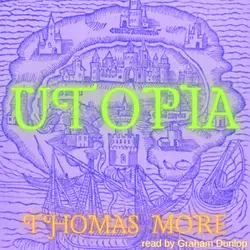
One of the most influential works of political philosophy ever written, exploring the timeless quest for a just and ideal society.

Discover "Utopia" by Thomas More, the groundbreaking classic that introduced the concept of an ideal society and forever shaped political philosophy, social thought, and literary imagination. Combining philosophical inquiry, social criticism, and imaginative storytelling, this enduring masterpiece continues to challenge readers to reflect on justice, governance, equality, and the organization of human society.

Presented as the account of a traveler who describes a remarkable island with unique customs, institutions, and social practices, Utopia invites readers to examine questions of law, education, religion, work, leadership, and the common good. Through thoughtful dialogue and subtle satire, Thomas More encourages reflection on the strengths and weaknesses of existing societies while inspiring readers to consider new possibilities for human flourishing. Its timeless themes remain strikingly relevant in discussions of politics, ethics, economics, and social reform.

First published in 1516, "Utopia" is regarded as one of the foundational works of Renaissance humanism and political philosophy. Its profound influence extends across literature, history, political science, sociology, and philosophy, inspiring generations of scholars, writers, and thinkers.

Perfect for readers interested in political philosophy, social theory, history, classic literature, Renaissance thought, ethics, and timeless nonfiction, this remarkable work offers an intellectually rewarding and thought-provoking reading experience.

Explore the visionary classic that gave the world the very idea of a "utopia." Add "Utopia" to your Kindle library today and discover one of the most influential works of political and philosophical thought ever written.

Begin vandaag nog met dit boek voor € 0

  • Krijg volledige toegang tot alle boeken in de app tijdens de proefperiode
  • Geen verplichtingen, op elk moment annuleren
Probeer nu gratis
Meer dan 52.000 mensen hebben Nextory 5 sterren gegeven in de App store en op Google Play.

Meer van Thomas More

  1. 3.3

    Utopia

    Thomas More

  2. 12 Masterpieces You Have to Read Before You Die. Philosophy

    Niccolo Machiavelli, Tommaso Campanella, Francis Bacon, Thomas More, John Stuart Mill, Immanuel Kant, Kahlil Gibran, Leo Tolstoy, G.K. Chesterton, Henry David Thoreau

  3. 33 Human Science Masterpieces You Must Read Before You Die. Illustrated : The Art of Public Speaking, The Meditations, The Kama Sutra and other masterpieces

    Edwin A. Abbott, Aristotle, Dale Carnegie, Gilbert Chesterton, René Descartes, Epictetus, Marcus Aurelius Antoninus, Sigmund Freud, Hermann Hesse, David Hume, Lao Tzu, Confucius, Swami Abhedananda, Anonimous, David Herbert Lawrence, Niccolò Machiavelli, Benedictus de Spinoza, John Mill, Prentice Mulford, Thomas More, Friedrich Nietzsche, J. Allanson Picton, Plato, Sun Tzu, Vatsyayana, Voltaire, H.G. Wells, Frances Bacon

  4. Nieuw
    3.3

    Utopia

    Thomas More

  5. 3.3

    Utopia

    Thomas More

  6. Harvard Classics : The Five-Foot Shelf of Books

    Aesop, Dante Alighieri, Hans Christian Andersen, Augustine of Hippo, Marcus Aurelius, Jane Austen, Francis Bacon, Honoré de Balzac, Francis Beaumont, Bjørnstjerne Bjørnson, Thomas Browne, Robert Browning, John Bunyan, EDMUND BURKE, Robert Burns, Lord Byron, Thomas Carlyle, Benvenuto Cellini, Miguel de Cervantes, Marcus Tullius Cicero, Richard Henry Jr., Charles Darwin, Alphonse Daudet, Thomas Dekker, Charles Dickens, Fyodor Dostoevsky, John Dryden, Charles W. Eliot, George Eliot, Ralph Waldo Emerson, Epictetus, John Fletcher, Theodor Fontane, Benjamin Franklin, Johann Wolfgang Goethe, Oliver Goldsmith, Jacob Grimm, Edward Everett Hale, Bret Harte, Nathaniel Hawthorne, Homer, Victor Hugo, Washington Irving, Henry James, Ben Jonson, Gottfried Keller, Thomas à Kempis, Alexander L. Kielland, Martin Luther, Niccolò Machiavelli, Alessandro Manzoni, Christopher Marlowe, Philip Massinger, Guy De Maupassant, John Stuart Mill, John Milton, Thomas More, William Morris, Alfred de Musset, William Allan Neilson, William Penn, Plato, Pliny the Younger, Plutarch, George Sand, Percy Bysshe Shelley, Richard Brinsley Sheridan, Adam Smith, Laurence Sterne, Theodor Storm, William Makepeace Thackeray, Leo Tolstoy, Ivan Turgenev, Mark Twain, Juan Valera, Virgil, Izaak Walton, John Webster, John Woolman

  7. 3.3

    Utopia

    Thomas More

  8. 3.3

    Utopia

    Thomas More

  9. 3.3

    Utopia

    Thomas More

  10. 3.3

    Utopia

    Thomas More

  11. 3.3

    Utopia

    Thomas More