2.5(2)

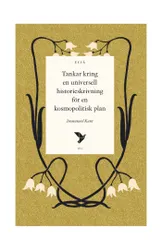
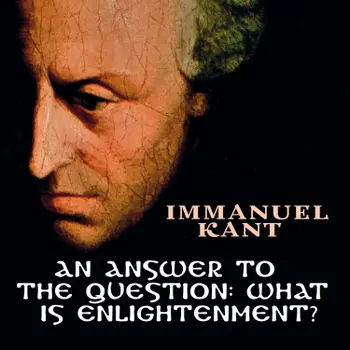
An Answer to the Question: What is Enlightenment?

"Answering the Question: What Is Enlightenment?" is a 1784 essay by the philosopher Immanuel Kant. In the December 1784 publication of the Berlinische Monatsschrift (Berlin Monthly), edited by Friedrich Gedike and Johann Erich Biester, Kant replied to the question posed a year earlier by the Reverend Johann Friedrich Zöllner, who was also an official in the Prussian government. Zöllner's question was addressed to a broad intellectual public community, in reply to Biester's essay entitled: "Proposal, not to engage the clergy any longer when marriages are conducted" (April 1783) and a number of leading intellectuals replied with essays, of which Kant's is the most famous and has had the most impact. Kant's opening paragraph of the essay is a much-cited definition of a lack of enlightenment as people's inability to think for themselves due not to their lack of intellect, but lack of courage.

Kant's essay also addressed the causes of a lack of enlightenment and the preconditions necessary to make it possible for people to enlighten themselves. He held it necessary that all church and state paternalism be abolished and people be given the freedom to use their own intellect. Kant praised Frederick II of Prussia for creating these preconditions. Kant focused on religious issues, saying that "our rulers" had less interest in telling citizens what to think in regard to artistic and scientific issues.

Kom i gang med denne boken i dag for 0 kr

  • Få full tilgang til alle bøkene i appen i prøveperioden
  • Ingen forpliktelser, si opp når du vil
Prøv gratis nå
Mer enn 52 000 personer har gitt Nextory 5 stjerner på App Store og Google Play.

  1. 12 Masterpieces You Have to Read Before You Die. Philosophy

    Niccolo Machiavelli, Tommaso Campanella, Francis Bacon, Thomas More, John Stuart Mill, Immanuel Kant, Kahlil Gibran, Leo Tolstoy, G.K. Chesterton, Henry David Thoreau

    audiobook
  2. 3500 Final Quotes

    Marcus Aurelius, Jane Austen, Beaumarchais, Napoleon Bonaparte, Buddha, Winston Churchill, Cicero, Confucius, Nicolas de Chamfort, Charles de Gaulle, Antoine de Saint-Exupéry, Denis Diderot, Fyodor Dostoevsky, Albert Einstein, Ralph Waldo Emerson, Anne Frank, Mahatma Gandhi, Immanuel Kant, Søren Kierkegaard, Martin Luther King, Georg Christoph Lichtenberg, Abraham Lincoln, Montesquieu, Friedrich Nietzsche, Plato, Marcel Proust, Arthur Schopenhauer, William Shakespeare, Socrates, Baruch Spinoza, Henry David Thoreau, Leonardo da Vinci, Voltaire, Oscar Wilde, Laozi

    audiobook
  3. 2000 Final Quotations

    Marcus Aurelius, Jane Austen, Buddha, Anton Chekhov, Cicero, Emil Cioran, Confucius, Albert Einstein, Anne Frank, Mahatma Gandhi, Johann Wolfgang Goethe, Carl Jung, Immanuel Kant, Friedrich Nietzsche, Marcel Proust, Arthur Schopenhauer, William Shakespeare, Baruch Spinoza, Leonardo da Vinci, Laozi

    audiobook
  4. Critique of Pure Reason

    Immanuel Kant

    audiobookbook
  5. Prolegomena to Any Future Metaphysics that Will Be Able to Present Itself as a Science

    Immanuel Kant

    audiobook
  6. Grounding for the Metaphysics of Morals

    Immanuel Kant

    audiobook
  7. 50 Short Story Masterpieces you have to listen before you die (Golden Deer Classics)

    F. Scott Fitzgerald, O.Henry, Mark Twain, Kahlil Gibran, W. W. Jacobs, Anonymous, Thomas Jefferson, Founding Fathers, Plato, Lord Alfred Tennyson, T. S. Eliot, William Dean Howells, Karl Marx, Friedrich Engels, Leo Tolstoy, Washington Irving, Samuel Taylor Coleridge, Bram Stoker, Sun Tzu, Edgar Allan Poe, Lao Tzu, Oscar Wilde, William Blake, Patrick Henry, H.G. Wells, Saki, Herman Melville, Clement Clarke Moore, Bret Harte, Immanuel Kant, Jack London, Henry Ford, G.K. Chesterton, Charles Perrault, Anton Chekhov, D. H. Lawrence, Fyodor Dostoevsky, Franz Kafka, James Joyce, John Muir

    audiobook
  8. Om pedagogikk

    Immanuel Kant

    book
  9. Kritikk av den praktiske fornuft

    Immanuel Kant

    book
  10. Crítica de la Razón Pura

    Immanuel Kant

    audiobookbook
  11. Yaşam Felsefesi

    Immanuel Kant

    book
  12. Was ist Aufklärung? Ein philosophischer Essay. : Hörbuchzeit: Klassiker der Weltliteratur

    Hörbuchzeit, Immanuel Kant

    audiobook