Om denne boken

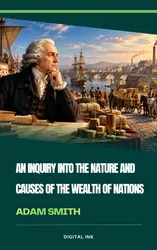
Discover the timeless classic that laid the foundation of modern economics—An Inquiry into the Nature and Causes of the Wealth of Nations by Adam Smith. A revolutionary work that transformed how we understand trade, markets, and prosperity.

First published in 1776, this monumental book by Adam Smith explores the principles of free markets, the division of labor, and the invisible hand that guides economic growth. Written with clarity and insight, The Wealth of Nations explains how nations build prosperity and why individuals, driven by self-interest, contribute to society's wealth.

Smith's groundbreaking ideas continue to influence economists, policymakers, and entrepreneurs across the globe. From the roots of capitalism to the complexities of trade and competition, this book offers wisdom that remains as relevant today as it was centuries ago. Whether you're a student of economics or a curious reader seeking to understand the mechanics of wealth, this masterpiece is an essential addition to your library.

Celebrated as one of the greatest works in history, The Wealth of Nations has been hailed as "the Bible of economics" and remains a cornerstone of economic theory. Frequently cited in academia and praised for its enduring relevance, this work solidifies Adam Smith's reputation as the father of modern economics.

Unlock the secrets of prosperity and explore the ideas that shaped the modern world. Don't miss your chance to own this transformative classic! Click "Buy Now" to get your copy of The Wealth of Nations today.

Kom i gang med denne boken i dag for 0 kr

  • Få full tilgang til alle bøkene i appen i prøveperioden
  • Ingen forpliktelser, si opp når du vil
Prøv gratis nå
Mer enn 52 000 personer har gitt Nextory 5 stjerner på App Store og Google Play.

Mer av Adam Smith

  1. Harvard Classics : The Five-Foot Shelf of Books

    Aesop, Dante Alighieri, Hans Christian Andersen, Augustine of Hippo, Marcus Aurelius, Jane Austen, Francis Bacon, Honoré de Balzac, Francis Beaumont, Bjørnstjerne Bjørnson, Thomas Browne, Robert Browning, John Bunyan, EDMUND BURKE, Robert Burns, Lord Byron, Thomas Carlyle, Benvenuto Cellini, Miguel de Cervantes, Marcus Tullius Cicero, Richard Henry Jr., Charles Darwin, Alphonse Daudet, Thomas Dekker, Charles Dickens, Fyodor Dostoevsky, John Dryden, Charles W. Eliot, George Eliot, Ralph Waldo Emerson, Epictetus, John Fletcher, Theodor Fontane, Benjamin Franklin, Johann Wolfgang Goethe, Oliver Goldsmith, Jacob Grimm, Edward Everett Hale, Bret Harte, Nathaniel Hawthorne, Homer, Victor Hugo, Washington Irving, Henry James, Ben Jonson, Gottfried Keller, Thomas à Kempis, Alexander L. Kielland, Martin Luther, Niccolò Machiavelli, Alessandro Manzoni, Christopher Marlowe, Philip Massinger, Guy De Maupassant, John Stuart Mill, John Milton, Thomas More, William Morris, Alfred de Musset, William Allan Neilson, William Penn, Plato, Pliny the Younger, Plutarch, George Sand, Percy Bysshe Shelley, Richard Brinsley Sheridan, Adam Smith, Laurence Sterne, Theodor Storm, William Makepeace Thackeray, Leo Tolstoy, Ivan Turgenev, Mark Twain, Juan Valera, Virgil, Izaak Walton, John Webster, John Woolman

  2. 4.8

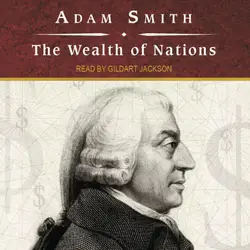
    The Wealth of Nations

    Adam Smith

  3. The Money Game

    Adam Smith

  4. Buddha, Me, and a Cup of Tea : Finding Your True Zen

    Adam Smith

  5. 3.9
    #1

    Doctor Who, Vol. 1: Short Trips (Unabridged)

    George Mann, David A., Jamie Hailstone, Damian Sawyer, Ally Kennen, Colin Baker, Adam Smith, Dorothy Koomson

  6. Ny

    An Inquiry into the Nature and Causes of the Wealth of Nations

    Adam Smith

  7. An Inquiry into the Nature and Causes of the Wealth of Nations

    Adam Smith

  8. Essays on Philosophical Subjects

    Adam Smith

  9. An Inquiry into the Nature and Causes of the Wealth of Nations

    Adam Smith

  10. The Wealth of Nations : An Inquiry into the Nature and Causes of the Wealth of Nations

    Adam Smith

  11. An Inquiry into the Nature and Causes of the Wealth of Nations

    Adam Smith

  12. An Inquiry into the Nature and Causes of the Wealth of Nations

    Adam Smith