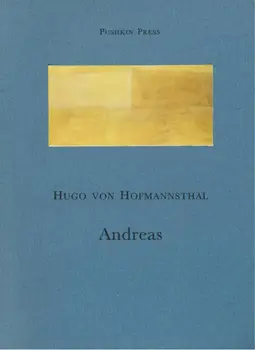
Andreas

This novel from the great Austrian poet, dramatist, essayist and librettist, Hugo von Hoffmansthal Andreas is a fascinating insight into the work of this renowned author.

Andreas is an unfinished and posthumously-published novel of violence and naivety, pathos and melancholy. Set in the eighteenth century, it tells the story of a young Viennese aristocrat who intends to travel alone to Venice as the first stage of his 'Grand Tour';. On his journey, he acquires an unsavoury servant who unleashes a trail of destruction and violence, which taints and corrupts Andreas' first experience of love. Andreas' loss of innocence takes place in the misty alleyways and gloomy palaces of La Serenissima, whose masked inhabitants confuse and entice him, the women either madonnas or whores indistinguishable behind their masks.

Hugo von Hoffmansthal (1874-1929) was a writer of poems and plays from a young age. As a teenager, he met Stefan George, and had several poems published in his journal Blätter für die Kunst. He went on to study in Vienna, and along with Peter Altenberg and Arthur Schnitzler, was a member of the avant-garde group Young Vienna (Jung Wien). He went on to write the libretti for several operas composed by Richard Strauss, including Elektra and Der Rosenkavalier. During the First World War, the conservative Hoffmansthal wrote speeches and articles praising the war effort. He was devastated by the post-war dissolution of the Austro-Hungarian Empire, but continued with his work, founding the Salzburg Festival in 1925, along with Max Reinhardt. In 1939 his son committed suicide, and two days later Hoffmansthal died of a stroke.
Om denne boken

This novel from the great Austrian poet, dramatist, essayist and librettist, Hugo von Hoffmansthal Andreas is a fascinating insight into the work of this renowned author.

Andreas is an unfinished and posthumously-published novel of violence and naivety, pathos and melancholy. Set in the eighteenth century, it tells the story of a young Viennese aristocrat who intends to travel alone to Venice as the first stage of his 'Grand Tour';. On his journey, he acquires an unsavoury servant who unleashes a trail of destruction and violence, which taints and corrupts Andreas' first experience of love. Andreas' loss of innocence takes place in the misty alleyways and gloomy palaces of La Serenissima, whose masked inhabitants confuse and entice him, the women either madonnas or whores indistinguishable behind their masks.

Hugo von Hoffmansthal (1874-1929) was a writer of poems and plays from a young age. As a teenager, he met Stefan George, and had several poems published in his journal Blätter für die Kunst. He went on to study in Vienna, and along with Peter Altenberg and Arthur Schnitzler, was a member of the avant-garde group Young Vienna (Jung Wien). He went on to write the libretti for several operas composed by Richard Strauss, including Elektra and Der Rosenkavalier. During the First World War, the conservative Hoffmansthal wrote speeches and articles praising the war effort. He was devastated by the post-war dissolution of the Austro-Hungarian Empire, but continued with his work, founding the Salzburg Festival in 1925, along with Max Reinhardt. In 1939 his son committed suicide, and two days later Hoffmansthal died of a stroke.

Kom i gang med denne boken i dag for 0 kr

  • Få full tilgang til alle bøkene i appen i prøveperioden
  • Ingen forpliktelser, si opp når du vil
Prøv gratis nå
Mer enn 52 000 personer har gitt Nextory 5 stjerner på App Store og Google Play.

  1. Auf den Spuren des Unbewussten: : Meilensteine der österreichischen Literatur

    Stefan Zweig, Hugo Bettauer, Robert Musil, Hugo von Hofmannsthal, Joseph Roth, Arthur Schnitzler, Felix Salten

  2. Lyrikalische Lesung Episoden 56-60

    Johann Wolfgang von Goethe, John Keats, Annette von Droste-Hülshoff, Arno Holz, Wilhelm Busch, Georg Heym, Heinrich Heine, Franz Werfel, Charles Baudelaire, Rainer Maria Rilke, Friedrich Nietzsche, Hugo von Hofmannsthal, Edgar Allan Poe

  3. Briefwechsel - Strauss, Richard & Hugo von Hofmannsthal (ungekürzt)

    Richard Strauss, Hugo von Hofmannsthal

  4. Der Sturm Elektra - Briefe (ungekürzt)

    Gertrud Eysoldt, Hugo von Hofmannsthal

  5. Jedermann : Das Spiel vom Sterben des reichen Mannes

    Hugo von Hofmannsthal

  6. Augenblicke in Griechenland

    Hugo von Hofmannsthal

  7. Meisterwerke deutscher Literatur : 100 Klassiker: Der Prozess, Der Sandmann, Professor Unrat, Also sprach Zarathustra, Faust, Jeder stirbt für sich allein

    Johann Wolfgang Goethe, Rainer Maria Rilke, Hans Fallada, Stefan Zweig, Annette von Droste-Hülshoff, Franz Kafka, Klaus Mann, Hermann Broch, Heinrich Mann, Friedrich Nietzsche, Heinrich Heine, Friedrich Schiller, Robert Musil, Joseph Roth, Heinrich von Kleist, Kurt Tucholsky, Ödön von Horváth, Karl May, Wilhelm Busch, Heinrich Hoffmann, Johanna Spyri, Else Lasker-Schüler, Georg Büchner, Joseph von Eichendorff, Arthur Schnitzler, Theodor Storm, Hugo von Hofmannsthal, Christoph Martin Wieland, E. T. Hoffmann, Gotthold Ephraim Lessing, Frank Wedekind, Gottfried Keller, Theodor Fontane, Clemens Brentano, Achim von Arnim, Jacob Grimm, Wilhelm Grimm, Adelbert von Chamisso, Arthur Schopenhauer, August Klingemann, Novalis, Friedrich Hölderlin, Jean Paul, Gottfried von Straßburg, Sigmund Freud, Elisabeth Langgässer, Gottfried August Bürger, Jakob Michael Lenz, Friedrich Gottlieb Klopstock, Wolfram von Eschenbach, Sebastian Brant, Hermann Bote, Hans Jakob von Grimmelshausen, Hildegard von Bingen

  8. Meisterwerke der deutschen Literatur : 100 Klassiker, die man kennen muss

    Rainer Maria Rilke, Hans Fallada, Annette von Droste-Hülshoff, Stefan Zweig, Franz Kafka, Johann Wolfgang Goethe, Klaus Mann, Hermann Broch, Heinrich Mann, Friedrich Nietzsche, Heinrich Heine, Friedrich Schiller, Robert Musil, Joseph Roth, Heinrich von Kleist, Kurt Tucholsky, Ödön von Horváth, Karl May, Wilhelm Busch, Heinrich Hoffmann, Johanna Spyri, Else Lasker-Schüler, Georg Büchner, Joseph von Eichendorff, Arthur Schnitzler, Theodor Storm, Hugo von Hofmannsthal, Christoph Martin Wieland, E. T. A. A Hoffmann, Gotthold Ephraim Lessing, Frank Wedekind, Gottfried Keller, Theodor Fontane, Clemens Brentano, Achim von Arnim, Jacob Grimm, Wilhelm Grimm, Adelbert von Chamisso, Arthur Schopenhauer, August Klingemann, Novalis, Friedrich Hölderlin, Jean Paul, Gottfried von Straßburg, Sigmund Freud, Elisabeth Langgässer, Gottfried August Bürger, Jakob Michael Reinhold Lenz, Friedrich Gottlieb Klopstock, Wolfram von Eschenbach, Sebastian Brant, Hermann Bote, Hans Jakob Christoffel von Grimmelshausen, Hildegard von Bingen

  9. 100 Deutsche Klassiker - Meisterwerke, die man kennen muss : Die bahnbrechenden Romane, Erzählungen, Dramen, Aufsätze und Gedichte

    Franz Kafka, Johann Wolfgang von Goethe, Theodor Storm, Hugo von Hofmannsthal, Christoph Martin Wieland, E. T. A. A Hoffmann, Gotthold Ephraim Lessing, Frank Wedekind, Gottfried Keller, Theodor Fontane, Clemens Brentano, Achim von Arnim, Jacob Grimm, Wilhelm Grimm, Adelbert von Chamisso, Arthur Schopenhauer, August Klingemann, Novalis, Friedrich Hölderlin, Jean Paul, Gottfried von Straßburg, Sigmund Freud, Elisabeth Langgässer, Gottfried August Bürger, Jakob Michael Reinhold Lenz, Friedrich Gottlieb Klopstock, Wolfram von Eschenbach, Sebastian Brant, Hermann Bote, Hildegard von Bingen, Hans Fallada, Annette von Droste-Hülshoff, Stefan Zweig, Klaus Mann, Hermann Broch, Heinrich Mann, Friedrich Nietzsche, Heinrich Heine, Friedrich Schiller, Robert Musil, Joseph Roth, Heinrich von Kleist, Rainer Maria Rilke, Kurt Tucholsky, Ödön von Horváth, Karl May, Wilhelm Busch, Heinrich Hoffmann, Johanna Spyri, Else Lasker-Schüler, Georg Büchner, Joseph von Eichendorff, Arthur Schnitzler

  10. Prosas breves

    Hugo von Hofmannsthal

  11. Der Schwierige: Lustspiel in drei Akten

    Hugo von Hofmannsthal