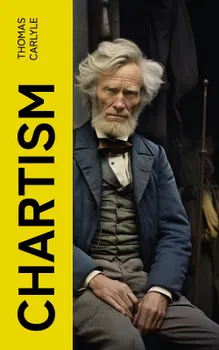
Chartism (Annotated) : Enriched Edition. A Victorian Critique of Democracy, Working-Class Unrest, and Industrial Britain's Social Crisis

Thomas Carlyle's Chartism (1839) is a fiercely argued intervention in the political and social crises of early Victorian Britain. Written in Carlyle's prophetic, aphoristic prose, the book treats the Chartist movement not merely as a demand for parliamentary reform but as a symptom of profound national disorder: poverty, industrial dislocation, and the moral failure of governing elites. It belongs to the literature of the "Condition of England" question, standing beside works that sought to interpret the human costs of industrial modernity. Carlyle, Scottish essayist, historian, and moral critic, had already established himself through Sartor Resartus and The French Revolution as a writer suspicious of mechanistic politics and complacent liberalism. His background in Calvinist seriousness, German idealist thought, and historical study shaped his conviction that society required spiritual authority as much as administrative reform. Chartism reflects his ambivalence: sympathy for suffering workers combined with distrust of democratic remedies. This book is recommended to readers interested in Victorian political thought, social criticism, and the literary response to industrial capitalism. Though often unsettling in its judgments, Chartism remains indispensable for understanding how nineteenth-century Britain imagined class conflict, leadership, and national responsibility.

This enriched edition has been carefully crafted to add value to your reading experience.

- A succinct Introduction situates the work's timeless appeal and themes.

- The Synopsis outlines the central plot, highlighting key developments without spoiling critical twists.

- A detailed Historical Context immerses you in the era's events and influences that shaped the writing.

- An Author Biography reveals milestones in the author's life, illuminating the personal insights behind the text.

- A thorough Analysis dissects symbols, motifs, and character arcs to unearth underlying meanings.

- Reflection questions prompt you to engage personally with the work's messages, connecting them to modern life.

- Hand‐picked Memorable Quotes shine a spotlight on moments of literary brilliance.

Om denne boken

Thomas Carlyle's Chartism (1839) is a fiercely argued intervention in the political and social crises of early Victorian Britain. Written in Carlyle's prophetic, aphoristic prose, the book treats the Chartist movement not merely as a demand for parliamentary reform but as a symptom of profound national disorder: poverty, industrial dislocation, and the moral failure of governing elites. It belongs to the literature of the "Condition of England" question, standing beside works that sought to interpret the human costs of industrial modernity. Carlyle, Scottish essayist, historian, and moral critic, had already established himself through Sartor Resartus and The French Revolution as a writer suspicious of mechanistic politics and complacent liberalism. His background in Calvinist seriousness, German idealist thought, and historical study shaped his conviction that society required spiritual authority as much as administrative reform. Chartism reflects his ambivalence: sympathy for suffering workers combined with distrust of democratic remedies. This book is recommended to readers interested in Victorian political thought, social criticism, and the literary response to industrial capitalism. Though often unsettling in its judgments, Chartism remains indispensable for understanding how nineteenth-century Britain imagined class conflict, leadership, and national responsibility.

This enriched edition has been carefully crafted to add value to your reading experience.

- A succinct Introduction situates the work's timeless appeal and themes.

- The Synopsis outlines the central plot, highlighting key developments without spoiling critical twists.

- A detailed Historical Context immerses you in the era's events and influences that shaped the writing.

- An Author Biography reveals milestones in the author's life, illuminating the personal insights behind the text.

- A thorough Analysis dissects symbols, motifs, and character arcs to unearth underlying meanings.

- Reflection questions prompt you to engage personally with the work's messages, connecting them to modern life.

- Hand‐picked Memorable Quotes shine a spotlight on moments of literary brilliance.
Kom i gang med denne boken i dag for 0 kr

  • Få full tilgang til alle bøkene i appen i prøveperioden
  • Ingen forpliktelser, si opp når du vil
Prøv gratis nå
Mer enn 52 000 personer har gitt Nextory 5 stjerner på App Store og Google Play.

  1. 100 Klassiker der Geschichtsschreibung : Die Geschichte des Alten Ägypten, Der Alexanderzug, Römische Geschichte, Herbst des Mittelalters, Die russische Revolution, Der Kampf um Europa

    Edward Gibbon, Leopold von Ranke, J. B. Bury, Theodor Mommsen, Herodot, Thukydides, Xenophon, Arrian, Titus Livius, Tacitus, Gaius Iulius Caesar, Sueton, Polybios, Ammianus Marcellinus, Plutarch, Diogenes Laërtios, Eusebius, Prokop von Cäsarea, Anna Komnena, Agathias, Marc Bloch, L. W. King, George Rawlinson, Edward Bulwer-Lytton, Jacob Burckhardt, Joseph François Michaud, Johan Huizinga, Arthur Middleton Reeves, Niccolò Machiavelli, G.K. Chesterton, Voltaire, Friedrich Schiller, Ricarda Huch, Thomas Carlyle, Charles Downer Hazen, Egon Friedell, Walter Benjamin

  2. 100 Große Geschichtsbücher - Klassiker, die man kennen muss : Der Peloponnesische Krieg, Der Alexanderzug, Ab Urbe Condita, Napoleonische Kriege, Geschichte des Ersten und Zweiten Weltkriegs

    Tacitus, Thukydides, Plutarch, Theodor Mommsen, Edward Gibbon, Leopold von Ranke, Ricarda Huch, Helmuth von Moltke, Xenophon, Arrian, Titus Livius, Gaius Iulius Caesar, Sueton, Polybios, Ammianus Marcellinus, Diogenes Laërtios, Eusebius, Prokop von Cäsarea, Anna Komnena, Agathias, Marc Bloch, George Rawlinson, Edward Bulwer-Lytton, Jacob Burckhardt, Joseph François Michaud, Johan Huizinga, Niccolò Machiavelli, G.K. Chesterton, Voltaire, Friedrich Schiller, Thomas Carlyle, Charles Downer Hazen, Egon Friedell, Walter Benjamin

  3. The French Revolution

    Thomas Carlyle

  4. The Gift of Friendship : What the Wisest Minds Said About Our Deepest Bonds Across Two Thousand Years

    Alfred H. Hyatt, Henry David Thoreau, Thomas Carlyle, Henry Mackenzie, Oliver Goldsmith, Samuel Johnson, George Berkeley, Richard Steele, Joseph Addison, Francis Bacon, Michel de Montaigne, Anthusa, Aristotle

  5. Die größten Klassiker der Geschichtswissenschaft (Kommentiert) : Erweiterte Ausgabe. Der Peloponnesische Krieg, Römische Geschichte, Aus Zwei Jahrtausenden Deutscher Geschichte, Die Französische Revolution

    Theodor Mommsen, Herodot, Thukydides, Titus Livius, Sueton, Tacitus, Jacob Burckhardt, Niccolò Machiavelli, Ricarda Huch, Thomas Carlyle, Leopold von Ranke, Egon Friedell, Felix Salten

  6. Die größten Geschichtsbücher - Klassiker, die man kennen muss : Der Peloponnesische Krieg, Römische Geschichte, Aus Zwei Jahrtausenden Deutscher Geschichte, Die Französische Revolution

    Tacitus, Leopold von Ranke, Theodor Mommsen, Herodot, Thukydides, Titus Livius, Sueton, Jacob Burckhardt, Niccolò Machiavelli, Ricarda Huch, Thomas Carlyle, Egon Friedell, Felix Salten

  7. Die Französische Revolution : Revolutionäre Analyse einer turbulenten Epoche

    Thomas Carlyle

  8. History of Friedrich II of Prussia (All 21 Volumes) : Enriched edition. Biography of the Famous Prussian King, Called Frederick the Great

    Thomas Carlyle

  9. Die Französische Revolution (Alle 3 Bände) : Bereicherte Ausgabe.

    Thomas Carlyle

  10. Die Französische Revolution : Bereicherte Ausgabe. Chaos, Leidenschaft und politische Umwälzungen: lebendige Prosa zur Geburt moderner Demokratie

    Thomas Carlyle

  11. Französische Revolution und napoleonische Ära : Geschichte der Französischen Revolution und der Napoleonischen Kriege, Biographie von Napoleon Bonaparte, Aufstieg und Fall der Familie Napoleon

    Thomas Carlyle, August Wilhelm Grube, Egon Friedell, Alexandre Dumas, Ricarda Huch, Jerome Bonaparte