Om denne boken

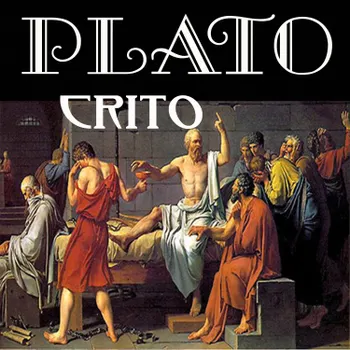
Crito is a dialogue that was written by the ancient Greek philosopher Plato. It depicts a conversation between Socrates and his wealthy friend Crito of Alopece regarding justice, injustice, and the appropriate response to injustice after Socrates's imprisonment, which is chronicled in the Apology.

In Crito, Socrates believes injustice may not be answered with injustice, personifies the Laws of Athens to prove this, and refuses Crito's offer to finance his escape from prison. The dialogue contains an ancient statement of the social contract theory of government. In contemporary discussions, the meaning of Crito is debated to determine whether it is a plea for unconditional obedience to the laws of a society. The text is one of the few Platonic dialogues that appear to be unaffected by Plato's opinions on the matter; it is dated to have been written around the same time as the Apology.

Kom i gang med denne boken i dag for 0 kr

  • Få full tilgang til alle bøkene i appen i prøveperioden
  • Ingen forpliktelser, si opp når du vil
Prøv gratis nå
Mer enn 52 000 personer har gitt Nextory 5 stjerner på App Store og Google Play.

Mer av Plato

  1. 4.8

    Sokrates' forsvarstale

    Plato

  2. Ny
    3.0

    Meno

    Plato

  3. Harvard Classics : The Five-Foot Shelf of Books

    Aesop, Dante Alighieri, Hans Christian Andersen, Augustine of Hippo, Marcus Aurelius, Jane Austen, Francis Bacon, Honoré de Balzac, Francis Beaumont, Bjørnstjerne Bjørnson, Thomas Browne, Robert Browning, John Bunyan, EDMUND BURKE, Robert Burns, Lord Byron, Thomas Carlyle, Benvenuto Cellini, Miguel de Cervantes, Marcus Tullius Cicero, Richard Henry Jr., Charles Darwin, Alphonse Daudet, Thomas Dekker, Charles Dickens, Fyodor Dostoevsky, John Dryden, Charles W. Eliot, George Eliot, Ralph Waldo Emerson, Epictetus, John Fletcher, Theodor Fontane, Benjamin Franklin, Johann Wolfgang Goethe, Oliver Goldsmith, Jacob Grimm, Edward Everett Hale, Bret Harte, Nathaniel Hawthorne, Homer, Victor Hugo, Washington Irving, Henry James, Ben Jonson, Gottfried Keller, Thomas à Kempis, Alexander L. Kielland, Martin Luther, Niccolò Machiavelli, Alessandro Manzoni, Christopher Marlowe, Philip Massinger, Guy De Maupassant, John Stuart Mill, John Milton, Thomas More, William Morris, Alfred de Musset, William Allan Neilson, William Penn, Plato, Pliny the Younger, Plutarch, George Sand, Percy Bysshe Shelley, Richard Brinsley Sheridan, Adam Smith, Laurence Sterne, Theodor Storm, William Makepeace Thackeray, Leo Tolstoy, Ivan Turgenev, Mark Twain, Juan Valera, Virgil, Izaak Walton, John Webster, John Woolman

  4. 4.5

    The Republic

    Plato

  5. The Republic of Plato

    Plato

  6. Critias : The Lost Story of Atlantis – A Fragment on Power, Decline, and Civilization

    Plato, Tim Zengerink

  7. 4.5

    The Republic

    Plato

  8. 10 Masterpieces You Have to Read Before You Die, Vol.5 : The Odyssey, The Republic, Meditations, The Divine Comedy, Faust and others

    Homer, Plato, Aristotle, Marcus Aurelius, Niccolo Machiavelli, Dante Alighieri, Johann Wolfgang von Goethe, Leo Tolstoy

  9. 4.3

    500 Quotes to Learn Wisdom from Classical Greek Philosophers

    Aristotle, Epictetus, – Heraclitus Ephesus, Plato, Socrates

  10. 33 Masterpieces of Philosophy and Science to Read Before You Die (Illustrated) : Utopia, The Meditations, The Art of War, The Kama Sutra, Candide

    Thomas More, Marcus Aurelius Antoninus, Sun Tzu, Vatsyayana, Voltaire, Edwin A. Abbott, Aristotle, Dale Carnegie, Gilbert Keith Chesterton, René Descartes, Epictetus, Sigmund Freud, Hermann Hesse, David Hume, Lao Tzu, David Herbert Lawrence, Niccolò Machiavelli, John Mill, Prentice Mulford, Friedrich Nietzsche, Plato, Bertrand Russell, H.G. Wells, Frances Bacon

  11. 5.0
    #9

    7 short stories that INFJ will love

    Marcus Aurelius, Virginia Woolf, H.P. Lovecraft, Kate Chopin, Nathaniel Hawthorne, Plato, Ralph Waldo Emerson, August Nemo

  12. 3.5

    Plato's Republic

    Plato