Om denne boken

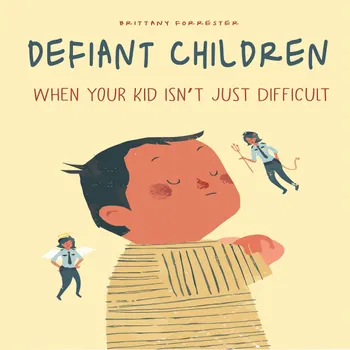
Learning to communicate and manage frustration is part of growing up. But some children don’t master those skills. Suppose their frequent angry outbursts and aggressive behaviors interfere with family life, making friends, or school performance. In that case, they may have the oppositional defiant disorder (ODD), which, by some estimates, affects up to 16 percent of school-age children. Though no statistics are available for younger children, experts say that most children with ODD show signs of the disorder in the preschool years.

Oppositional defiant disorder describes a pattern of angry/irritable mood, argumentative/defiant behavior, and/or spitefulness that lasts at least six months in multiple settings. It occurs almost daily in children younger than 5 and at least once a week in older children. (By 6 or 7, most children have learned to express anger in productive, socially acceptable ways.)

Examples of anger and irritable mood include frequent loss of temper and being easily annoyed or resentful. Argumentative and defiant behavior includes refusing to obey rules, continually challenging authority, being deliberately annoying to others, and/or blaming others for mistakes or bad behavior.

He says that many children with ODD have other mental health challenges, such as anxiety, mood disorders, and language and learning disorders. Trauma, parenting, styles, and other environmental issues may also contribute.

As with many mental health conditions, ODD occurs on a continuum. Children with mild ODD may show symptoms only at home or only at school. Moderate ODD may be the diagnosis when a child’s ODD behaviors happen in two settings. ODD is classified as severe when the acting out is seen in three or more locations.
Kom i gang med denne boken i dag for 0 kr

  • Få full tilgang til alle bøkene i appen i prøveperioden
  • Ingen forpliktelser, si opp når du vil
Prøv gratis nå
Mer enn 52 000 personer har gitt Nextory 5 stjerner på App Store og Google Play.

Andre lesere likte disse

  1. 4.3

    Too Perfect : When Being in Control Gets Out of Control

    Allan E. Mallinger, MD, Jeannette De Wyze

  2. Childhood Speech, Language, and Listening Problems, 3rd Edition

    Patricia McAleer Hamaguchi

  3. Anger Management for Kids : The Complete Guide to Understand and Overcome Children's Anxiety and Anger

    Sonnie Bloggs

  4. Mindful Discipline : A Loving Approach to Setting Limits and Raising an Emotionally Intelligent Child

    Shauna L. PhD, Chris White, MD

  5. The Behavior Code : A Practical Guide to Understanding and Teaching the Most Challenging Students

    Jessica Minahan, Nancy Rappaport, MD

  6. 3.3

    Discipline your kids with Positive Parenting

    Nicole Libin

  7. Effective Communication and Emotional Intelligence Mastery 2 Books in 1: Everything You need to know about Persuasion, NLP, Mind Hacking and Mental Manipulation

    Barret Trevis, Parks Daniel, Self Discovery Academy

  8. Anger Busting 101: The Ultimate Guide on How to Stay Free From Anger, Discover the Tricks and Tips on How You Can Master Your Emotions and Control Your Anger

    Den Wilburn

  9. Not In My Classroom!: A Teacher's Guide to Effective Classroom Management

    Frederick C Wootan, Catherine H. Mulligan

  10. 3.0

    Calm Within Chaos: A Guide to Living a Stress- Free Life in 10 Easy Steps : Easy Transformative Practices for Inner Peace and Resilience

    Behzad D Panah

  11. When Anger Hurts : Quieting the Storm Within, 2nd Edition

    Matthew McKay, Ph.D., Peter D. Rogers, PhD, Judith McKay RN

  12. The Prepper's Ultimate Food Storage Guide : Your Complete Resource to Create a Long-Term, Live-Saving Supply of Nutritious, Shelf-Stable Meals, Snacks, and More

    Julie Languille, Daisy Luther, Tess Pennington, Shelle Wells