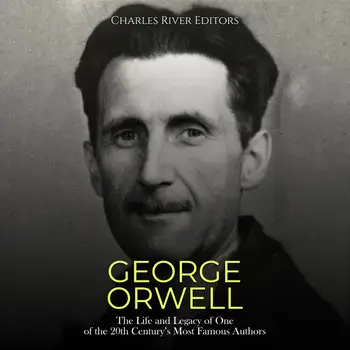
George Orwell: The Life and Legacy of One of the 20th Century’s Most Famous Authors

for many walks of life, including commercial, diplomatic, academic, philosophical, and historical pursuits. George Orwell’s campaign for perfectly written English in an artistic and content-oriented sense might seem obsessive now, but the importance of written accuracy and well-conveyed meaning for that age cannot be overstated. In fact, Orwell and his works remain famous in large measure because they’re so critical of the ways in which language can be manipulated.

Orwell believed that a decaying language was a decaying society, open to misinformation, manipulation, and rewritten versions of history, the kind of themes that have become synonymous with his name and works. He was a philosophical and political writer caught between strong capitalistic, socialistic, communist, and fascist forces operating around the globe in the early 20th century, and to prevent extremes on both sides from adopting and distorting his works, he labored to simplify his style past the possibility of misconception. His works hauntingly warn readers of the dangers of extremism, totalitarianism, and all other kinds of tyranny that can be found in government, and as a result, the word Orwellian is often thrown around. In the same vein, critics of government policies or individual politicians often make reference to Animal Farm and Nineteen Eighty-Four, dystopian works that were contemporary with World War II.

With such a successful nom de plume, it is difficult for almost anyone but family relations to recall Orwell’s real name. Eric Arthur Blair wanted to be a writer from the beginning, but so controversial were his works that he wished to avoid embarrassing or opening his family up to criticism. The name Orwell likely came from the beautiful River Orwell in East Anglia. Either way, the gifted English novelist, essayist, and critic became a major force in political literature of the 20th century.

Om denne boken

for many walks of life, including commercial, diplomatic, academic, philosophical, and historical pursuits. George Orwell’s campaign for perfectly written English in an artistic and content-oriented sense might seem obsessive now, but the importance of written accuracy and well-conveyed meaning for that age cannot be overstated. In fact, Orwell and his works remain famous in large measure because they’re so critical of the ways in which language can be manipulated.

Orwell believed that a decaying language was a decaying society, open to misinformation, manipulation, and rewritten versions of history, the kind of themes that have become synonymous with his name and works. He was a philosophical and political writer caught between strong capitalistic, socialistic, communist, and fascist forces operating around the globe in the early 20th century, and to prevent extremes on both sides from adopting and distorting his works, he labored to simplify his style past the possibility of misconception. His works hauntingly warn readers of the dangers of extremism, totalitarianism, and all other kinds of tyranny that can be found in government, and as a result, the word Orwellian is often thrown around. In the same vein, critics of government policies or individual politicians often make reference to Animal Farm and Nineteen Eighty-Four, dystopian works that were contemporary with World War II.

With such a successful nom de plume, it is difficult for almost anyone but family relations to recall Orwell’s real name. Eric Arthur Blair wanted to be a writer from the beginning, but so controversial were his works that he wished to avoid embarrassing or opening his family up to criticism. The name Orwell likely came from the beautiful River Orwell in East Anglia. Either way, the gifted English novelist, essayist, and critic became a major force in political literature of the 20th century.
Kom i gang med denne boken i dag for 0 kr

  • Få full tilgang til alle bøkene i appen i prøveperioden
  • Ingen forpliktelser, si opp når du vil
Prøv gratis nå
Mer enn 52 000 personer har gitt Nextory 5 stjerner på App Store og Google Play.

  1. 5.0

    Cochise and Geronimo: The Lives and Legacies of the Most Famous Apache Warriors

    Charles River Editors

  2. Submarines and the World Wars: The History of Submarine Warfare in World War I and World War II

    Charles River Editors

  3. The End of the Bronze Age: The History of the Kingdoms that Dominated the Near East in the Late Bronze Age

    Charles River Editors

  4. The Armenian Empire: The History and Legacy of the Ancient Kingdom of Greater Armenia

    Charles River Editors

  5. The Age of Sail’s Most Famous Battles: The History of the Naval Engagements that Shaped Europe in the Early Modern Period

    Charles River Editors

  6. Persepolis and Susa: The History of the Achaemenid Persian Empire’s Capitals

    Charles River Editors

  7. The Dawn of the Age of Exploration: The History of the Initial Expeditions that Led to European Imperialism across the Globe

    Charles River Editors

  8. Across the Silk Road and the Atlantic: The History of Marco Polo and Christopher Columbus’ Groundbreaking Voyages

    Charles River Editors

  9. The Start of the Cold War: The History of the Burgeoning Rivalry Between the United States and Soviet Union

    Charles River Editors

  10. Warfare in Ancient Greece: The History of the Greeks’ Wars on Land and Sea in Antiquity

    Charles River Editors

  11. The Ottoman Sieges of Vienna: The History of the Ottoman Empire’s Unsuccessful Attempts to Conquer the Habsburg Capital

    Charles River Editors

  12. The Dramatic Rise and Fall of the Portuguese Empire: The History and Legacy of Portugal’s Mercantile Empire across the World

    Charles River Editors