Rise and Fall of Cesar Birotteau

In "Rise and Fall of Cesar Birotteau," Honoré de Balzac masterfully chronicles the rise and eventual downfall of a middle-class perfumer in early 19th century Paris. This detailed narrative offers a profound exploration of ambition, social status, and the mercurial nature of fortune within the framework of Balzac's renowned "La Comédie Humaine." Rich in its portrayal of Parisian society, the novel employs a keenly observational literary style, blending satire and realism while underscoring the relentless pursuit of success and the susceptibility to corruption inherent in human ambition. Balzac's intricate character development and vivid depictions of city life serve as a revealing commentary on the social structures and economic imperatives of his time. Honoré de Balzac (1799-1850), a pivotal figure in the literary canon, drew upon his experiences of financial struggle and societal observation, which informed the themes of capitalism and moral decay depicted in this work. His commitment to chronicling the intricacies of social classes and their interrelations highlights his belief in the importance of individual narratives within the greater societal fabric. As a writer deeply embedded in the era's tumult, Balzac effectively illustrates the pitfall of aspirations gone awry through the lens of his characters. This novel is an essential read for those interested in the complexities of human nature and the sociocultural dynamics of the 19th century. Balzac's intricate storytelling invites readers to reflect on the moral dilemmas faced by individuals in the throes of ambition. Highly recommended for students of literature and history alike, this work epitomizes the richness of human experience and the often-unforgiving landscape of societal expectation.

Om denne boken

In "Rise and Fall of Cesar Birotteau," Honoré de Balzac masterfully chronicles the rise and eventual downfall of a middle-class perfumer in early 19th century Paris. This detailed narrative offers a profound exploration of ambition, social status, and the mercurial nature of fortune within the framework of Balzac's renowned "La Comédie Humaine." Rich in its portrayal of Parisian society, the novel employs a keenly observational literary style, blending satire and realism while underscoring the relentless pursuit of success and the susceptibility to corruption inherent in human ambition. Balzac's intricate character development and vivid depictions of city life serve as a revealing commentary on the social structures and economic imperatives of his time. Honoré de Balzac (1799-1850), a pivotal figure in the literary canon, drew upon his experiences of financial struggle and societal observation, which informed the themes of capitalism and moral decay depicted in this work. His commitment to chronicling the intricacies of social classes and their interrelations highlights his belief in the importance of individual narratives within the greater societal fabric. As a writer deeply embedded in the era's tumult, Balzac effectively illustrates the pitfall of aspirations gone awry through the lens of his characters. This novel is an essential read for those interested in the complexities of human nature and the sociocultural dynamics of the 19th century. Balzac's intricate storytelling invites readers to reflect on the moral dilemmas faced by individuals in the throes of ambition. Highly recommended for students of literature and history alike, this work epitomizes the richness of human experience and the often-unforgiving landscape of societal expectation.
Kom i gang med denne boken i dag for 0 kr

  • Få full tilgang til alle bøkene i appen i prøveperioden
  • Ingen forpliktelser, si opp når du vil
Prøv gratis nå
Mer enn 52 000 personer har gitt Nextory 5 stjerner på App Store og Google Play.

  1. 2.0

    Father Goriot - Audiobook

    Honoré de Balzac, Classic Audiobooks

  2. Eugénie Grandet - Audiobook

    Honoré de Balzac, Classic Audiobooks

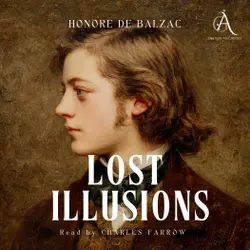
  3. Lost Illusions - Audiobook

    Honoré de Balzac, Classic Audiobooks

  4. 5.0

    50 Masterpieces you have to read before you die vol: 2 : Timeless Classics to Enrich Your Mind and Soul

    Louisa, Jane Austen, Joseph Conrad, D. H. Lawrence, George Eliot, Leo Tolstoy, James Joyce, Charles Dickens, Bram Stoker, Oscar Wilde, Honoré de Balzac, Edgar Rice Burroughs, Anne Brontë, Charlotte Brontë, Emily Brontë, Lewis Carroll, Willa Cather, Miguel de Cervantes, E. E. Cummings, Fyodor Dostoyevsky, Daniel Defoe, Arthur Conan Doyle, Alexandre Dumas, Gustave Flaubert, Henry James, Victor Hugo, HB Classics

  5. 50 Masterpieces You Must Read Before You Die: Volume 2 : Timeless Classics That Will Enrich Your Mind and Soul

    Louisa May Alcott, Jane Austen, Joseph Conrad, D. H. Lawrence, George Eliot, Leo Tolstoy, James Joyce, Charles Dickens, Bram Stoker, Oscar Wilde, Honoré de Balzac, Edgar Rice Burroughs, Anne Brontë, Charlotte Brontë, Emily Brontë, Lewis Carroll, Willa Cather, Miguel de Cervantes, E. E. Cummings, Fyodor Dostoyevsky, Daniel Defoe, Arthur Conan Doyle, Alexandre Dumas, Gustave Flaubert, Henry James, Victor Hugo, The griffin classics

  6. 50 Masterpieces you have to read

    Louisa May Alcott, Jane Austen, Joseph Conrad, D. H. Lawrence, George Eliot, Leo Tolstoy, James Joyce, Charles Dickens, Bram Stoker, Oscar Wilde, Honoré de Balzac, Edgar Rice Burroughs, Anne Brontë, Charlotte Brontë, Emily Brontë, Lewis Carroll, Willa Cather, Miguel de Cervantes, E. Cummings, Fyodor Dostoyevsky, Daniel Defoe, Arthur Conan Doyle, Alexandre Dumas, Gustave Flaubert, Henry James, Victor Hugo

  7. Scener fra kurtisanenes liv : roman

    Honoré de Balzac

  8. 4.0

    Tapte illusjoner : roman

    Honoré de Balzac

  9. 50 Masterpieces you have to read

    Louisa May Alcott, Jane Austen, Joseph Conrad, D. H. Lawrence, George Eliot, Leo Tolstoy, James Joyce, Charles Dickens, Bram Stoker, Oscar Wilde, Honoré de Balzac, Edgar Rice Burroughs, Anne Brontë, Charlotte Brontë, Emily Brontë, Lewis Carroll, Willa Cather, Miguel de Cervantes, E. Cummings, Fyodor Dostoyevsky, Daniel Defoe, Arthur Conan Doyle, Alexandre Dumas, Gustave Flaubert, Henry James, Victor Hugo

  10. 50 Capolavori Da Leggere Prima Di Morire: Vol. 1 (Golden Deer Classics)

    Carlo Collodi, Golden Deer Classics, Dante Alighieri, Niccolò Machiavelli, Daniel Defoe, Charlotte Brontë, Nathaniel Hawthorne, Jules Verne, Plato, Edmondo de Amicis, Rudyard Kipling, Voltaire, Homer, Sofocle, Lao Tzu, Jonathan Swift, Friedrich Schiller, Johann Wolfgang von Goethe, Honoré de Balzac, Aleksandr Puškin, Charles Dickens, Edgar Allan Poe, Fëdor Dostoevskij, Fyodor Dostoevsky, Herman Melville, Henry David Thoreau, Harriet Beecher Stowe, Lewis Carroll, Iginio Ugo Tarchetti, Arthur Schopenhauer, Friedrich Nietzsche, Emilio De Marchi, Gabriele D’Annunzio, Giovanni Verga, Jerome Klapka Jerome, Anatole France, Émile Zola, Oscar Wilde, J.M. Barrie, Matilde Serao, Grazia Deledda, Gilbert K. Chesterton, Italo Svevo, Luigi Pirandello, Augusto de Angelis, Stendhal, Alessandro Manzoni

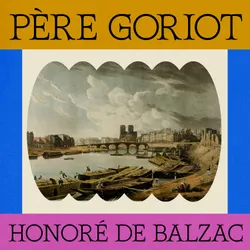
  11. Père Goriot

    Honoré de Balzac

  12. 4.5
    #14

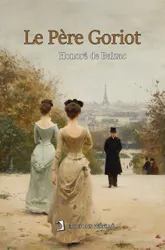
    Le père Goriot

    Honoré de Balzac