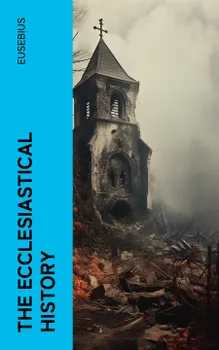
The Ecclesiastical History (Annotated) : Enriched Edition. Complete 10 Book Edition: The Early Christianity: From A.D. 1-324

Eusebius's The Ecclesiastical History is the foundational narrative of early Christianity, tracing the Church from the apostolic age to the triumph of Constantine. Combining chronicle, documentary quotation, apologetic argument, and providential interpretation, it preserves otherwise lost letters, martyr acts, episcopal successions, and accounts of heresies and persecutions. Its style is not that of modern critical history, but of late antique Christian historiography: archival, polemical, and theological, seeking to show divine purpose within historical events. Eusebius of Caesarea, bishop, scholar, and biblical exegete, wrote from a position uniquely shaped by both persecution and imperial transformation. Having lived through the Diocletianic persecutions and then witnessed Constantine's patronage of Christianity, he understood the Church's past as a drama of suffering, doctrinal contest, and vindication. His access to the library at Caesarea and to earlier Christian writings enabled him to assemble a historical record of extraordinary breadth. This work is essential for readers interested in Christian origins, late antiquity, or the formation of historical memory. Though it must be read critically, its documentary riches and interpretive ambition make it indispensable: a compelling witness to how the early Church understood its identity, continuity, and destiny.

This enriched edition has been carefully crafted to add value to your reading experience.

- A succinct Introduction situates the work's timeless appeal and themes.

- The Synopsis outlines the central plot, highlighting key developments without spoiling critical twists.

- A detailed Historical Context immerses you in the era's events and influences that shaped the writing.

- An Author Biography reveals milestones in the author's life, illuminating the personal insights behind the text.

- A thorough Analysis dissects symbols, motifs, and character arcs to unearth underlying meanings.

- Reflection questions prompt you to engage personally with the work's messages, connecting them to modern life.

- Hand‐picked Memorable Quotes shine a spotlight on moments of literary brilliance.

- Interactive footnotes clarify unusual references, historical allusions, and archaic phrases for an effortless, more informed read.
Om denne boken

Eusebius's The Ecclesiastical History is the foundational narrative of early Christianity, tracing the Church from the apostolic age to the triumph of Constantine. Combining chronicle, documentary quotation, apologetic argument, and providential interpretation, it preserves otherwise lost letters, martyr acts, episcopal successions, and accounts of heresies and persecutions. Its style is not that of modern critical history, but of late antique Christian historiography: archival, polemical, and theological, seeking to show divine purpose within historical events. Eusebius of Caesarea, bishop, scholar, and biblical exegete, wrote from a position uniquely shaped by both persecution and imperial transformation. Having lived through the Diocletianic persecutions and then witnessed Constantine's patronage of Christianity, he understood the Church's past as a drama of suffering, doctrinal contest, and vindication. His access to the library at Caesarea and to earlier Christian writings enabled him to assemble a historical record of extraordinary breadth. This work is essential for readers interested in Christian origins, late antiquity, or the formation of historical memory. Though it must be read critically, its documentary riches and interpretive ambition make it indispensable: a compelling witness to how the early Church understood its identity, continuity, and destiny.

This enriched edition has been carefully crafted to add value to your reading experience.

- A succinct Introduction situates the work's timeless appeal and themes.

- The Synopsis outlines the central plot, highlighting key developments without spoiling critical twists.

- A detailed Historical Context immerses you in the era's events and influences that shaped the writing.

- An Author Biography reveals milestones in the author's life, illuminating the personal insights behind the text.

- A thorough Analysis dissects symbols, motifs, and character arcs to unearth underlying meanings.

- Reflection questions prompt you to engage personally with the work's messages, connecting them to modern life.

- Hand‐picked Memorable Quotes shine a spotlight on moments of literary brilliance.

- Interactive footnotes clarify unusual references, historical allusions, and archaic phrases for an effortless, more informed read.
Kom i gang med denne boken i dag for 0 kr

  • Få full tilgang til alle bøkene i appen i prøveperioden
  • Ingen forpliktelser, si opp når du vil
Prøv gratis nå
Mer enn 52 000 personer har gitt Nextory 5 stjerner på App Store og Google Play.

  1. Ny

    Byzanz : Die bedeutendsten historischen Werke der Antike und des Mittelalters

    Anna Komnena, Prokop von Cäsarea, Eusebius, Agathias, Michael Psellos, J. B. Bury, William Gordon Holmes, Charles Oman, Joseph François Michaud

  2. Ny

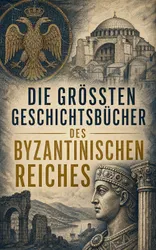
    Die größten Geschichtsbücher des Byzantinischen Reiches : Geschichte des Oströmischen Reiches, Kirchengeschichte, Die Zeit Constantins des Großen, Das Zeitalter von Justinian und Theodora

    Jacob Burckhardt, Prokop von Cäsarea, J. B. Bury, Joseph François Michaud, Anna Komnena, Michael Psellos, Eusebius, Charles Oman, William Gordon Holmes

  3. Ny

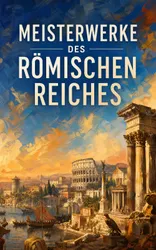
    Meisterwerke des Römischen Reiches : 50 Klassiker des antiken Roms: Selbstbetrachtungen, Handbüchlein der Moral, Historien, Aeneis, Leben der großen Griechen und Römer, Der Alexanderzug, Der Gottesstaat

    Tacitus, Mark Aurel, Vergil, Cicero, Caesar, Augustus, Titus Livius, Polybios, Ammianus Marcellinus, Flavius Josephus, Ovid, Petronius, Arrian, Sueton, Plutarch, Epiktet, Lukian, Apuleius, Longos von Lesbos, Epikur, Diogenes Laërtios, Eusebius, Ignatius von Antiochien, Tertullian, Origenes, Heiliger Augustinus

  4. Ny

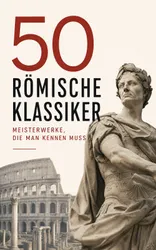
    50 Römische Klassiker - Meisterwerke, die man kennen muss : Aeneis, Gallischer Krieg, Selbstbetrachtungen, Ab Urbe Condita, Vom glückseligen Leben, Der goldene Esel, Jüdischer Krieg, Metamorphosen...

    Marcus Aurelius, Seneca, Tacitus, Plutarch, Marcus Tullius Cicero, Gaius Iulius Caesar, Titus Livius, Polybios, Flavius Josephus, Vergil, Ovid, Petronius, Arrian, Sueton, Epiktet, Lukian, Apuleius, Longos von Lesbos, Epikur, Diogenes Laërtios, Eusebius, Kaiser Augustus, Ignatius von Antiochien, Tertullian, Origenes, Augustinus von Hippo

  5. Ny

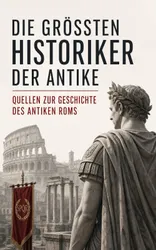
    Die größten Historiker der Antike - Quellen zur Geschichte des antiken Roms : Annalen, Ab Urbe Condita, Der Bürgerkrieg, Römische Kaiserbiographien, Leben der großen Römer, Die Germania...

    Titus Livius, Tacitus, Plutarch, Ammianus Marcellinus, Gaius Iulius Caesar, Sueton, Polybios, Diogenes Laërtios, Eusebius

  6. Ny

    Byzanz : Die Zeit Konstantins des Großen, Das Zeitalter von Justinian und Theodora, Geschichte des Byzantinischen Reiches,

    J. B. Bury, Jacob Burckhardt, Charles Oman, Joseph François Michaud, Michael Psellos, William Gordon Holmes, Eusebius, Prokop von Cäsarea, Agathias, Anna Komnena

  7. Ny

    Die größten Historiker der Antike - Quellen zur Geschichte von Byzanz : Die Geheimgeschichte, Leben Konstantins, Kirchengeschichte, Chronographia, Die Kriegsgeschichte, Alexiade...

    Prokop von Cäsarea, Michael Psellos, Anna Komnena, Eusebius, Agathias

  8. Ny

    Die größten Historiker des Byzantinischen Reiches : Die Kriegsgeschichte, Die Geheimgeschichte, Historien, Alexiade, Kirchengeschichte

    Michael Psellos, Anna Komnena, Prokop von Cäsarea, Eusebius, Agathias

  9. 100 Klassiker der Geschichtsschreibung : Die Geschichte des Alten Ägypten, Der Alexanderzug, Römische Geschichte, Herbst des Mittelalters, Die russische Revolution, Der Kampf um Europa

    Edward Gibbon, Leopold von Ranke, J. B. Bury, Theodor Mommsen, Herodot, Thukydides, Xenophon, Arrian, Titus Livius, Tacitus, Gaius Iulius Caesar, Sueton, Polybios, Ammianus Marcellinus, Plutarch, Diogenes Laërtios, Eusebius, Prokop von Cäsarea, Anna Komnena, Agathias, Marc Bloch, L. W. King, George Rawlinson, Edward Bulwer-Lytton, Jacob Burckhardt, Joseph François Michaud, Johan Huizinga, Arthur Middleton Reeves, Niccolò Machiavelli, G.K. Chesterton, Voltaire, Friedrich Schiller, Ricarda Huch, Thomas Carlyle, Charles Downer Hazen, Egon Friedell, Walter Benjamin

  10. Die größten Geschichtsbücher der Antike : Römische Kaiserbiographien, Der Alexanderzug, Der Bürgerkrieg, Der Peloponnesische Krieg, Ab urbe condita, Historien, Die Kriegsgeschichte, Kirchengeschichte

    Tacitus, Ammianus Marcellinus, Gaius Iulius Caesar, Plutarch, Herodot, Thukydides, Arrian, Titus Livius, Sueton, Polybios, Diogenes Laërtios, Prokop von Cäsarea, Eusebius, Xenophon

  11. 100 Große Geschichtsbücher - Klassiker, die man kennen muss : Der Peloponnesische Krieg, Der Alexanderzug, Ab Urbe Condita, Napoleonische Kriege, Geschichte des Ersten und Zweiten Weltkriegs

    Tacitus, Thukydides, Plutarch, Theodor Mommsen, Edward Gibbon, Leopold von Ranke, Ricarda Huch, Helmuth von Moltke, Xenophon, Arrian, Titus Livius, Gaius Iulius Caesar, Sueton, Polybios, Ammianus Marcellinus, Diogenes Laërtios, Eusebius, Prokop von Cäsarea, Anna Komnena, Agathias, Marc Bloch, George Rawlinson, Edward Bulwer-Lytton, Jacob Burckhardt, Joseph François Michaud, Johan Huizinga, Niccolò Machiavelli, G.K. Chesterton, Voltaire, Friedrich Schiller, Thomas Carlyle, Charles Downer Hazen, Egon Friedell, Walter Benjamin

  12. Die Welt der Antike in 20 Büchern : Der Alexanderzug, Die Germania, Der Peloponnesische Krieg, Gallischer Krieg, Leben der großen Griechen und Römer, Die Kriegsgeschichte, Kirchengeschichte

    Herodot, Thukydides, Arrian, Tacitus, Titus Livius, Plutarch, Gaius Iulius Caesar, Sueton, Polybios, Ammianus Marcellinus, Diogenes Laërtios, Prokop von Cäsarea, Eusebius, Xenophon