Om denne boken

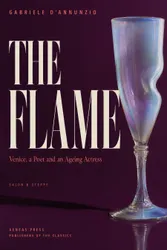
The Flame (Il fuoco, 1900) is D'Annunzio's sumptuous Venetian novel of artistic vocation, erotic domination, and cultural ambition. Centered on the visionary poet Stelio Effrena and the aging actress Foscarina, it transforms a love affair into a meditation on creation, sacrifice, and the dream of a renewed Latin art. Written in a highly wrought, sensuous prose, the book belongs to European Decadence and Aestheticism, while also absorbing Wagnerian ideas of total art and the symbolic charge of Venice as both splendor and decline. Gabriele D'Annunzio, poet, novelist, dramatist, and later nationalist public figure, was among the most flamboyant Italian writers of the fin de siècle. His cult of beauty, aristocratic self-fashioning, and fascination with exceptional personalities deeply inform the novel. The relationship between Stelio and Foscarina is widely read in light of D'Annunzio's liaison with the great actress Eleonora Duse, whose art and emotional intensity helped shape his theatrical imagination. This book is recommended to readers interested in decadent literature, modern Italian prose, and fiction about the cost of artistic greatness. It is not a modest novel, but its excesses are inseparable from its power.

This enriched edition has been carefully crafted to add value to your reading experience.

- A succinct Introduction situates the work's timeless appeal and themes.

- The Synopsis outlines the central plot, highlighting key developments without spoiling critical twists.

- A detailed Historical Context immerses you in the era's events and influences that shaped the writing.

- An Author Biography reveals milestones in the author's life, illuminating the personal insights behind the text.

- A thorough Analysis dissects symbols, motifs, and character arcs to unearth underlying meanings.

- Reflection questions prompt you to engage personally with the work's messages, connecting them to modern life.

- Hand‐picked Memorable Quotes shine a spotlight on moments of literary brilliance.

- Interactive footnotes clarify unusual references, historical allusions, and archaic phrases for an effortless, more informed read.

Kom i gang med denne boken i dag for 0 kr

  • Få full tilgang til alle bøkene i appen i prøveperioden
  • Ingen forpliktelser, si opp når du vil
Prøv gratis nå
Mer enn 52 000 personer har gitt Nextory 5 stjerner på App Store og Google Play.

  1. The Flame : Venice, a Poet and an Ageing Actress

    Gabriele D’Annunzio

  2. The Triumph of Death : An Italian Passion Turned to Ruin

    Gabriele D’Annunzio

  3. El inocente

    Gabriele D’Annunzio

  4. La veglia funebre :

    Gabriele D’Annunzio

  5. La pioggia nel pineto :

    Gabriele D’Annunzio

  6. Il piacere - Audiolibro

    Gabriele D’Annunzio

  7. 100 Klassiker der Romantik - Meisterwerke, die man kennen muss : Liebes-, Bildungs- und Gesellschaftsromane der europäischen Literaturgeschichte

    Jane Austen, Louisa May Alcott, D. H. Lawrence, Fjodor Dostojewski, William Shakespeare, Hedwig Courths-Mahler, Frances Burney, Charlotte Brontë, Alexandre Dumas, Margaret Mitchell, Charles Dickens, L.M. Montgomery, Eugenie Marlitt, Wilhelmine Heimburg, Elisabeth Bürstenbinder, Stendhal, Johann Wolfgang Goethe, Walter Scott, Guy De Maupassant, Victor Hugo, George Sand, Leo Tolstoi, Gabriele D’Annunzio, Rudyard Kipling, Gustave Flaubert, Nathaniel Hawthorne, Jean-Jacques Rousseau, Bernardin de Saint-Pierre, F. Scott Fitzgerald, Prosper Mérimée, Edith Wharton, Lena Christ, François-René de Chateaubriand, Stefan Zweig, Alexander Sergejewitsch Puschkin, Ida Boy-Ed, Arthur Schnitzler, Anatole France, Johanna Spyri, George Eliot, Gaston Leroux, Nataly von Eschstruth, Gottfried von Straßburg, Sophie Mereau, Caroline von Wolzogen, Benedikte Naubert, Henry De Stacpoole, Levin Schücking

  8. Grotescos y arabescos

    Gabriele D’Annunzio, Diego Mejía Estévez

  9. Il Piacere

    Gabriele D’Annunzio

  10. Die 100 schönsten Liebesromane zu Weihnachten : Eine Weihnachtsanthologie großer Liebesklassiker von Romantik bis zur frühen Moderne

    Louisa May Alcott, Jane Austen, Hedwig Courths-Mahler, Lucy Maud Montgomery, Emily Brontë, Victor Hugo, F. Scott Fitzgerald, Frances Burney, Charlotte Brontë, Anne Brontë, Alexandre Dumas, Charles Dickens, Eugenie Marlitt, Wilhelmine Heimburg, Elisabeth Bürstenbinder, Stendhal, Johann Wolfgang Goethe, Pierre Choderlos Laclos, Walter Scott, Guy De Maupassant, George Sand, Gabriele D’Annunzio, Leo Tolstoi, Rudyard Kipling, Gustave Flaubert, Nathaniel Hawthorne, Jean-Jacques Rousseau, Bernardin de Saint-Pierre, Prosper Mérimée, François-René de Chateaubriand, Stefan Zweig, Eufemia von Adlersfeld-Ballestrem, Hermann Stehr, Sophie von Roche, William Shakespeare, Gottfried von Straßburg, Alexander Sergejewitsch Puschkin, Hermann Heiberg, D. H. Lawrence, Fjodor Dostojewski, Ida Boy-Ed, Arthur Schnitzler, Anatole France, Johanna Spyri, George Eliot, Nataly von Eschstruth, Marianne Ehrmann, Sophie Albrecht, Sophie Mereau, Caroline von Wolzogen, Christian August Vulpius, Benedikte Naubert, Johanna Schopenhauer, Frau von W., Levin Schücking, Hermann Stegemann

  11. The Child of Pleasure

    Gabriele D’Annunzio

  12. Il notturno

    Gabriele D’Annunzio