Om denne boken

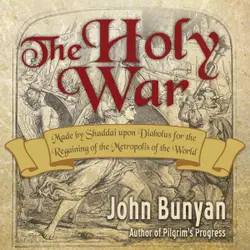
In "The Holy War," John Bunyan masterfully weaves an allegorical tale that explores the perpetual struggle between good and evil, embodied in the conflict over the city of Mansoul. Written in a narrative style rich with biblical allusions and vivid imagery, Bunyan employs a clear, didactic approach to depict the spiritual warfare experienced by humanity. This work, published in 1682, reflects the author's Puritan background and his intent to convey moral and theological truths amidst the tumultuous backdrop of 17th-century England, a period deeply influenced by religious conflict and personal faith crises. John Bunyan, an ardent Puritan preacher and author, faced significant personal trials, including his imprisonment for his nonconformist beliefs. These experiences shaped his literary voice, imbuing his works with urgency and a profound understanding of the human condition in relation to divine grace. "The Holy War" stands as a testament to his deep engagement with scripture and his desire to elucidate the complexities of spiritual struggle, informed by his own arduous journey through doubt and certainty. Recommended for both scholars and general readers, "The Holy War" offers a compelling exploration of internal conflict and redemption. Bunyan'Äôs allegory invites readers to reflect on their own spiritual battles and the nature of faith, making this text as relevant today as it was in the 17th century. Its rich symbolism and didactic purpose render it a significant piece in the canon of Christian literature.
Kom i gang med denne boken i dag for 0 kr

  • Få full tilgang til alle bøkene i appen i prøveperioden
  • Ingen forpliktelser, si opp når du vil
Prøv gratis nå
Mer enn 52 000 personer har gitt Nextory 5 stjerner på App Store og Google Play.

  1. Works of John Bunyan

    John Bunyan

  2. 15. juni

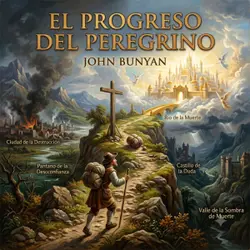
    El Progreso del Peregrino

    John Bunyan

  3. Ny

    Harvard Classics : The Five-Foot Shelf of Books

    Aesop, Dante Alighieri, Hans Christian Andersen, Augustine of Hippo, Marcus Aurelius, Jane Austen, Francis Bacon, Honoré de Balzac, Francis Beaumont, Bjørnstjerne Bjørnson, Thomas Browne, Robert Browning, John Bunyan, EDMUND BURKE, Robert Burns, Lord Byron, Thomas Carlyle, Benvenuto Cellini, Miguel de Cervantes, Marcus Tullius Cicero, Richard Henry Jr., Charles Darwin, Alphonse Daudet, Thomas Dekker, Charles Dickens, Fyodor Dostoevsky, John Dryden, Charles W. Eliot, George Eliot, Ralph Waldo Emerson, Epictetus, John Fletcher, Theodor Fontane, Benjamin Franklin, Johann Wolfgang Goethe, Oliver Goldsmith, Jacob Grimm, Edward Everett Hale, Bret Harte, Nathaniel Hawthorne, Homer, Victor Hugo, Washington Irving, Henry James, Ben Jonson, Gottfried Keller, Thomas à Kempis, Alexander L. Kielland, Martin Luther, Niccolò Machiavelli, Alessandro Manzoni, Christopher Marlowe, Philip Massinger, Guy De Maupassant, John Stuart Mill, John Milton, Thomas More, William Morris, Alfred de Musset, William Allan Neilson, William Penn, Plato, Pliny the Younger, Plutarch, George Sand, Percy Bysshe Shelley, Richard Brinsley Sheridan, Adam Smith, Laurence Sterne, Theodor Storm, William Makepeace Thackeray, Leo Tolstoy, Ivan Turgenev, Mark Twain, Juan Valera, Virgil, Izaak Walton, John Webster, John Woolman

  4. Ny
    5.0

    The Pilgrim's Progress

    John Bunyan

  5. Ny

    The Pilgrim's Progress : The Illustrated Gift Edition

    John Bunyan

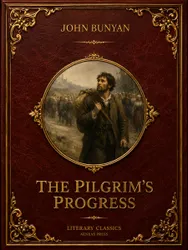
  6. The Pilgrim's Progress : John Bunyan's classic allegory of the Christian journey

    John Bunyan

  7. Le voyage du pèlerin

    John Bunyan

  8. The Pilgrim's Progress : From This World to That Which Is to Come

    John Bunyan

  9. El Progreso del Peregrino

    John Bunyan

  10. 5.0

    The Pilgrim's Progress

    John Bunyan

  11. 5.0

    The Pilgrim's Progress

    John Bunyan

  12. 5.0

    Grace Abounding to the Chief of Sinners

    John Bunyan