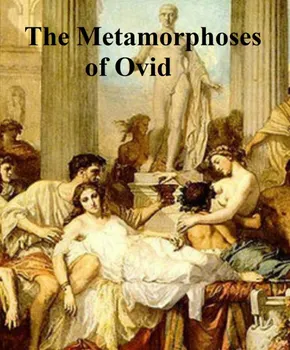
The Metamorphoses of Ovid

Literally translated with notes and explanations by Henry T. Riley, books 1 to 15. First published in 1899. According to Wikipedia: "Publius Ovidius Naso (20 March 43 BC – AD 17 or 18), known as Ovid in the English-speaking world, was a Roman poet who wrote about love, seduction, and mythological transformation. He is considered a master of the elegiac couplet, and is traditionally ranked alongside Virgil and Horace as one of the three canonic poets of Latin literature. His poetry, much imitated during Late Antiquity and the Middle Ages, decisively influenced European art and literature. The Elegiac couplet is the meter of most of Ovid's poems: the Amores — Ars Amatoria, Remedia Amoris — are didactic long poems; the Fasti, about the Roman calendar; the Medicamina Faciei Femineae, about cosmetics; fictional letters from mythologic heroines, the Heroides or Epistulae Heroidum; and all of the works written in exile (five Tristia books, four Epistulae ex Ponto books, and "Ibis", a long curse-poem). The two extant fragments of the tragedy Medea are in iambic trimeter and anapest, respectively; the Metamorphoses is in dactylic hexameter; the meter of the Aeneid, by Virgil and of the Odyssey and the Iliad, by Homer."
Om denne boken

Literally translated with notes and explanations by Henry T. Riley, books 1 to 15. First published in 1899. According to Wikipedia: "Publius Ovidius Naso (20 March 43 BC – AD 17 or 18), known as Ovid in the English-speaking world, was a Roman poet who wrote about love, seduction, and mythological transformation. He is considered a master of the elegiac couplet, and is traditionally ranked alongside Virgil and Horace as one of the three canonic poets of Latin literature. His poetry, much imitated during Late Antiquity and the Middle Ages, decisively influenced European art and literature. The Elegiac couplet is the meter of most of Ovid's poems: the Amores — Ars Amatoria, Remedia Amoris — are didactic long poems; the Fasti, about the Roman calendar; the Medicamina Faciei Femineae, about cosmetics; fictional letters from mythologic heroines, the Heroides or Epistulae Heroidum; and all of the works written in exile (five Tristia books, four Epistulae ex Ponto books, and "Ibis", a long curse-poem). The two extant fragments of the tragedy Medea are in iambic trimeter and anapest, respectively; the Metamorphoses is in dactylic hexameter; the meter of the Aeneid, by Virgil and of the Odyssey and the Iliad, by Homer."
Kom i gang med denne boken i dag for 0 kr

  • Få full tilgang til alle bøkene i appen i prøveperioden
  • Ingen forpliktelser, si opp når du vil
Prøv gratis nå
Mer enn 52 000 personer har gitt Nextory 5 stjerner på App Store og Google Play.

  1. Metamorphoses

    Ovid

  2. Metamorphoses

    Ovid

  3. The Metamorphoses of Ovid

    Ovid

  4. The Ovid Collection

    Ovid

  5. Ny

    50 Römische Klassiker - Meisterwerke, die man kennen muss : Aeneis, Gallischer Krieg, Selbstbetrachtungen, Ab Urbe Condita, Vom glückseligen Leben, Der goldene Esel, Jüdischer Krieg, Metamorphosen...

    Marcus Aurelius, Seneca, Tacitus, Plutarch, Marcus Tullius Cicero, Gaius Iulius Caesar, Titus Livius, Polybios, Flavius Josephus, Vergil, Ovid, Petronius, Arrian, Sueton, Epiktet, Lukian, Apuleius, Longos von Lesbos, Epikur, Diogenes Laërtios, Eusebius, Kaiser Augustus, Ignatius von Antiochien, Tertullian, Origenes, Augustinus von Hippo

  6. Ny

    Meisterwerke des Römischen Reiches : 50 Klassiker des antiken Roms: Selbstbetrachtungen, Handbüchlein der Moral, Historien, Aeneis, Leben der großen Griechen und Römer, Der Alexanderzug, Der Gottesstaat

    Tacitus, Mark Aurel, Vergil, Cicero, Caesar, Augustus, Titus Livius, Polybios, Ammianus Marcellinus, Flavius Josephus, Ovid, Petronius, Arrian, Sueton, Plutarch, Epiktet, Lukian, Apuleius, Longos von Lesbos, Epikur, Diogenes Laërtios, Eusebius, Ignatius von Antiochien, Tertullian, Origenes, Heiliger Augustinus

  7. Metamorphosen : Verwandlungssagen der Antike

    Ovid

  8. Die größten Klassiker der Lyrik : Die schönsten Gedichte der Weltliteratur: Bhagavadgita, Duineser Elegien, Grashalme, Venus und Adonis, Das verlorene Paradies, West-östlicher Divan

    Lord Byron, Rainer Maria Rilke, Giacomo Leopardi, Walt Whitman, Dschalal ad-Din Rumi, Heinrich Heine, William Shakespeare, John Milton, Friedrich Schiller, Percy Bysshe Shelley, Edgar Allan Poe, Johann Wolfgang Goethe, Gottfried von Straßburg, Victor Hugo, Dante Alighieri, William Wordsworth, Homer, Vergil, Ovid, Georg Herwegh, Giosuè Carducci, Omar Chayyām, Alphonse de Lamartine, Stéphane Mallarmé, Christian Morgenstern, Joachim Ringelnatz, Annette von Droste-Hülshoff, Alexander Sergejewitsch Puschkin, Robert Burns, Charles Baudelaire

  9. Poetische Meisterwerke der Weltliteratur : Duineser Elegien, Grashalme, Venus und Adonis, Das verlorene Paradies, West-östlicher Divan, Gedichte aus dem Diwan-e Schams-e Tabrizi

    Rainer Maria Rilke, Walt Whitman, Heinrich Heine, William Shakespeare, John Milton, Lord Byron, Friedrich Schiller, Percy Bysshe Shelley, Edgar Allan Poe, Johann Wolfgang Goethe, Dschalal ad-Din Rumi, Gottfried von Straßburg, Victor Hugo, Dante Alighieri, William Wordsworth Homer, Vergil, Ovid, Giacomo Leopardi, Georg Herwegh, Giosuè Carducci, Omar Chayyām, Alphonse de Lamartine, Stéphane Mallarmé, Christian Morgenstern, Joachim Ringelnatz, Annette von Droste-Hülshoff, Alexander Sergejewitsch Puschkin, Robert Burns, Charles Baudelaire

  10. Von Göttern und Helden : Die Legenden und Mythen des Altertums: Ilias, Odyssee, Gilgamesch-Epos, Metamorphosen

    Gustav Schwab, Homer, Ovid, Ludwig Preller, Theodor Birt, Karl Friedrich Becker

  11. Die größten Mythen der Antike : Die Sagen und Mythen des Altertums: Ilias, Odyssee, Gilgamesch-Epos, Metamorphosen

    Homer, Ovid, Ludwig Preller, Gustav Schwab, Theodor Birt, Karl Friedrich Becker