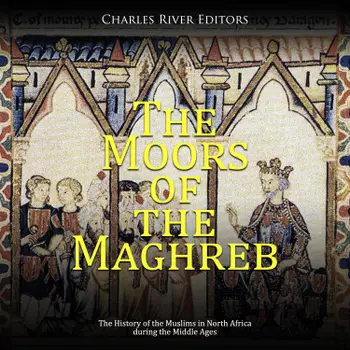
The Moors of the Maghreb: The History of the Muslims in North Africa during the Middle Ages

The term Moor is a historical rather than an ethnic name. It is an invention of European Christians for the Islamic inhabitants of Maghreb (North Africa), Andalusia (Spain), Sicily and Malta, and was sometimes use to designate all Muslims. It is derived from Mauri, the Latin name for the Berbers who lived in the Roman province of Mauretania, which ranged across modern Algeria and Morocco. Saracen was another European term used to designate Muslims, though it usually referred to the Arabic peoples of the Middle East and derives from an ancient name for the Arabs, Sarakenoi. The Muslims of those regions no more refer to themselves by that term than those of North Africa call themselves Moors. Maghreb, or al-Maghreb, is a historical term used by Arabic Muslims for the territory of coastal North Africa from Alexandria to the Atlantic Coast. It means “The West” and is used in opposition to Mashrek, “The East,” used to refer to the lands of Islam in the Middle East and north-eastern Africa. The Berbers refer to the region in their own language as Tamazgha. In a limited, precise sense it can also refer to the Kingdom of Morocco, the proper name of which is al-Mamlakah al-Maghribiyyah, “Kingdom of the West.”

Ethnically the people of North Africa are mostly of mixed Arab-Berber descent, and the Berbers are a proud and noble group of peoples dating from ancient times. The term Berber is again a foreign designation, coming from the Greek barbaroi, meaning stranger. By implication, as far as the Greeks and Romans were concerned, the word indicated the people were uncivilized. From this comes the archaic English name Barbary, used to designate the north coast of Africa and still used in “Barbary ape” and the breed of horse known as the Barb. The Berbers call themselves Imazighen, though in truth they are a grouping of different tribes rather than a strictly homogenous group.

Kom i gang med denne boken i dag for 0 kr

  • Få full tilgang til alle bøkene i appen i prøveperioden
  • Ingen forpliktelser, si opp når du vil
Prøv gratis nå
Mer enn 52 000 personer har gitt Nextory 5 stjerner på App Store og Google Play.

  1. Persepolis and Susa: The History of the Achaemenid Persian Empire’s Capitals

    Charles River Editors

  2. The Dawn of the Age of Exploration: The History of the Initial Expeditions that Led to European Imperialism across the Globe

    Charles River Editors

  3. Across the Silk Road and the Atlantic: The History of Marco Polo and Christopher Columbus’ Groundbreaking Voyages

    Charles River Editors

  4. 3.5

    Sigmund Freud and Carl Jung: The Pioneering Lives and Works of History’s Most Influential Psychologists

    Charles River Editors

  5. 3.0

    The Battle of Vienna (1683): The History and Legacy of the Decisive Conflict between the Ottoman Turkish Empire and Holy Roman Empire

    Charles River Editors

  6. Arnold Rothstein and Meyer Lansky: The Lives and Legacies of the Gangsters Who Reformed Organized Crime in America

    Charles River Editors

  7. 3.0

    The Tainos and Caribs: The History of the Indigenous Natives Who Encountered Christopher Columbus in 1492

    Charles River Editors

  8. The Dutch East India Company and British East India Company: The History and Legacy of the World’s Most Famous Colonial Trade Companies

    Charles River Editors

  9. The Osage Indian Murders: The History of the Notorious Killing Spree and the Federal Investigations in the Early 20th Century

    Charles River Editors

  10. The Biggest Battles of the Pacific Theater: The History of the Decisive Campaigns that Led to Victory Over Japan in World War II

    Charles River Editors

  11. 4.3

    Czechoslovakia and Yugoslavia: The History and Legacy of the Multiethnic Nations that Split Apart after the Cold War

    Charles River Editors

  12. The Ottoman Sieges of Vienna: The History of the Ottoman Empire’s Unsuccessful Attempts to Conquer the Habsburg Capital

    Charles River Editors