Om denne boken

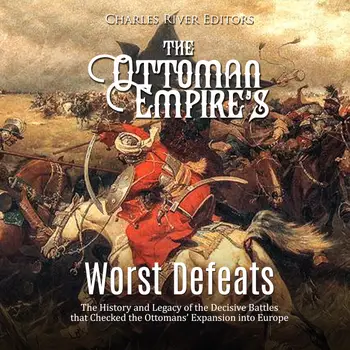
In the wake of taking Constantinople, the Ottoman Empire would spend the next few centuries expanding its size, power, and influence, bumping up against Eastern Europe and becoming one of the world’s most important geopolitical players. It was a rise that would not truly start to wane until the 19th century. The long agony of the “sick man of Europe,” an expression used by the Tsar of Russia to depict the falling Ottoman Empire, could almost blind people to its incredible power and history. Preserving its mixed heritage, coming from both its geographic position rising above the ashes of the Byzantine Empire and the tradition inherited from the Muslim Conquests, the Ottoman Empire lasted more than six centuries. Its soldiers fought, died, and conquered lands on three different continents, making it one of the few stable multiethnic empires in history, and likely one of the last. Thus, it’s somewhat inevitable that the history of its decline is at the heart of complex geopolitical disputes, as well as sectarian tensions that are still key to understanding the Middle East, North Africa and the Balkans.

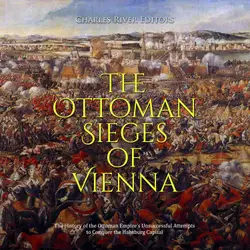
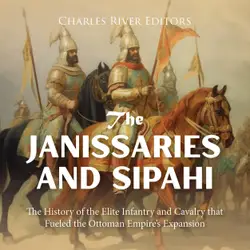
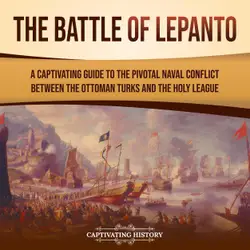
When studying the fall of the Ottoman Empire, historians have argued over the breaking point that saw a leading global power slowly become a decadent empire. The defeat in the Battle of Lepanto stopped the Ottomans from pushing further into the Mediterranean, and the Battle of Vienna in 1683 was certainly an important turning point for the expanding empire, as the defeat of Grand Vizier Kara Mustafa Pasha at the hands of a coalition led by the Austrian Habsburg dynasty, Holy Roman Empire and Polish-Lithuanian commonwealth marked the end of Ottoman expansionism. It was also the beginning of a slow decline during which the Ottoman Empire suffered multiple military defeats, found itself mired by corruption, and had to deal with the increasingly mutinous Janissaries (the Empire’s initial foot soldiers).

Kom i gang med denne boken i dag for 0 kr

  • Få full tilgang til alle bøkene i appen i prøveperioden
  • Ingen forpliktelser, si opp når du vil
Prøv gratis nå
Mer enn 52 000 personer har gitt Nextory 5 stjerner på App Store og Google Play.

Lignende bøker

  1. The Ottoman Empire’s Greatest Victories: The History and Legacy of the Most Important Battles Won by the Ottomans

    Charles River Editors

  2. The Ottoman Empire’s Most Important Battles: The History and Legacy of the Ottomans’ Biggest Victories and Defeats

    Charles River Editors

  3. The Ottoman Sieges of Vienna: The History of the Ottoman Empire’s Unsuccessful Attempts to Conquer the Habsburg Capital

    Charles River Editors

  4. The Ottomans and Christians: The History and Legacy of the Ottomans’ Conflicts with Catholic and Orthodox Nations

    Charles River Editors

  5. The Ottoman Empire’s Greatest Sultans: The Lives and Legacies of Osman I, Mehmed II, and Suleiman the Magnificent

    Charles River Editors

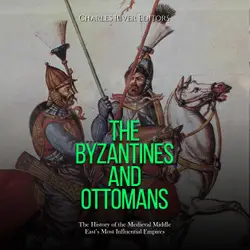
  6. The Byzantines and Ottomans: The History of the Medieval Middle East’s Most Influential Empires

    Charles River Editors

  7. The Age of Sail’s Most Famous Battles: The History of the Naval Engagements that Shaped Europe in the Early Modern Period

    Charles River Editors

  8. The Janissaries and Sipahi: The History of the Elite Infantry and Cavalry that Fueled the Ottoman Empire’s Expansion

    Charles River Editors

  9. The Islamic Invasions of Europe: The History of the Ottoman and Moorish Campaigns across the Continent

    Charles River Editors

  10. The Byzantine-Seljuk Wars: The History and Legacy of the Battles for Asia Minor in the 11th Century

    Charles River Editors

  11. Manzikert and Myriokephalon: The History of the Battles for Anatolia between the Byzantines and Seljuks

    Charles River Editors

  12. The Battle of Lepanto: A Captivating Guide to the Pivotal Naval Conflict between the Ottoman Turks and the Holy League

    Captivating History