
Vurdering: 3.3 av 5, basert på 3 anmeldelser
Lydbok E-bok

Om denne boken

The superstition upon which this tale is founded is very general in the East. Among the Arabians, it appears to be common: it did not, however, extend itself to the Greeks until after the establishment of Christianity; and it has only assumed its present form since the division of the Latin and Greek churches. At which time, the idea becoming prevalent that a Latin body could not corrupt if buried in their territory, it gradually increased, and formed the subject of many wonderful stories, still extant, of the dead rising from their graves and feeding upon the blood of the young and beautiful. In the West it spread, with some slight variation, all over Hungary, Poland, Austria, and Lorraine, where the belief existed that vampyres nightly imbibed a certain portion of the blood of their victims, who became emaciated, lost their strength, and speedily died of consumption. Whilst these human blood-suckers fattened, and their veins became distended to such a state of repletion as to cause the blood to flow from all the passages of their bodies, and even from the very pores of their skins.

In the London Journal of March 1732 is a curious, and, of course, credible account of a particular case of vampyrism, which is stated to have occurred at Madreyga, in Hungary. It appears that, upon an examination of the commander-in-chief and magistrates of the place, they positively and unanimously affirmed that, about five years before, a certain Heyduke, named Arnold Paul, had been heard to say, that, at Cassovia, on the frontiers of the Turkish Servia, he had been tormented by a vampyre, but had found a way to rid himself of the evil by eating some of the earth out of the vampyre's grave and rubbing himself with his blood. This precaution, however, did not prevent him from becoming a vampyre himself. For about 20 or 30 days after his death and burial, many persons complained of having been tormented by him.

Kom i gang med denne boken i dag for 0 kr

  • Få full tilgang til alle bøkene i appen i prøveperioden
  • Ingen forpliktelser, si opp når du vil
Prøv gratis nå
Mer enn 52 000 personer har gitt Nextory 5 stjerner på App Store og Google Play.

  1. The Pumpkins Have Eyes - Haloween Collection

    Wilhelm Hauff, Charles Dickens, Mark Twain, Harriet Beecher Stowe, Edgar Allan Poe, William Hope Hodgson, John Buchan, George MacDonald, Bram Stoker, Anatole France, Jack London, Henry James, Théophile Gautier, Arthur Conan Doyle, Richard Le Gallienne, Ralph Adams Cram, Guy De Maupassant, Thomas Hardy, William Archer, Daniel Defoe, Brander Matthews, Lafcadio Hearn, Ambrose Bierce, Ellis Parker Butler, Washington Irving, Nathaniel Hawthorne, Grant Allen, Arthur Machen, Wilkie Collins, Thomas Peckett Prest, James Malcolm Rymer, Fergus Hume, Walter Hubbell, Leopold Kompert, Florence Marryat, John William Polidori, Vincent O'Sullivan, W. W. Jacobs, M.P. Shiel, M. R. James, H.P. Lovecraft, Francis Marion Crawford, Mary Shelley, Margaret Oliphant, Frank R. Stockton, A. T. Quiller-Couch, Leonard Kip, Katherine Rickford, Bithia Mary Croker, Catherine L. Pirkis, Pedro De Alarçon, Pliny the Younger, Helena Blavatsky, Villiers de Adam, William F. Harvey, Fiona Macleod, William T. Stead, Gambier Bolton, Andrew Jackson Davis, Nizida, Walter F. Prince, Chester Bailey Fernando

  2. 3.3

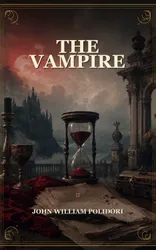
    The Vampyre

    John William Polidori

  3. Ny
    3.3

    The Vampyre

    John William Polidori

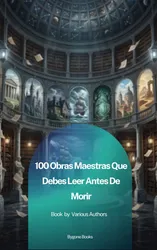
  4. 100 obras maestras que debes leer antes de morir

    Francis Scott Fitzgerald, Mary Shelley, Lyman Frank Baum, Edith Nesbit, Dante Alighieri, Jane Austen, Ambrose Bierce, Emily Brontë, Edgar Rice Burroughs, Lewis Carroll, Wilkie Collins, René Descartes, Charles Dickens, Emily Dickinson, Alexandre Dumas, Gustave Flaubert, Benito Pérez Galdós, Johann Wolfgang Goethe, Thomas Hardy, E. T. Hoffmann, Washington Irving, Henry James, James Joyce, Franz Kafka, Gaston Leroux, Federico García Lorca, H.P. Lovecraft, Publio Virgilio Marón, Lucy Maud Montgomery, John William Polidori, Marco Polo, Antoine de Saint-Exupéry, Emilio Salgari, Walter Scott, Mark Twain, Jules Verne

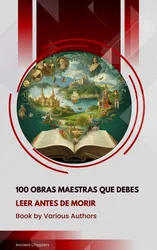
  5. 100 Obras Maestras Que Debes Leer Antes De Morir

    Francis Scott Fitzgerald, Mary Shelley, Lyman Frank Baum, Edith Nesbit, Dante Alighieri, Jane Austen, Ambrose Bierce, Emily Brontë, Edgar Rice Burroughs, Lewis Carroll, Wilkie Collins, René Descartes, Charles Dickens, Emily Dickinson, Alexandre Dumas, Gustave Flaubert, Benito Pérez Galdós, Johann Wolfgang von Goethe, Thomas Hardy, E T A Hoffmann, Washington Irving, Henry James, James Joyce, Franz Kafka, Gaston Leroux, Federico García Lorca, H.P. Lovecraft, Publio Virgilio Marón, Lucy Maud Montgomery, John William Polidori, Marco Polo, Antoine de Saint-Exupéry, Emilio Salgari, Walter Scott, Mark Twain, Jules Verne, H.G. Wells, Edith Wharton, Mary Wollstonecraft, Fernando de Rojas

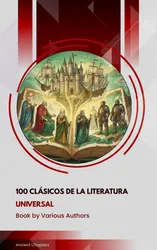
  6. 100 Clásicos de la Literatura Universal

    Francis Scott Fitzgerald, Mary Shelley, Lyman Frank Baum, Louisa May Alcott, Dante Alighieri, Jane Austen, Ambrose Bierce, Emily Brontë, Edgar Rice Burroughs, Lewis Carroll, Wilkie Collins, René Descartes, Charles Dickens, Emily Dickinson, Alexandre Dumas, Gustave Flaubert, Benito Pérez Galdós, Johann Wolfgang von Goethe, Thomas Hardy, E T A Hoffmann, Washington Irving, Henry James, James Joyce, Franz Kafka, Gaston Leroux, Federico García Lorca, H.P. Lovecraft, Publio Virgilio Marón, Lucy Maud Montgomery, John William Polidori, Marco Polo, Antoine de Saint-Exupéry, Emilio Salgari, Walter Scott, Mark Twain, Jules Verne, Julio Verne, H.G. Wells, Edith Wharton, Mary Wollstonecraft, Stefan Zweig, Sun Tzu, Bram Stoker, - Aristoteles, George Bernard Shaw, Henryk Sienkiewicz, Concepción Arenal, Charlotte Brontë, Miguel de Cervantes, G.K. Chesterton, Daniel Defoe, Fyodor Mikhailovich Dostoyevsky, Arthur Conan Doyle, Sigmund Freud, H. Rider Haggard, Homero, Immanuel Kant, Rudyard Kipling, Molière, Friedrich Nietzsche, Fernando de Rojas, Sófocles, William Makepeace Thackeray, León Tolstói, Voltaire, Ramón María del Valle-Inclán, Oscar Wilde, Virginia Woolf

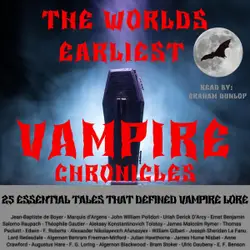
  7. The Worlds Earliest Vampire Chronicles : 25 Essential Tales That Defined Vampire Lore

    Jean-Baptiste de Boyer, Marquis d' Argens, John William Polidori, Uriah Derick D'Arcy, Ernst Benjamin Salomo Raupach, Théophile Gautier, Aleksey Konstantinovich Tolstoy, James Malcolm Rymer, Thomas Peckett, Edwin F. Roberts, Alexander Nikolayevich Afanasyev, William Gilbert, Joseph Sheridan Le Fanu, Lord Redesdale, Algernon Bertram Freeman-Mitford, Julian Hawthorne, James Hume Nisbet, Anne Crawford, Augustus Hare, F.G. Loring, Algernon Blackwood, Bram Stoker, Ulric Daubeny, E F Benson

  8. The Vampire

    John William Polidori

  9. 4.0

    El Vampiro

    John William Polidori

  10. #1

    SOMBRAS DE SANGRE : Historias clásicas que dieron origen a los vampiros literarios

    John William Polidori, Ernest Raupach, Elizabeth Caroline Grey, Julian Hawthorne

  11. 3.0

    El vampiro

    John William Polidori