Om den här boken

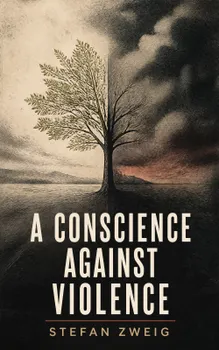
Stefan Zweig's 'A Conscience against Violence' delves into the profound moral quandaries faced by individuals grappling with the relentless tides of aggression and ethical compromise. Written with Zweig's characteristic eloquence and psychological insight, this book serves as both a critique of and a meditation on the human condition during times of conflict. Employing a narrative style imbued with empathy and introspection, Zweig crafts a compelling examination of how conscience can act as a beacon amid the shadows of tumultuous moral landscapes. Set against the backdrop of a world increasingly surrendering to the allure of brutality, Zweig's work remains a beacon of literary sophistication and timeless relevance. Stefan Zweig, one of the most prominent literary figures of the early 20th century, was deeply affected by the geopolitical upheavals of his time, particularly the two World Wars. His experiences as a European intellectual witnessing the disintegration of the old world order inform his poignant exploration of conscience and violence. Zweig's extensive travels and interactions with diverse cultures and philosophies further enriched his perspective, allowing him to write with a universal understanding of the human psyche. His personal commitment to pacifism and humanism imbues this narrative with its profound moral depth and timeless significance. This book is a must-read for those seeking a richer understanding of the struggle between ethical principles and the often corrosive context of societal violence. Zweig's masterful prose and insightful human portraits offer readers not only a reflective journey into the past but also enduring lessons applicable to contemporary society. Academics, historians, and literature enthusiasts alike will find in 'A Conscience against Violence' an invaluable addition to their literary repertoire, ensuring its place as a cornerstone in the study of conscience and moral conflict in literature.
Kom igång med den här boken idag för 0 kr

  • Få full tillgång till alla böcker i appen under provperioden
  • Ingen bindningstid, avsluta när du vill
Prova gratis nu
Mer än 52 000 personer har gett Nextory 5 stjärnor i App Store och på Google Play.

Liknande böcker

Mer av Stefan Zweig

  1. Tjugofyra timmar av en kvinnas liv

    Stefan Zweig

  2. Toppbetyg
    4.8

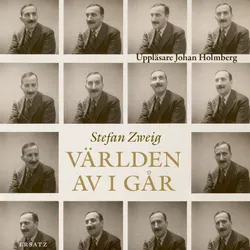
    Världen av igår

    Stefan Zweig

  3. 4.2

    Amoklöparen

    Stefan Zweig

  4. 4.8

    Världen av i går

    Stefan Zweig

  5. 4.3

    Schacknovell

    Stefan Zweig

  6. 4.5

    Montaigne

    Stefan Zweig

  7. 4.0

    Hjärtats oro

    Stefan Zweig

  8. Ångest

    Stefan Zweig

  9. The World of Yesterday : A Memoir of Vienna, Exile, and Europe's Lost Golden Age

    Stefan Zweig

  10. 5.0

    Magellan : Conqueror of the Seas

    Stefan Zweig

  11. Marie Antoinette : The Portrait of an Average Woman

    Stefan Zweig

  12. 100 Clásicos de la Literatura Universal

    Francis Scott Fitzgerald, Mary Shelley, Lyman Frank Baum, Louisa May Alcott, Dante Alighieri, Jane Austen, Ambrose Bierce, Emily Brontë, Edgar Rice Burroughs, Lewis Carroll, Wilkie Collins, René Descartes, Charles Dickens, Emily Dickinson, Alexandre Dumas, Gustave Flaubert, Benito Pérez Galdós, Johann Wolfgang von Goethe, Thomas Hardy, E T A Hoffmann, Washington Irving, Henry James, James Joyce, Franz Kafka, Gaston Leroux, Federico García Lorca, H.P. Lovecraft, Publio Virgilio Marón, Lucy Maud Montgomery, John William Polidori, Marco Polo, Antoine de Saint-Exupéry, Emilio Salgari, Walter Scott, Mark Twain, Jules Verne, Julio Verne, H.G. Wells, Edith Wharton, Mary Wollstonecraft, Stefan Zweig, Sun Tzu, Bram Stoker, - Aristoteles, George Bernard Shaw, Henryk Sienkiewicz, Concepción Arenal, Charlotte Brontë, Miguel de Cervantes, G.K. Chesterton, Daniel Defoe, Fyodor Mikhailovich Dostoyevsky, Arthur Conan Doyle, Sigmund Freud, H. Rider Haggard, Homero, Immanuel Kant, Rudyard Kipling, Molière, Friedrich Nietzsche, Fernando de Rojas, Sófocles, William Makepeace Thackeray, León Tolstói, Voltaire, Ramón María del Valle-Inclán, Oscar Wilde, Virginia Woolf