Africa may have given rise to the first human beings, and Egypt probably gave rise to the first great civilizations, which continue to fascinate modern societies across the globe nearly 5,000 years later. From the Library and Lighthouse of Alexandria to the Great Pyramid at Giza, the Ancient Egyptians produced several wonders of the world, revolutionized architecture and construction, created some of the world’s first systems of mathematics and medicine, and established language and art that spread across the known world. With world-famous leaders like King Tut and Cleopatra, it’s no wonder that today’s world has so many Egyptologists.
Although the Egyptians may not have passed their civilization directly on to later peoples, the key elements that comprised Egyptian civilization, including their religion, early ideas of state, and art and architecture, can be seen in other pre-modern civilizations. Indeed, since Egyptian civilization represented some fundamental human concepts, a study of their culture can be useful when trying to understand many other pre-modern cultures.
Part of the reason Egyptian history is so intriguing is because it is so enigmatic – even today, despite the wealth of written materials and countless monuments, Egyptologists constantly uncover more mysteries about ancient Egypt, even if many of those mysteries are somewhat mundane and appeal more to academics. For example, historians still debate precise chronologies of dynasties, theological nuances, and architectural details.
One such mystery that shows no signs of going away is the history of the archeological site known as Amarna, which is actually the name of the modern village that is closest to the ancient Egyptian city of Akhet-Aten. Akhet-Aten was built during the reign of one of Egypt’s most enigmatic pharaohs, Akhenaten (ruled ca. 1364-1347 BCE), and modern archaeological studies have shown it was hastily built and almost as quickly abandoned. Although the city had a brief lifespan, it was vitally important at the time, so much so that the late Eighteenth Dynasty has been named the Amarna Period by modern scholars. The importance is reflected in the changes that Akhenaten attempted to make to Egyptian religion, art, architecture, and society, all of which can be found among the ruins of Amarna, from texts that described the Aten as the one true god to the depictions of the royal family that were like nothing seen before or after in ancient Egyptian art. An examination of Akhenaten’s rule and the life of the city of Akhet-Aten has helped modern scholars unravel some of the mysteries of the Amarna Period, but many still remain.
Akhenaten’s most famous successor was Tutankhamun: he who is the living image of the god Amun, the image of rebirth, one of perfect laws, who pacifies the two lands, one who has raised the crowns, the pacifier of the gods, the god Ra is the possessor of forms; Tutankamun, Tut-mesut, Neferhepu-segerehtaui, Wetjes-khau-sehetep-netjeru, Nebkheprure. These are the names and titles of a king who died at a young age, but the mere mention of his name brings to mind visions of gold and splendor, and thoughts of a majestic kingdom. The reality of this once king is something quite different, as his fame has less to do with his position in history and nearly everything to do with the discovery of his tomb by Howard Carter in 1922.
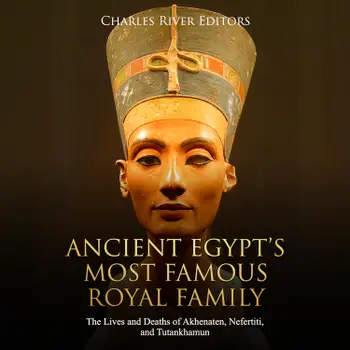
Ancient Egypt’s Most Famous Royal Family: The Lives and Deaths of Akhenaten, Nefertiti, and Tutankhamun chronicles what’s known and unknown about the famous pharaohs and the famous queen. Along with pictures depicting important people, places, and events, you will learn about Akhenaten, Nefertiti, and Tutankhamun like never before.