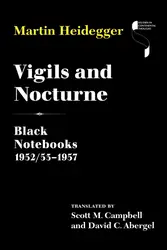
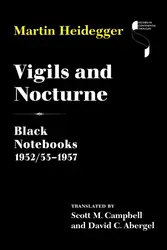
Martin Heidegger's 1941–1942 lecture course on Friedrich Hölderlin's hymn, "Remembrance," delivered immediately following his confrontation with Nietzsche, lays out a detailed plan for the interpretation of Hölderlin's poetry in which remembrance is a central concern. With its emphasis on the "free use of the national" and the "holy of the fatherland," the course marks an important progression in Heidegger's political thought. In addition to its startlingly innovative analyses of greeting, the festive, and the dream, the text provides Heidegger's fullest elaboration of the structure of commemorative thinking in relationship to time and the possibility of an "other beginning." This English translation by William McNeill and Julia Ireland completes the series of Heidegger's major lecture courses on Hölderlin.
Kom igång med den här boken idag för 0 kr
- Få full tillgång till alla böcker i appen under provperioden
- Ingen bindningstid, avsluta när du vill
Författare:
Serie:
Studies in Continental ThoughtSpråk:
Engelska
Format:

What Is Metaphysics, What Is Philosophy and Other Writings

Being and Time

The Philosophical Library Existentialism Collection : Hasidism, Essays in Metaphysics, and The Emotions

Mirada en lo que es : Conferencias de Bremen de 1949

Kant y el problema de la metafísica

Introducción a la metafísica

Correspondencia Heidegger/Jaspers 1920-1963

Duns Scotus's Doctrine of Categories and Meaning

Duns Scotus's Doctrine of Categories and Meaning

On Inception

On Inception

Hegel

Interpretation of Nietzsche's Second Untimely Meditation

The Return of Nature : Coming As If from Nowhere

Being and Truth

Duns Scotus's Doctrine of Categories and Meaning

The Phenomenology of Religious Life

Basic Concepts of Aristotelian Philosophy

Heidegger's Poietic Writings : From Contributions to Philosophy to The Event

Hölderlin's Hymns : "Germania" and "The Rhine"

Gadamer and the Transmission of History

Duns Scotus's Doctrine of Categories and Meaning

Light Traces