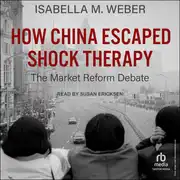
China has become deeply integrated into the world economy. Yet, gradual marketization has facilitated the country's rise without leading to its wholesale assimilation to global neoliberalism. This book uncovers the fierce contest about economic reforms that shaped China's path. In the first post-Mao decade, China's reformers were sharply divided. Should China destroy the core of the socialist system through shock therapy, or should it use the institutions of the planned economy as market creators? With hindsight, the historical record proves the high stakes behind the question: China embarked on an economic expansion commonly described as unprecedented in scope and pace, whereas Russia's economy collapsed under shock therapy. Based on extensive research, including interviews with key Chinese and international participants and World Bank officials as well as insights gleaned from unpublished documents, the book charts the debate that ultimately enabled China to follow a path to gradual reindustrialization. Beyond shedding light on the crossroads of the 1980s, it reveals the intellectual foundations of state-market relations in reform-era China through a longue durée lens. Overall, the book delivers an original perspective on China's economic model and its continuing contestations from within and from without.
How China Escaped Shock Therapy : The Market Reform Debate
Om den här boken
China has become deeply integrated into the world economy. Yet, gradual marketization has facilitated the country's rise without leading to its wholesale assimilation to global neoliberalism. This book uncovers the fierce contest about economic reforms that shaped China's path. In the first post-Mao decade, China's reformers were sharply divided. Should China destroy the core of the socialist system through shock therapy, or should it use the institutions of the planned economy as market creators? With hindsight, the historical record proves the high stakes behind the question: China embarked on an economic expansion commonly described as unprecedented in scope and pace, whereas Russia's economy collapsed under shock therapy. Based on extensive research, including interviews with key Chinese and international participants and World Bank officials as well as insights gleaned from unpublished documents, the book charts the debate that ultimately enabled China to follow a path to gradual reindustrialization. Beyond shedding light on the crossroads of the 1980s, it reveals the intellectual foundations of state-market relations in reform-era China through a longue durée lens. Overall, the book delivers an original perspective on China's economic model and its continuing contestations from within and from without.
Kom igång med den här boken idag för 0 kr
- Få full tillgång till alla böcker i appen under provperioden
- Ingen bindningstid, avsluta när du vill
Författare:
Uppläsare:
Språk:
Engelska
Format:

Thought Economics

Catalogue of the Sardinian, Etruscan and Italic bronze statuettes in the Danish National Museum

The Commanding Heights: The Battle for the World Economy

Sounds like a Melody

Fair Play

Secrets of the Moneylab : How Behavioral Economics Can Improve Your Business

Extinct for a Reason : A Field Guide to Failimals and Evolosers

Introduction to Physical & Online Real Estate

The Book of Numbers : Extract from King James Version Bible

Woolly: The True Story of the Quest to Revive History's Most Iconic Extinct Creature

Commercial Geography : A Book for High Schools, Commercial Courses, and Business Colleges

Can We Do That?: Innovative Practices That Will Change the Way You Do Church