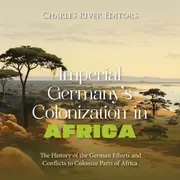
Om den här boken

Before the mid-19th century, European intervention in much of tropical Africa was extremely difficult because of the disease gradient. The combination of malaria and yellow fever commonly killed off half of European troops stationed in West Africa each year. It was the reverse of the conquest of the Americas, where introduced diseases wiped out 50 million indigenous Americans, opening the land to settlement and greatly reducing the ability to resist. This was much less of a problem in temperate southern Africa, accounting for the Dutch being able to set up a colony there in the 17th century.

The political situation was also important. Germany did not exist as a nation until 1871, when the German Empire was declared, following the decisive defeat of France in the Franco-Prussian War of 1870. Germany united into a single nation under the former king of Prussia, who became kaiser (meaning emperor). Previously, Germany had been a linguistic and cultural region fragmented into a welter of kingdoms, dukedoms, margraviates, bishoprics, and free cities.

The German Empire would prove to be the most short-lived of all, because, along with the Russian and Ottoman Empires, it did not survive World War I. In 1919, Germany lost all of its African colonies, which then accrued as League of Nations mandated territories either to France or Britain. The mandate over German South West Africa, the future Namibia, was placed under British control by proxy, and its day-to-day administration was handled from South Africa. Ultimately, South Africa absorbed South West Africa as a virtual province and resisted pressure to cede authority to the United Nations for decades. However, the contest between Germany and Britain on the African continent during the late 19th century would also create the conditions that led to the North Africa Campaign in World War II.

Kom igång med den här boken idag för 0 kr

  • Få full tillgång till alla böcker i appen under provperioden
  • Ingen bindningstid, avsluta när du vill
Prova gratis nu
Mer än 52 000 personer har gett Nextory 5 stjärnor i App Store och på Google Play.

Liknande böcker

  1. The Scramble for Africa: A Captivating Guide to European Expansion, Colonial Conflicts, the Berlin Conference, and Its Impact on Modern Times

    Captivating History

  2. Scramble for Africa: A Captivating Guide to Imperial Rivalries, Heroic Battles, and the Unfolding Legacy of the Continent, Including the Zulu War

    Captivating History

  3. Germany and the World Wars: The History and Legacy of the Germans’ Participation in History’s Biggest Conflicts

    Charles River Editors

  4. África y Roma: La historia y el legado del Imperio romano en el continente africano

    Charles River Editors

  5. Colonial Vietnam: The History of the Division Between North and South Vietnam

    Charles River Editors

  6. The German Invasions of France during the World Wars: The History of Germany’s Campaigns in World War I and World War II

    Charles River Editors

  7. The Spanish Empire in the Americas: The History of Spain’s Colonization across Central America and South America

    Charles River Editors

  8. The Modern Discovery of Australia and New Zealand: The History of the Indigenous Natives and the Initial European Expeditions and Settlements

    Charles River Editors

  9. Nazi Germany’s Conquest of Western Europe: The Negotiations and Campaigns that Let Hitler Conquer the Continent Before and During World War II

    Charles River Editors

  10. The History and Legacy of Germany’s Most Controversial Events Between World War I and World War II

    Charles River Editors

  11. A history of the colonization of Africa by alien races

    Harry Johnston

  12. The Famous Campaigns of World War I: The History of the Great War’s Most Important Battles

    Charles River Editors