MILTON

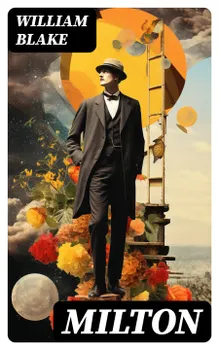
William Blake's "Milton" is a profound exploration of the interplay between myth, imagination, and spiritual awakening. Written in a distinctively visionary style, this long poem articulates Blake's unique cosmology, wherein the figure of John Milton serves as both a historical figure and a mythic archetype. Through his intricate use of symbols and allegory, Blake delves into themes of divine inspiration, the nature of the human soul, and the pursuit of artistic truth, positioning Milton as a prophet and his works as vehicles of profound knowledge and enlightenment. The poem, comprising a rich tapestry of allegorical prose and lyrical verses, reflects Blake's belief in the power of creativity to transcend earthly limitations and connect with the divine. William Blake (1757-1827), a visionary poet and artist, was deeply influenced by both the Enlightenment and the Romantic movement. His radical ideas on art, sexuality, and religion were often considered ahead of his time, which shaped his literary voice. Blake's admiration for Milton, along with his aspiration to express his own mythos, catalyzed the writing of "Milton." This work encapsulates Blake's conviction that art should convey deep spiritual truths, often intertwining his personal insights with broader philosophical questions. "Milton" is an essential read for those interested in understanding the intersection of poetry, spirituality, and the creative impulse. Through Blake's visionary lens, readers will uncover a profound meditation on the nature of artistic creation and the spiritual journey. This book is not merely a poetic endeavor; it is an invitation to explore the infinite possibilities of the human imagination.
Om den här boken

William Blake's "Milton" is a profound exploration of the interplay between myth, imagination, and spiritual awakening. Written in a distinctively visionary style, this long poem articulates Blake's unique cosmology, wherein the figure of John Milton serves as both a historical figure and a mythic archetype. Through his intricate use of symbols and allegory, Blake delves into themes of divine inspiration, the nature of the human soul, and the pursuit of artistic truth, positioning Milton as a prophet and his works as vehicles of profound knowledge and enlightenment. The poem, comprising a rich tapestry of allegorical prose and lyrical verses, reflects Blake's belief in the power of creativity to transcend earthly limitations and connect with the divine. William Blake (1757-1827), a visionary poet and artist, was deeply influenced by both the Enlightenment and the Romantic movement. His radical ideas on art, sexuality, and religion were often considered ahead of his time, which shaped his literary voice. Blake's admiration for Milton, along with his aspiration to express his own mythos, catalyzed the writing of "Milton." This work encapsulates Blake's conviction that art should convey deep spiritual truths, often intertwining his personal insights with broader philosophical questions. "Milton" is an essential read for those interested in understanding the intersection of poetry, spirituality, and the creative impulse. Through Blake's visionary lens, readers will uncover a profound meditation on the nature of artistic creation and the spiritual journey. This book is not merely a poetic endeavor; it is an invitation to explore the infinite possibilities of the human imagination.
Kom igång med den här boken idag för 0 kr

  • Få full tillgång till alla böcker i appen under provperioden
  • Ingen bindningstid, avsluta när du vill
Prova gratis nu
Mer än 52 000 personer har gett Nextory 5 stjärnor i App Store och på Google Play.

  1. Laocoon

    William Blake

  2. Into Eternal Darkness : Novels, Tales and Poems: The Mysteries of Udolpho, The Tell-Tale Heart, Sweeney Todd…

    Charles Dickens, Friedrich Schiller, Oscar Wilde, Robert Louis Stevenson, Edgar Allan Poe, William Hope Hodgson, Joseph Sheridan Fanu, George MacDonald, Percy Bysshe Shelley, Bram Stoker, Charlotte Brontë, Emily Brontë, William Godwin, Henry James, Victor Hugo, Théophile Gautier, Arthur Conan Doyle, Joseph Conrad, Guy Boothby, Jane Austen, Mayne Reid, John Meade Falkner, Guy De Maupassant, George Eliot, Samuel Taylor Coleridge, Robert Hugh Benson, Horace Walpole, Frederick Marryat, Thomas love Peacock, Washington Irving, Nathaniel Hawthorne, Gaston Leroux, Grant Allen, Arthur Machen, Wilkie Collins, Thomas Peckett Prest, James Malcolm Rymer, Robert Browning, Walter Hubbell, Marie Corelli, Charles Brockden Brown, James Hogg, William Blake, Charlotte Perkins Gilman, John Keats, Richard Marsh, Clara Reeve, Charles Robert Maturin, John William Polidori, Lord Byron, W. W. Jacobs, E F Benson, M. R. James, E. T. Hoffmann, George W. Reynolds, William Thomas Beckford, Christina Rossetti, Tobias Smollett, Nikolai Gogol, Mary Shelley, Edward Bulwer-Lytton, Ann Radcliffe, Matthew Gregory Lewis, Eliza Parsons, Eleanor Sleath, Émile Erckmann, Alexandre Chatrian

  3. Poems of William Blake : Enriched edition.

    William Blake

  4. The Ultimate Poetry Collection : Poetry of War, Romantic Poetry, Victorian Poetry

    Thomas Hardy, Samuel Taylor Coleridge, William Blake, William Wordsworth, W. B. Yeats, Lord Alfred Tennyson, Siegfried Sassoon, John Keats, Dante Gabriel Rossetti, Ted Hughes, Percy Bysshe Shelley, Wilfred Owen

  5. 3.0

    Milton, a poem

    William Blake

  6. Songs of Innocence and of Experience

    William Blake

  7. Songs of Innocence and of Experience (Unabridged)

    William Blake

  8. William Blake: Song of Innocence and of Experience

    William Blake

  9. 2.0

    Songs of Innocence and of Experience

    William Blake

  10. 2.0

    Songs of Innocence and of Experience

    William Blake

  11. William Blake Complete Works – World’s Best Collection : 250+ Works- All Poetry, Poems, Prose, Annotations, Letters & Rarities Plus Biography and Bonuses

    Alexander Gilchrist, William Blake, Algernon Charles Swinburne

  12. Songs of Innocence :

    William Blake