Om den här boken

Eating the flesh of an Egyptian mummy prevents the plague. Distilled poppies reduce melancholy. A Turkish drink called coffee increases alertness. Tobacco cures cancer. Such beliefs circulated in the seventeenth and eighteenth centuries, an era when the term "drug" encompassed everything from herbs and spices—like nutmeg, cinnamon, and chamomile—to such deadly poisons as lead, mercury, and arsenic. In The Age of Intoxication, Benjamin Breen offers a window into a time when drugs were not yet separated into categories—illicit and licit, recreational and medicinal, modern and traditional—and there was no barrier between the drug dealer and the pharmacist.

Focusing on the Portuguese colonies in Brazil and Angola and on the imperial capital of Lisbon, Breen examines the process by which novel drugs were located, commodified, and consumed. He then turns his attention to the British Empire, arguing that it owed much of its success in this period to its usurpation of the Portuguese drug networks. From the sickly sweet tobacco that helped finance the Atlantic slave trade to the cannabis that an East Indies merchant sold to the natural philosopher Robert Hooke in one of the earliest European coffeehouses, Breen shows how drugs have been entangled with science and empire from the very beginning.
Kom igång med den här boken idag för 0 kr

  • Få full tillgång till alla böcker i appen under provperioden
  • Ingen bindningstid, avsluta när du vill
Prova gratis nu
Mer än 52 000 personer har gett Nextory 5 stjärnor i App Store och på Google Play.

Andra läsare gillade också

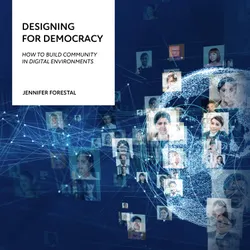
  1. Designing for Democracy : How to Build Community in Digital Environments

    Jennifer Forestal

  2. 5.0

    The Beats : A Very Short Introduction

    David Sterritt

  3. 3.0

    A Woman's Place Is in the Brewhouse : A Forgotten History of Alewives, Brewsters, Witches, and CEOs

    Tara Nurin

  4. 3.5

    Spinning Wyrd : A Journey through the Nordic Mysteries

    Ryan Smith

  5. 3.0

    Wild Cities : Discovering New Ways of Living in the Modern Urban Jungle

    Chris Fitch

  6. The Secret Apparatus : The Muslim Brotherhood's Industry of Death

    Cynthia Farahat

  7. The Road : A Story of Romans and Ways to the Past

    Christopher Hadley

  8. 5.0

    Indigenous Continent : The Epic Contest for North America

    Pekka Hamalainen

  9. 1.0

    Nature’s Ghosts : The world we lost and how to bring it back

    Sophie Yeo

  10. The Tower : A Chronicle of Climbing and Controversy on Cerro Torre

    Kelly Cordes

  11. Personhood : The New Civil War over Reproduction

    Mary Ziegler

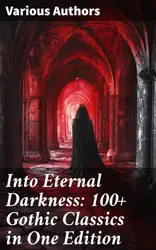
  12. Into Eternal Darkness : Novels, Tales and Poems: The Mysteries of Udolpho, The Tell-Tale Heart, Sweeney Todd…

    Charles Dickens, Friedrich Schiller, Oscar Wilde, Robert Louis Stevenson, Edgar Allan Poe, William Hope Hodgson, Joseph Sheridan Fanu, George MacDonald, Percy Bysshe Shelley, Bram Stoker, Charlotte Brontë, Emily Brontë, William Godwin, Henry James, Victor Hugo, Théophile Gautier, Arthur Conan Doyle, Joseph Conrad, Guy Boothby, Jane Austen, Mayne Reid, John Meade Falkner, Guy De Maupassant, George Eliot, Samuel Taylor Coleridge, Robert Hugh Benson, Horace Walpole, Frederick Marryat, Thomas love Peacock, Washington Irving, Nathaniel Hawthorne, Gaston Leroux, Grant Allen, Arthur Machen, Wilkie Collins, Thomas Peckett Prest, James Malcolm Rymer, Robert Browning, Walter Hubbell, Marie Corelli, Charles Brockden Brown, James Hogg, William Blake, Charlotte Perkins Gilman, John Keats, Richard Marsh, Clara Reeve, Charles Robert Maturin, John William Polidori, Lord Byron, W. W. Jacobs, E F Benson, M. R. James, E. T. Hoffmann, George W. Reynolds, William Thomas Beckford, Christina Rossetti, Tobias Smollett, Nikolai Gogol, Mary Shelley, Edward Bulwer-Lytton, Ann Radcliffe, Matthew Gregory Lewis, Eliza Parsons, Eleanor Sleath, Émile Erckmann, Alexandre Chatrian