Very little has been written about the history of Trans-Jordan between 1929-39, a decade of importance in the history of its struggle for independence and sovereignty, its progress and development, its relations with Palestine and the neighbouring Arab countries and the new awakening of Arab nationalism. During the 1930s, although still under the mandate of the League of Nations (which was entrusted to Great Britain) Trans-Jordan began to develop an international presence. The people of Trans-Jordan remained very poor however, and the government was supported by a grant-in-aid from the British Government. The British Resident in Amman Col. Henry Cox used that grant-in-aid as a justification for his financial and political control over the new mandated state, which limited its sovereignty. At the time, Great Britain had the largest empire on earth. Her wealth and power, as well as the survival of her Empire, depended mainly on her ability to defend her trade routes with her overseas colonies, protectorates and mandated territories. The Amir Abdullah Ibn al Husain wanted to take Trans-Jordan back from that Great Britain of the 1930s and develop it into an independent state. This book describes the second decade of that struggle.
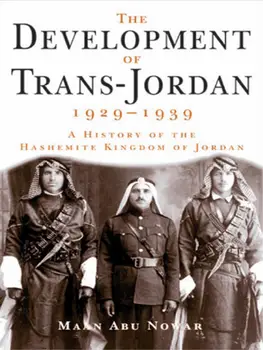
The Development of Trans-Jordan 1929-1939, The : A History of the Hashemite Kingdom of Jordan
Skriven av Maan Abu Nowar