Om den här boken

In his later work, Freud proposed that the human psyche could be divided into three parts: Id, ego and super-ego. Freud discussed this model in the 1920 essay Beyond the Pleasure Principle, and fully elaborated upon it in The Ego and the Id (1923), in which he developed it as an alternative to his previous topographic schema (i.e., conscious, unconscious and preconscious).

The id is the completely unconscious, impulsive, childlike portion of the psyche that operates on the "pleasure principle" and is the source of basic impulses and drives; it seeks immediate pleasure and gratification.

Freud acknowledged that his use of the term Id (das Es, "the It") derives from the writings of Georg Groddeck. The super-ego is the moral component of the psyche, which takes into account no special circumstances in which the morally right thing may not be right for a given situation. The rational ego attempts to exact a balance between the impractical hedonism of the id and the equally impractical moralism of the super-ego; it is the part of the psyche that is usually reflected most directly in a person's actions. When overburdened or threatened by its tasks, it may employ defense mechanisms including denial repression, undoing, rationalization, repression, and displacement. This concept is usually represented by the "Iceberg Model". This model represents the roles the Id, Ego, and Super Ego play in relation to conscious and unconscious thought.

Freud compared the relationship between the ego and the id to that between a charioteer and his horses: the horses provide the energy and drive, while the charioteer provides direction.

Kom igång med den här boken idag för 0 kr

  • Få full tillgång till alla böcker i appen under provperioden
  • Ingen bindningstid, avsluta när du vill
Prova gratis nu
Mer än 52 000 personer har gett Nextory 5 stjärnor i App Store och på Google Play.

Mer av Sigmund Freud

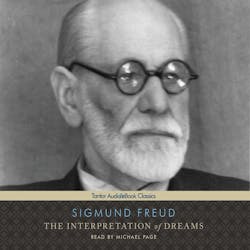
  1. 3.8

    The Interpretation of Dreams

    Sigmund Freud

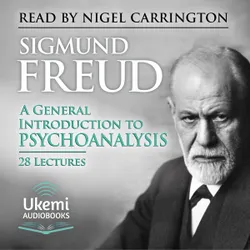
  2. 2.5

    A General Introduction to Psychoanalysis

    Sigmund Freud

  3. The Complete Works : Studies, Theories & Essays

    Sigmund Freud

  4. 100 Clásicos de la Literatura Universal

    Francis Scott Fitzgerald, Mary Shelley, Lyman Frank Baum, Louisa May Alcott, Dante Alighieri, Jane Austen, Ambrose Bierce, Emily Brontë, Edgar Rice Burroughs, Lewis Carroll, Wilkie Collins, René Descartes, Charles Dickens, Emily Dickinson, Alexandre Dumas, Gustave Flaubert, Benito Pérez Galdós, Johann Wolfgang von Goethe, Thomas Hardy, E T A Hoffmann, Washington Irving, Henry James, James Joyce, Franz Kafka, Gaston Leroux, Federico García Lorca, H.P. Lovecraft, Publio Virgilio Marón, Lucy Maud Montgomery, John William Polidori, Marco Polo, Antoine de Saint-Exupéry, Emilio Salgari, Walter Scott, Mark Twain, Jules Verne, Julio Verne, H.G. Wells, Edith Wharton, Mary Wollstonecraft, Stefan Zweig, Sun Tzu, Bram Stoker, - Aristoteles, George Bernard Shaw, Henryk Sienkiewicz, Concepción Arenal, Charlotte Brontë, Miguel de Cervantes, G.K. Chesterton, Daniel Defoe, Fyodor Mikhailovich Dostoyevsky, Arthur Conan Doyle, Sigmund Freud, H. Rider Haggard, Homero, Immanuel Kant, Rudyard Kipling, Molière, Friedrich Nietzsche, Fernando de Rojas, Sófocles, William Makepeace Thackeray, León Tolstói, Voltaire, Ramón María del Valle-Inclán, Oscar Wilde, Virginia Woolf

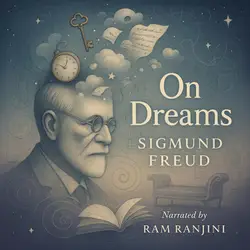
  5. 3.0

    On Dreams

    Sigmund Freud

  6. 3.4

    Group Psychology and the Analysis of the Ego

    Sigmund Freud

  7. Föreläsningar: Orientering i Psykoanalysen

    Sigmund Freud

  8. 4.4

    200 Quotes on Psychoanalysis

    Sigmund Freud, Carl Jung

  9. 1.0

    Psychopathology of Everyday Life

    Sigmund Freud

  10. 5.0

    Totem and Taboo

    Sigmund Freud

  11. 33 Human Science Masterpieces You Must Read Before You Die. Illustrated : The Art of Public Speaking, The Meditations, The Kama Sutra and other masterpieces

    Edwin A. Abbott, Aristotle, Dale Carnegie, Gilbert Chesterton, René Descartes, Epictetus, Marcus Aurelius Antoninus, Sigmund Freud, Hermann Hesse, David Hume, Lao Tzu, Confucius, Swami Abhedananda, Anonimous, David Herbert Lawrence, Niccolò Machiavelli, Benedictus de Spinoza, John Mill, Prentice Mulford, Thomas More, Friedrich Nietzsche, J. Allanson Picton, Plato, Sun Tzu, Vatsyayana, Voltaire, H.G. Wells, Frances Bacon

  12. #2

    Drømmetydning bind 2

    Sigmund Freud