Om den här boken

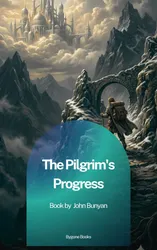
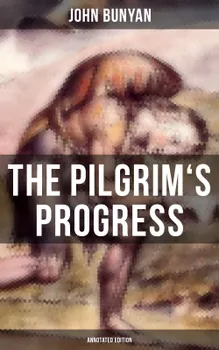
John Bunyan's 'The Pilgrim's Progress (Annotated Edition)' is a timeless allegorical tale that follows the journey of Christian, a protagonist seeking salvation. Written in the 17th century, Bunyan's work combines elements of religious discourse with vivid storytelling, making it a classic in the literary canon. The annotated edition provides readers with valuable insights into the historical and theological context of the text, enhancing the reading experience. The book's allegorical nature allows for a deeper exploration of Christian beliefs and values, making it a thought-provoking read for scholars and general readers alike. John Bunyan, a Puritan writer and preacher, drew upon his own experiences and faith to create 'The Pilgrim's Progress.' Bunyan's personal struggles with religion and salvation are reflected in the character of Christian, adding a layer of depth to the narrative. His dedication to sharing his beliefs through his writing has solidified his place as a key figure in Christian literature. I highly recommend 'The Pilgrim's Progress' to readers interested in exploring allegorical literature, religious themes, or classic English literature. Bunyan's masterful storytelling and profound insights make this book a must-read for anyone seeking a deeper understanding of faith and salvation.

In this enriched edition, we have carefully created added value for your reading experience:

- A succinct Introduction situates the work's timeless appeal and themes.

- The Synopsis outlines the central plot, highlighting key developments without spoiling critical twists.

- A detailed Historical Context immerses you in the era's events and influences that shaped the writing.

- An Author Biography reveals milestones in the author's life, illuminating the personal insights behind the text.

- A thorough Analysis dissects symbols, motifs, and character arcs to unearth underlying meanings.

- Reflection questions prompt you to engage personally with the work's messages, connecting them to modern life.

- Hand‐picked Memorable Quotes shine a spotlight on moments of literary brilliance.

- Interactive footnotes clarify unusual references, historical allusions, and archaic phrases for an effortless, more informed read.


Kom igång med den här boken idag för 0 kr

  • Få full tillgång till alla böcker i appen under provperioden
  • Ingen bindningstid, avsluta när du vill
Prova gratis nu
Mer än 52 000 personer har gett Nextory 5 stjärnor i App Store och på Google Play.

  1. 50 Masterpieces you have to read before you die

    Frances Hodgson Burnett, Homer, Charles Dickens, Lyman Frank Baum, Nathaniel Hawthorne, Thomas Hardy, Robert Louis Stevenson, Henry Haggard, Wilkie Collins, H.G. Wells, Sir Walter Scott, Lucy Maud Montgomery, Louisa May Alcott, Henry Fielding, Mary Shelley, Arthur Conan Doyle, Leo Tolstoy, Euripides, Fyodor Dostoevsky, Alexander Pushkin, James Fenimore Cooper, Daniel Defoe, Joseph Conrad, Jonathan Swift, William Shakespeare, Oscar Wilde, John Bunyan, Charles Darwin, Alfred Tennyson, Bram Stoker, James Joyce, Dante Alighieri, Howard Pyle, Jane Austen, Emily Bronte, Giovanni Boccaccio, Rudyard Kipling

  2. The Pilgrim’s Progress

    John Bunyan

  3. 5.0

    The Pilgrim's Progress

    John Bunyan

  4. 4.3

    The Pilgrim's Progress

    John Bunyan

  5. The Pilgrim's Progress : Journey of the Soul

    John Bunyan

  6. 5.0

    The Pilgrim's Progress

    John Bunyan

  7. 5.0

    Kristens resa

    John Bunyan

  8. 5.0

    The Holy War

    John Bunyan

  9. 4.0

    Pilgrim's Progress : Updated, Modern English

    John Bunyan

  10. Works of John Bunyan

    John Bunyan

  11. 15 juni

    El Progreso del Peregrino

    John Bunyan

  12. Ny

    Harvard Classics : The Five-Foot Shelf of Books

    Aesop, Dante Alighieri, Hans Christian Andersen, Augustine of Hippo, Marcus Aurelius, Jane Austen, Francis Bacon, Honoré de Balzac, Francis Beaumont, Bjørnstjerne Bjørnson, Thomas Browne, Robert Browning, John Bunyan, EDMUND BURKE, Robert Burns, Lord Byron, Thomas Carlyle, Benvenuto Cellini, Miguel de Cervantes, Marcus Tullius Cicero, Richard Henry Jr., Charles Darwin, Alphonse Daudet, Thomas Dekker, Charles Dickens, Fyodor Dostoevsky, John Dryden, Charles W. Eliot, George Eliot, Ralph Waldo Emerson, Epictetus, John Fletcher, Theodor Fontane, Benjamin Franklin, Johann Wolfgang Goethe, Oliver Goldsmith, Jacob Grimm, Edward Everett Hale, Bret Harte, Nathaniel Hawthorne, Homer, Victor Hugo, Washington Irving, Henry James, Ben Jonson, Gottfried Keller, Thomas à Kempis, Alexander L. Kielland, Martin Luther, Niccolò Machiavelli, Alessandro Manzoni, Christopher Marlowe, Philip Massinger, Guy De Maupassant, John Stuart Mill, John Milton, Thomas More, William Morris, Alfred de Musset, William Allan Neilson, William Penn, Plato, Pliny the Younger, Plutarch, George Sand, Percy Bysshe Shelley, Richard Brinsley Sheridan, Adam Smith, Laurence Sterne, Theodor Storm, William Makepeace Thackeray, Leo Tolstoy, Ivan Turgenev, Mark Twain, Juan Valera, Virgil, Izaak Walton, John Webster, John Woolman