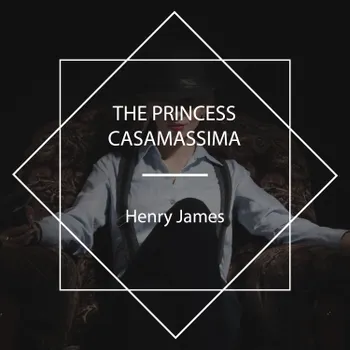
The Princess Casamassima

The Princess Casamassima is a novel by Henry James, first published as a serial in The Atlantic Monthly in 1885-1886 and then as a book in 1886.

It is the story of an intelligent but confused young London bookbinder, Hyacinth Robinson, who becomes involved in radical politics and a terrorist assassination plot.

The book is unusual in the Jamesian canon for dealing with such a violent political subject. But it is often paired with another novel published by James in the same year, The Bostonians, which is also concerned with political issues, though in a much less tragic manner.

Princess Casamassima can be read on several levels: first, as a political and social novel, exploring the anarchistic and revolutionary underground of London in the 1880s; secondly as a psychological study of such a movement on a young man (the protagonist, Hyacinth Robinson) who may or may not be descended from the aristocracy, but whose artistic nature shines out in the midst of the London slums; and thirdly, as an examination of the conundrum whether the world of art and culture is necessarily built on the abject poverty of others.

The Princess herself started as the beautiful and intelligent American Christina Light in James’s Roderick Hudson but has now come to London to escape the Neapolitan prince to whom she is unhappily married. Yet she and Robinson are only two of a larger set of characters whose commitment to an imagined revolutionary cause may be sincere or many be questionable. As is usual with Henry James, readers will have to make their own judgements.

Total Running Time (TRT): 21h, 34 min

Henry James, OM (Order of Merit) (1843-1916) was an American-born writer, regarded as one of the key figures of 19th-century literary realism.

He is best known for a number of novels showing Americans encountering Europe and Europeans. His method of writing from a character's point of view allowed him to explore issues related to consciousness and perception, and his style in later works has been compared to impressionist painting. His imaginative use of point of view, interior monologue and unreliable narrators brought a new depth to narrative fiction.

Henry James was nominated for the Nobel Prize in Literature in 1911, 1912, and 1916.

Om den här boken

The Princess Casamassima is a novel by Henry James, first published as a serial in The Atlantic Monthly in 1885-1886 and then as a book in 1886.

It is the story of an intelligent but confused young London bookbinder, Hyacinth Robinson, who becomes involved in radical politics and a terrorist assassination plot.

The book is unusual in the Jamesian canon for dealing with such a violent political subject. But it is often paired with another novel published by James in the same year, The Bostonians, which is also concerned with political issues, though in a much less tragic manner.

Princess Casamassima can be read on several levels: first, as a political and social novel, exploring the anarchistic and revolutionary underground of London in the 1880s; secondly as a psychological study of such a movement on a young man (the protagonist, Hyacinth Robinson) who may or may not be descended from the aristocracy, but whose artistic nature shines out in the midst of the London slums; and thirdly, as an examination of the conundrum whether the world of art and culture is necessarily built on the abject poverty of others.

The Princess herself started as the beautiful and intelligent American Christina Light in James’s Roderick Hudson but has now come to London to escape the Neapolitan prince to whom she is unhappily married. Yet she and Robinson are only two of a larger set of characters whose commitment to an imagined revolutionary cause may be sincere or many be questionable. As is usual with Henry James, readers will have to make their own judgements.

Total Running Time (TRT): 21h, 34 min

Henry James, OM (Order of Merit) (1843-1916) was an American-born writer, regarded as one of the key figures of 19th-century literary realism.

He is best known for a number of novels showing Americans encountering Europe and Europeans. His method of writing from a character's point of view allowed him to explore issues related to consciousness and perception, and his style in later works has been compared to impressionist painting. His imaginative use of point of view, interior monologue and unreliable narrators brought a new depth to narrative fiction.

Henry James was nominated for the Nobel Prize in Literature in 1911, 1912, and 1916.

Kom igång med den här boken idag för 0 kr

  • Få full tillgång till alla böcker i appen under provperioden
  • Ingen bindningstid, avsluta när du vill
Prova gratis nu
Mer än 52 000 personer har gett Nextory 5 stjärnor i App Store och på Google Play.

  1. 50 Masterpieces you need to read

    Louisa May Alcott, Jane Austen, Joseph Conrad, D. H. Lawrence, George Eliot, Leo Tolstoy, James Joyce, Charles Dickens, Bram Stoker, Oscar Wilde, Honoré de Balzac, Edgar Rice Burroughs, Anne Brontë, Charlotte Brontë, Emily Brontë, Lewis Carroll, Willa Cather, Miguel de Cervantes, E. Cummings, Fyodor Dostoyevsky, Daniel Defoe, Arthur Conan Doyle, Alexandre Dumas, Gustave Flaubert, Henry James, Victor Hugo

  2. 5.0

    The Wheel of Time

    Henry James

  3. 3.0

    50 Masterpieces you have to read before you die vol: 1 (2020 Edition) : Included: Little Women, The Richest Man in Babylon Emma, The Call Of The Wild ....

    Louisa May Alcott, Dante Alighieri, Marcus Aurelius, Jane Austen, L. Frank Baum, Charlotte Brontë, Emily Brontë, Anne Brontë, Miguel de Cervantes, Agatha Christie, George S. Clason, Arthur Conan Doyle, Joseph Conrad, Charles Dickens, Fyodor Dostoyevsky, Alexandre Dumas, George Eliot, G.K. Chesterton, G.K. Chesterton, Zane Grey, Nathaniel Hawthorne, Napoleon Hill, Homer, Victor Hugo, Frances Hodgson Burnett, Washington Irving, Henry James, Franz Kafka, Rudyard Kipling, Jack London, Leo Tolstoy, H.P. Lovecraft, Lucy Maud Montgomery, Joseph Murphy, Robert Louis Stevenson, Edgar Allan Poe, Marcel Proust, Publius, Mary Shelley, Bram Stoker, Mark Twain, Sun Tzu, Lew Wallace, Wallace D. Wattles, H.G. Wells

  4. The Essential Feminist Classics : Including Biographies & Memoirs of the Most Influential Women in History

    Henrik Ibsen, Charlotte Brontë, Marietta Holley, Henry James, Louisa May Alcott, John Stuart Mill, Zona Gale, Jane Austen, Thomas Hardy, Edith Wharton, Gene Stratton-Porter, Rebecca Harding Davis, Margaret Fuller, Elizabeth Cady Stanton, Elia Wilkinson Peattie, Virginia Woolf, Mary Wollstonecraft, Willa Cather, Nathaniel Hawthorne, Mary Johnston, Grant Allen, Theodore Dreiser, Kate Chopin, Sojourner Truth, Charlotte Perkins Gilman, Harriet Martineau, Fanny Burney, Mary Ware Dennett, Julia Ward Howe, Ada Cambridge, H.G. Wells, Sarah H. Bradford, D. H. Lawrence, Nikolai Leskov, Lucy Maud Montgomery, Leo Tolstoy, Margaret Deland, Elizabeth Gaskell, Margaret Oliphant, Margaret Mitchell, Elizabeth von Arnim, Elizabeth Burgoyne Corbett

  5. The Bostonians

    Henry James

  6. 3.1

    När skruven dras åt :

    Henry James

  7. 4.0

    What Maisie Knew

    Henry James

  8. The Wings of the Dove

    Henry James

  9. 50 Masterpieces you have to read : An Unforgettable Journey into Timeless Literature - eBook Edition

    Louisa May Alcott, Jane Austen, Joseph Conrad, D. H. Lawrence, George Eliot, Leo Tolstoy, James Joyce, Charles Dickens, Bram Stoker, Oscar Wilde, Honoré de Balzac, Edgar Rice Burroughs, Anne Brontë, Charlotte Brontë, Emily Brontë, Lewis Carroll, Willa Cather, Miguel de Cervantes, E. Cummings, Fyodor Dostoyevsky, Daniel Defoe, Arthur Conan Doyle, Alexandre Dumas, Gustave Flaubert, Henry James, Victor Hugo

  10. 5.0

    The Wheel Of Time

    Henry James

  11. 4.5

    The Portrait of a Lady

    Henry James

  12. The Turn Of The Screw :

    Henry James